
Wainscoting is decorative wood paneling or molding fixed to the lower portion of a wall, and sometimes the full height, to add depth, texture and protection. Also spelled wainscotting, it is one of the most requested wall treatments in Malaysian homes.
This guide covers the main wainscoting styles, heights and materials for Malaysia's climate, with wainscoting design ideas from homes we have completed.
Key takeaways
- Wainscoting covers the lower portion of a wall, usually 30–40 inches (760–1,015 mm) high, or the full height as a feature.
- The main wainscoting styles are raised panel, flat panel, overlay panels, beadboard, board and batten and shiplap.
- The golden rule: about one-third of the wall, and no more than half.
- Humidity decides the materials: seal MDF on every edge, and use PVC or vinyl in wet rooms.
- The ideas below come from homes we have completed.
What is wainscoting?
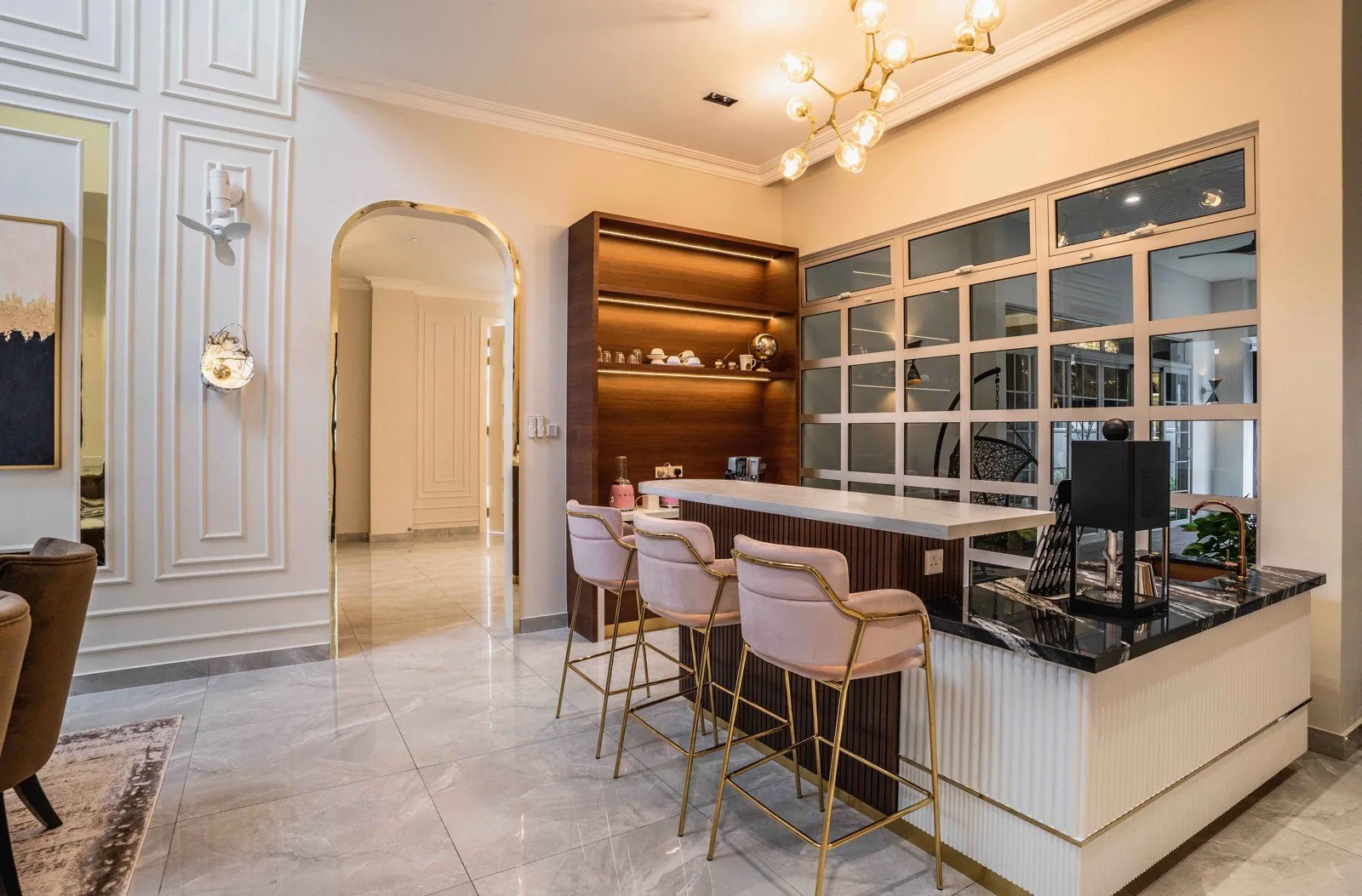
Wainscoting covers the lower part of a wall with panels. A chair rail or cap molding runs along the top, and a baseboard finishes it at the floor.
Traditional panels sit in a frame of vertical stiles and horizontal rails: a top rail, sometimes a center rail, and a bottom rail. The rails and stiles hold the panels and give the wall its rhythm; wider rails create a heavier, more formal style.
The word dates to the 14th century, when it meant fine imported oak boards. Raised panel walls were standard in grand houses of colonial times.
Today wainscoting is both practical and decorative. It protects walls from chair backs and scuffs, and it can mask minor wall imperfections.
It also helps break up large wall surfaces for a more balanced look, which matters in a tall living space or an open-plan house.
What is the difference between wainscoting and panelling?
Paneling is any wood or panel covering on a wall. Wainscoting is paneling on the lower wall, usually capped by a rail.
When wainscoting runs floor to ceiling, the wall itself becomes a major design feature rather than a protective wall treatment.
Wainscoting styles
Wainscoting is versatile and complements various interior styles, from a classic look to clean lines. These wainscoting styles each suit a different space and a different level of formality, so choose the style for the room, not the trend.
Raised panel wainscoting
Raised panel wainscoting has milled raised panels with beveled edges set into the stiles and rails. The edges catch the light and create shadow.
It gives a traditional feel suited to formal rooms. Raised panel wainscoting is typically 30–40 inches (760–1,015 mm) high.
Flat panel wainscoting
Flat panel wainscoting uses flat panels inside the stiles and rails. It offers clean lines popular in modern designs.
Flat panel wainscoting can be installed using sheet material such as MDF, with molding applied on top. Flat panels are also the easiest to paint and keep clean.
Painted flat panels suit a small space, because the plain surface keeps the wall calm while the frame around the panels adds a decorative edge.
Overlay panels and picture frame molding
Overlay panels combine raised and flat panel styles: molding is applied over flat panels to create a frame.
Picture frame molding in two rows, a short frame under a tall one, is the most common wainscoting design in Malaysian homes.
Beadboard wainscoting
Beadboard is narrow vertical boards with a groove, or bead, between each board. Beadboard wainscoting originated in the 19th century Victorian style and became common in homes by the 1880s, often in kitchens and bathrooms.
Beadboard provides a cottage-inspired aesthetic for informal spaces and laundry rooms. Painted beadboard also suits a bathroom in a coastal house.
Board and batten wainscoting
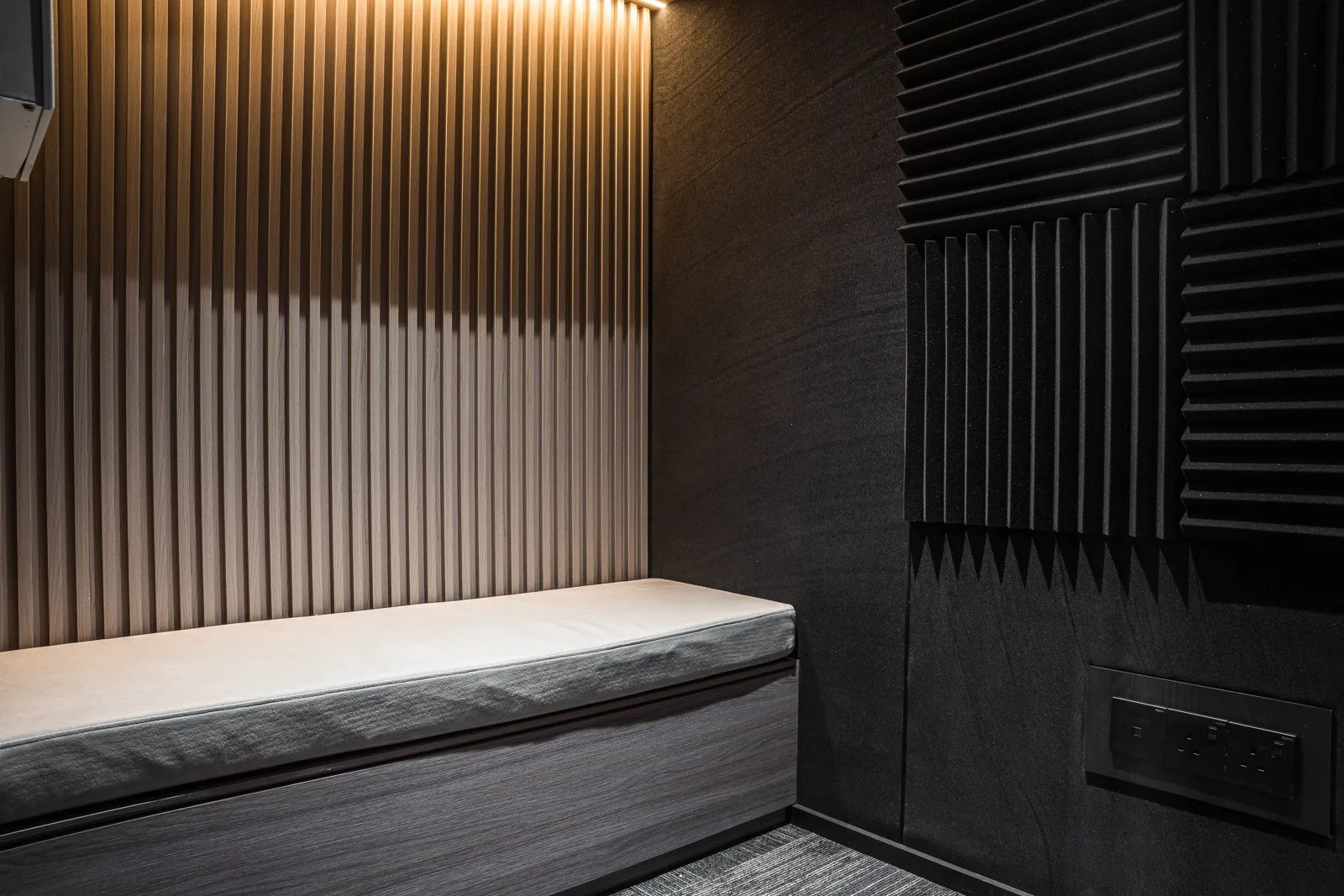
Board and batten uses a flat board with vertical battens fixed over it. A board and batten wall gives a simple grid that works in a modern style. Battens are typically 3–6 inches (75–150 mm) wide and spaced 10–16 inches (250–400 mm) apart, depending on wall width.
Batten wainscoting suits a hallway and a cottage style. In a study, batten wainscoting in timber gives a warmer style.
Shiplap wainscoting
Shiplap wainscoting uses horizontal boards that overlap, each board adding surface texture. Painted white, shiplap wainscoting reads coastal; in a dark stain it suits a study.
What are the different styles of wood wall paneling?
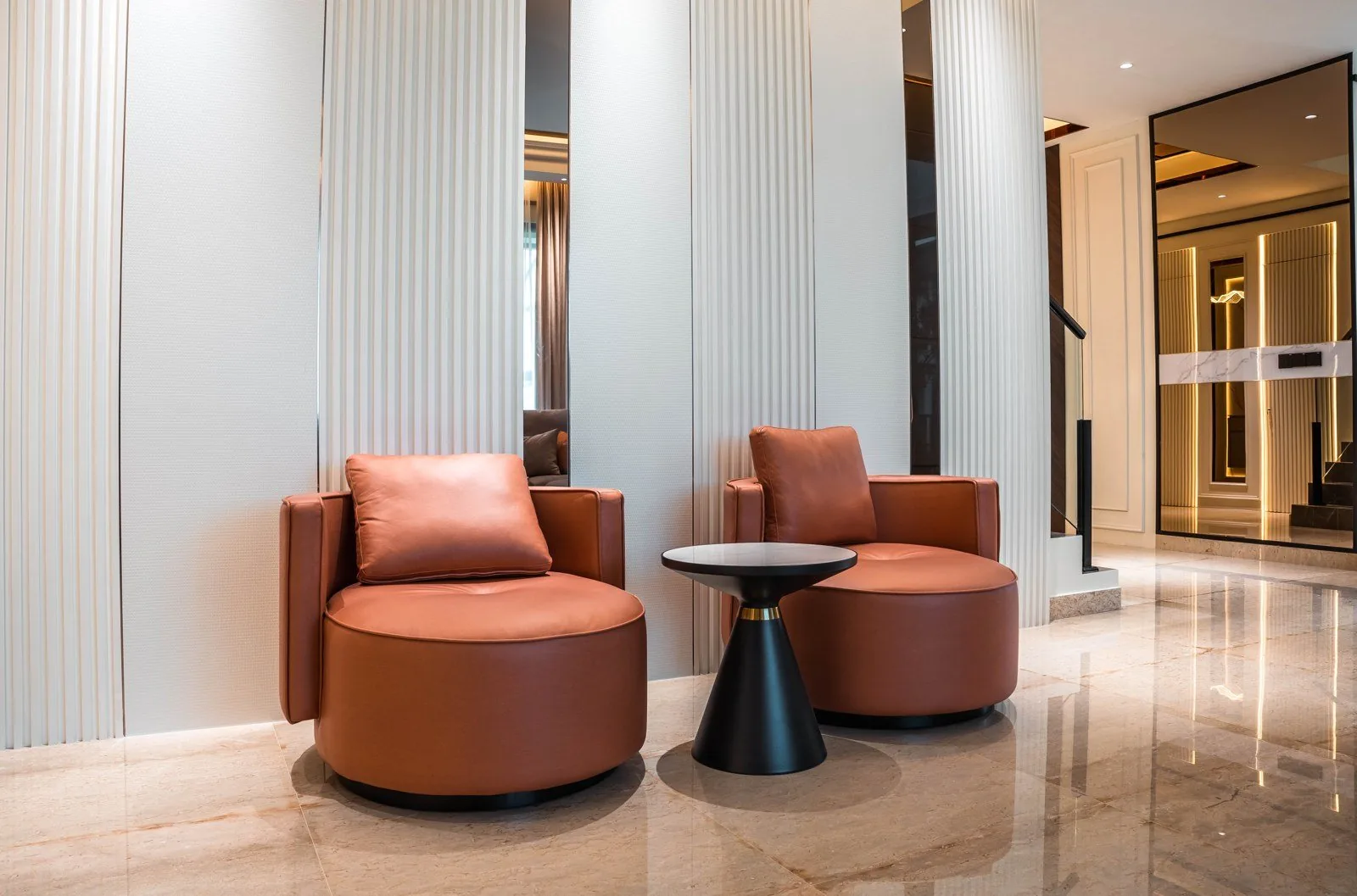
The different styles of wood paneling are raised panel, flat panel, overlay panels, beadboard, board and batten, shiplap, and modern fluted or slatted wood paneling. Each style suits a different room.
Wainscoting design ideas by room
These come from completed homes. Wainscoting can create a focal point without overwhelming a room, and the same wainscoting panels can change the feel of each space.
Dining room
The dining room is where wainscoting earns its place: chairs are pushed back against the wall at every meal.
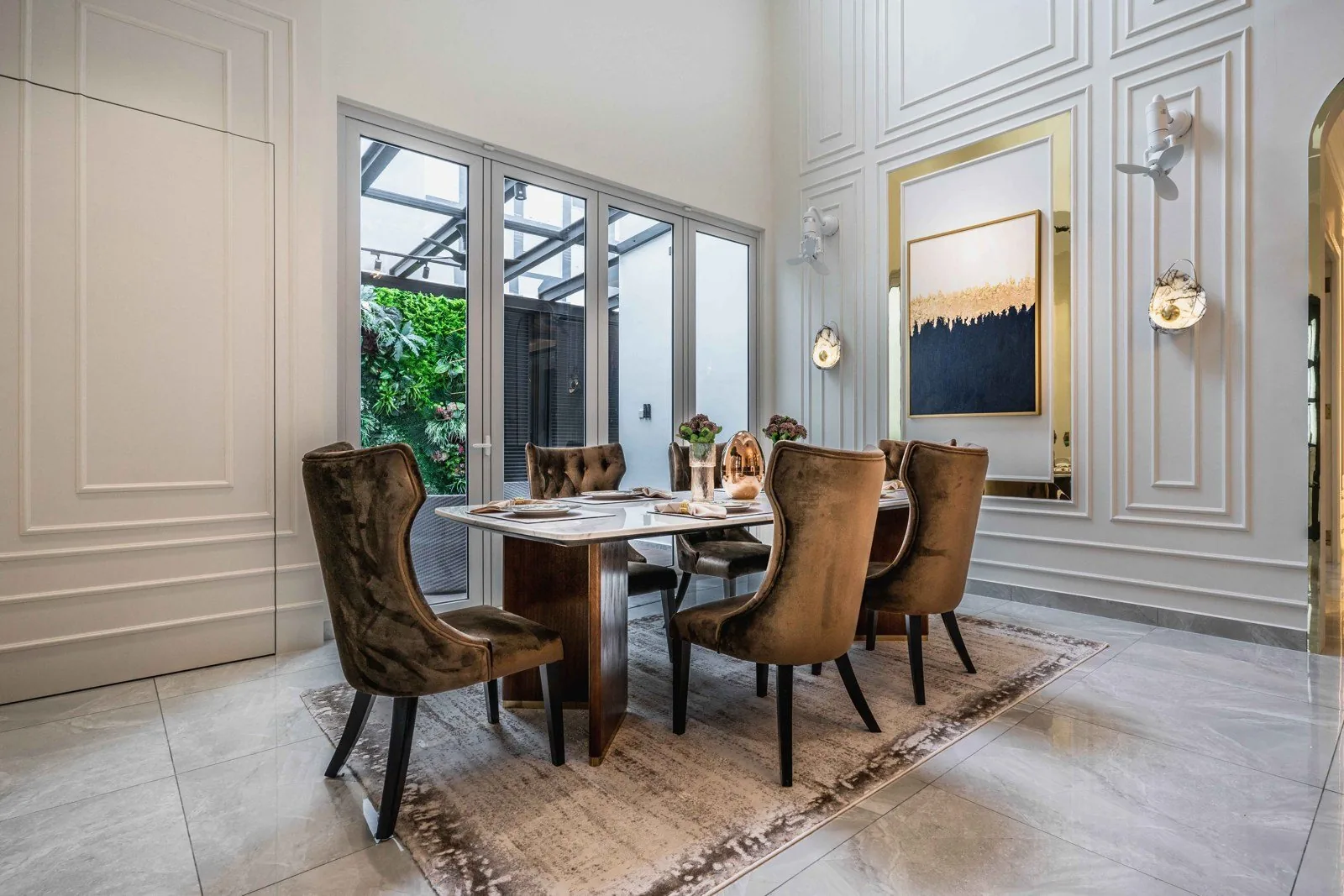
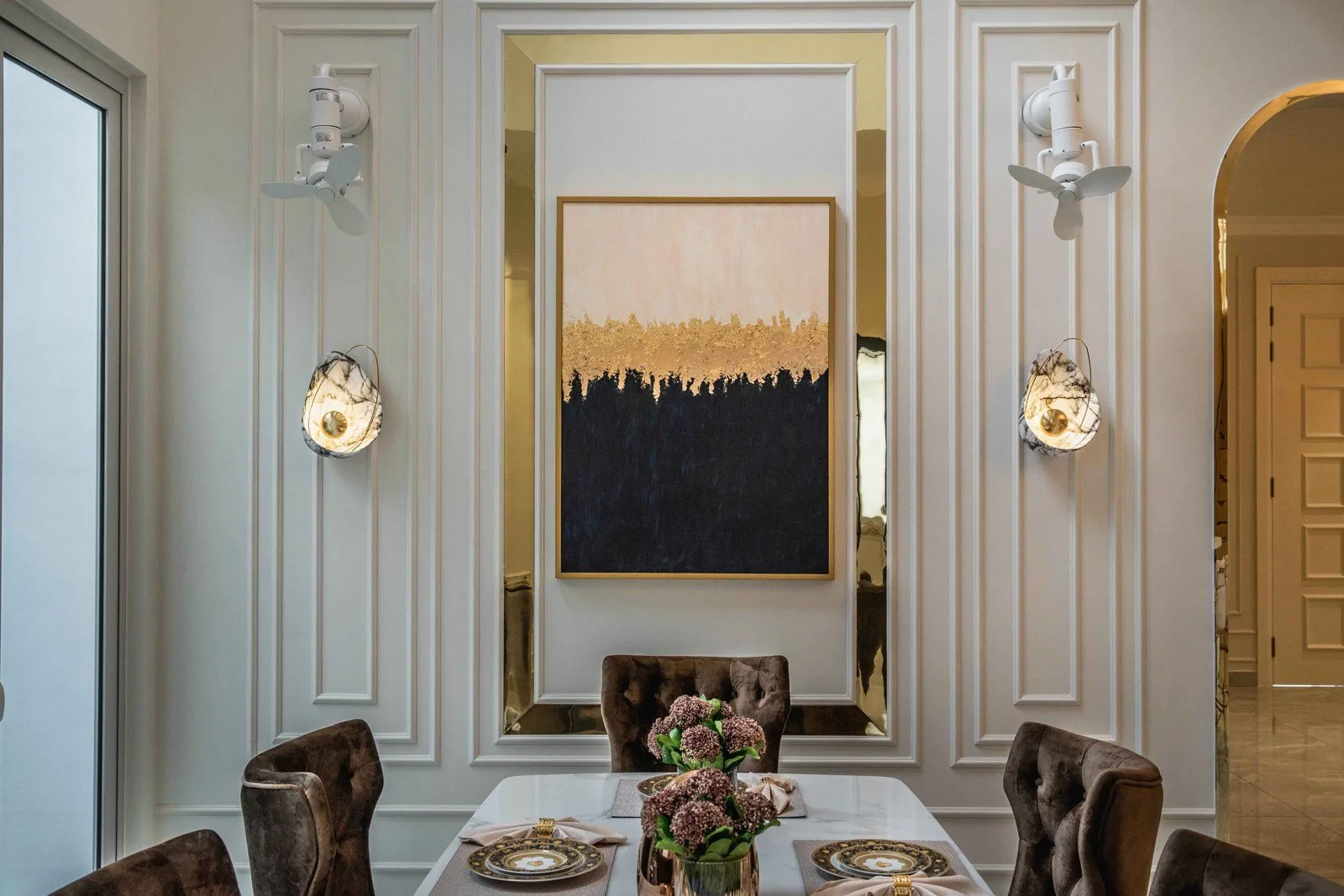
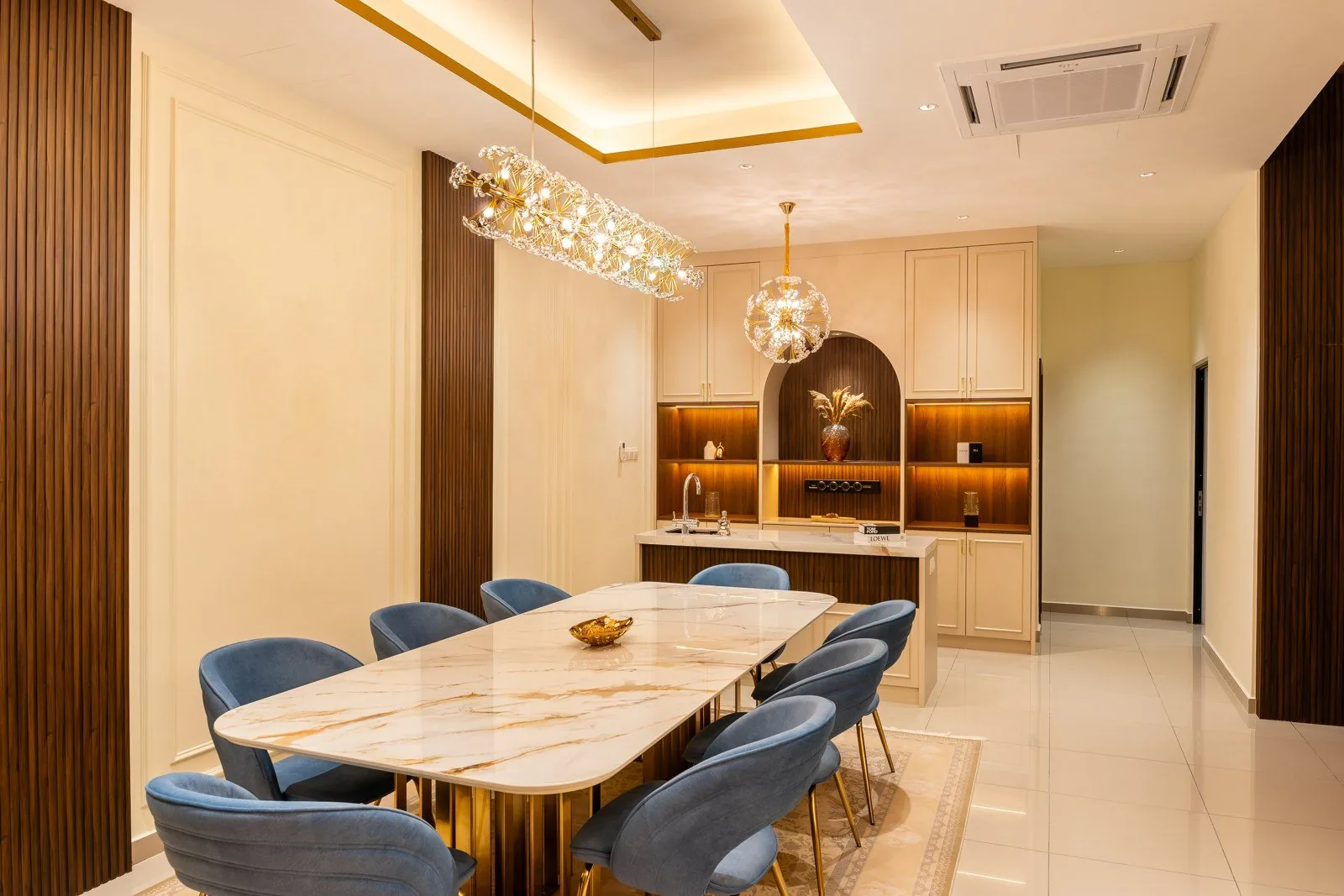
At EcoSpring in Johor Bahru, the dining room has full-height panels with brass-framed art.
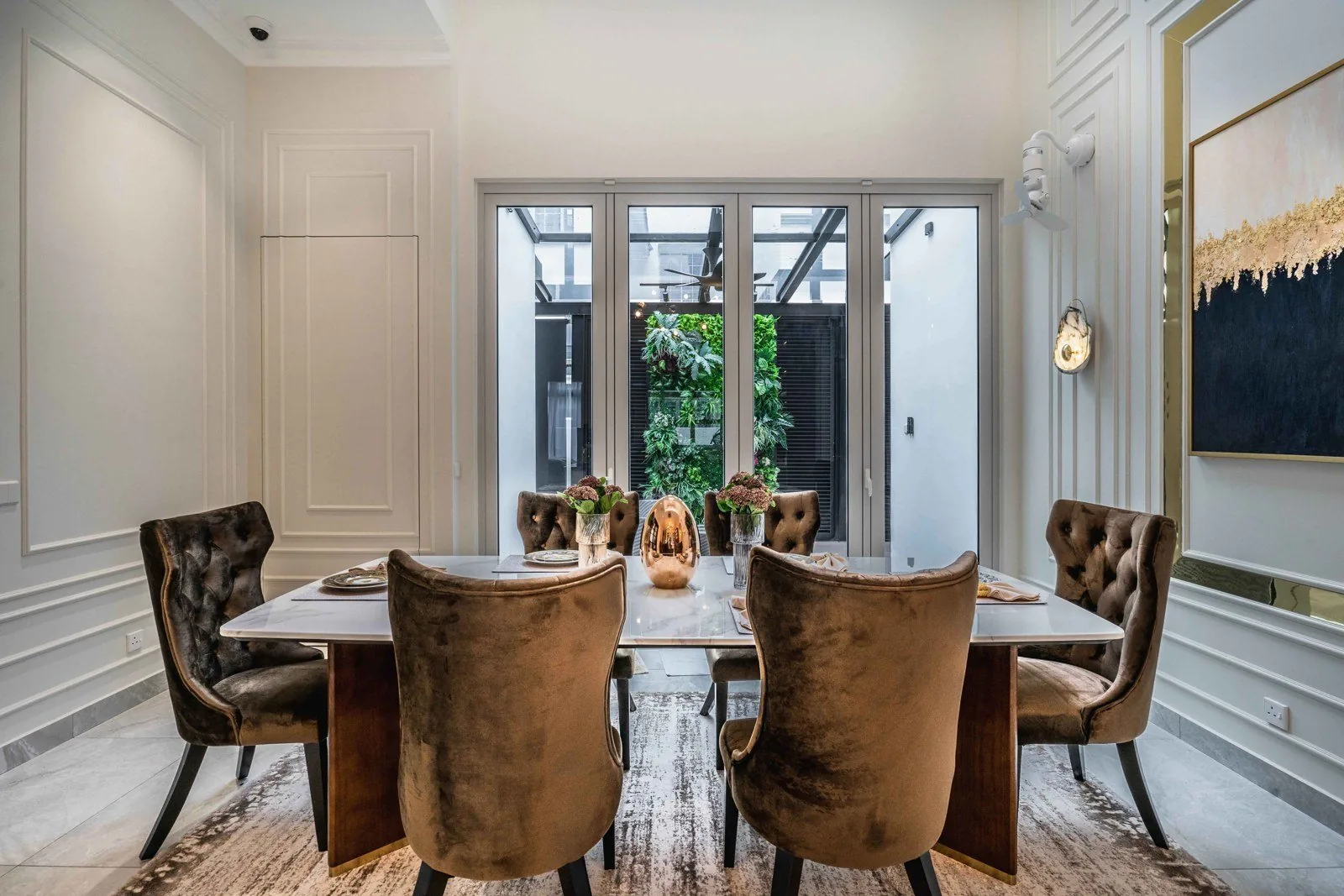
At Setia Safiro, flat panels frame the dining room beside timber battens, a quieter style for an open space.
Living room and entryway
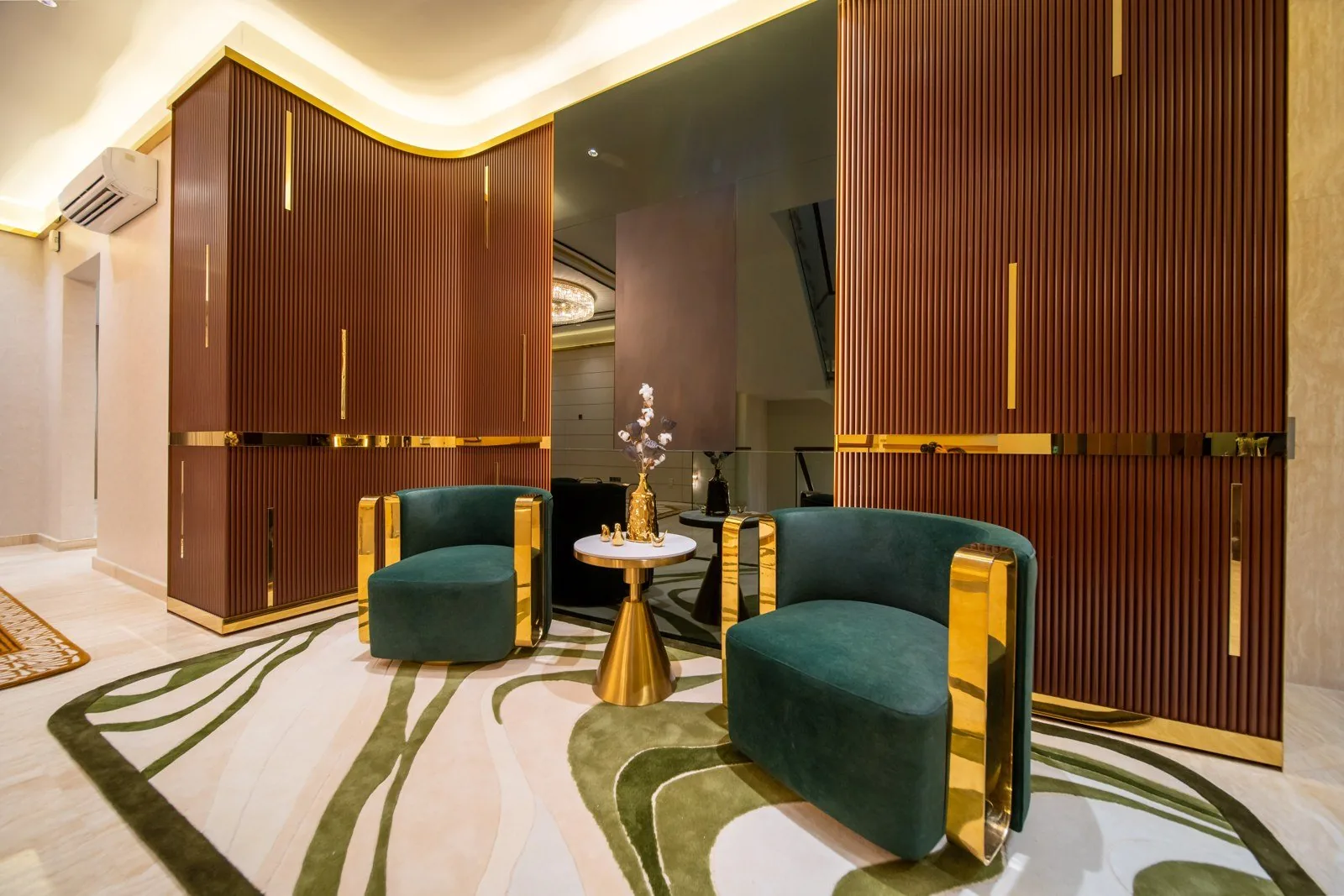
In an entryway, wainscoting adds instant character and elegance to any room a guest sees first. In a living space, it gives a large wall structure, and panels in the entryway can carry through to the stairs.
See our entrance design and living room design guides to decorate the rest of the space.
Hallway
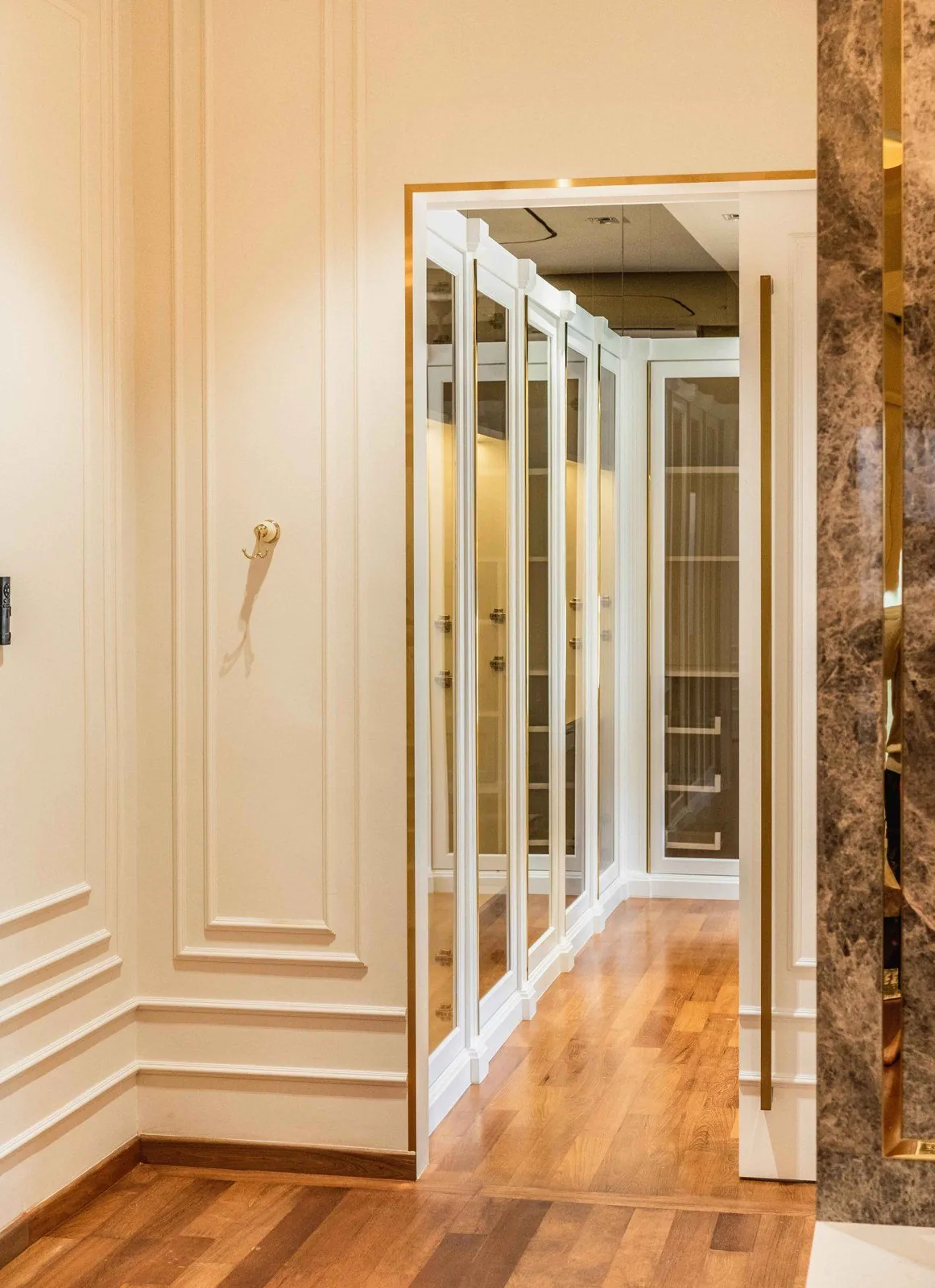
A hallway takes the most knocks, so wainscoting protects walls from damage. At EcoSpring, the hallway has lower wall panels and rails above a molded baseboard, which keeps a narrow space bright.
Bedroom
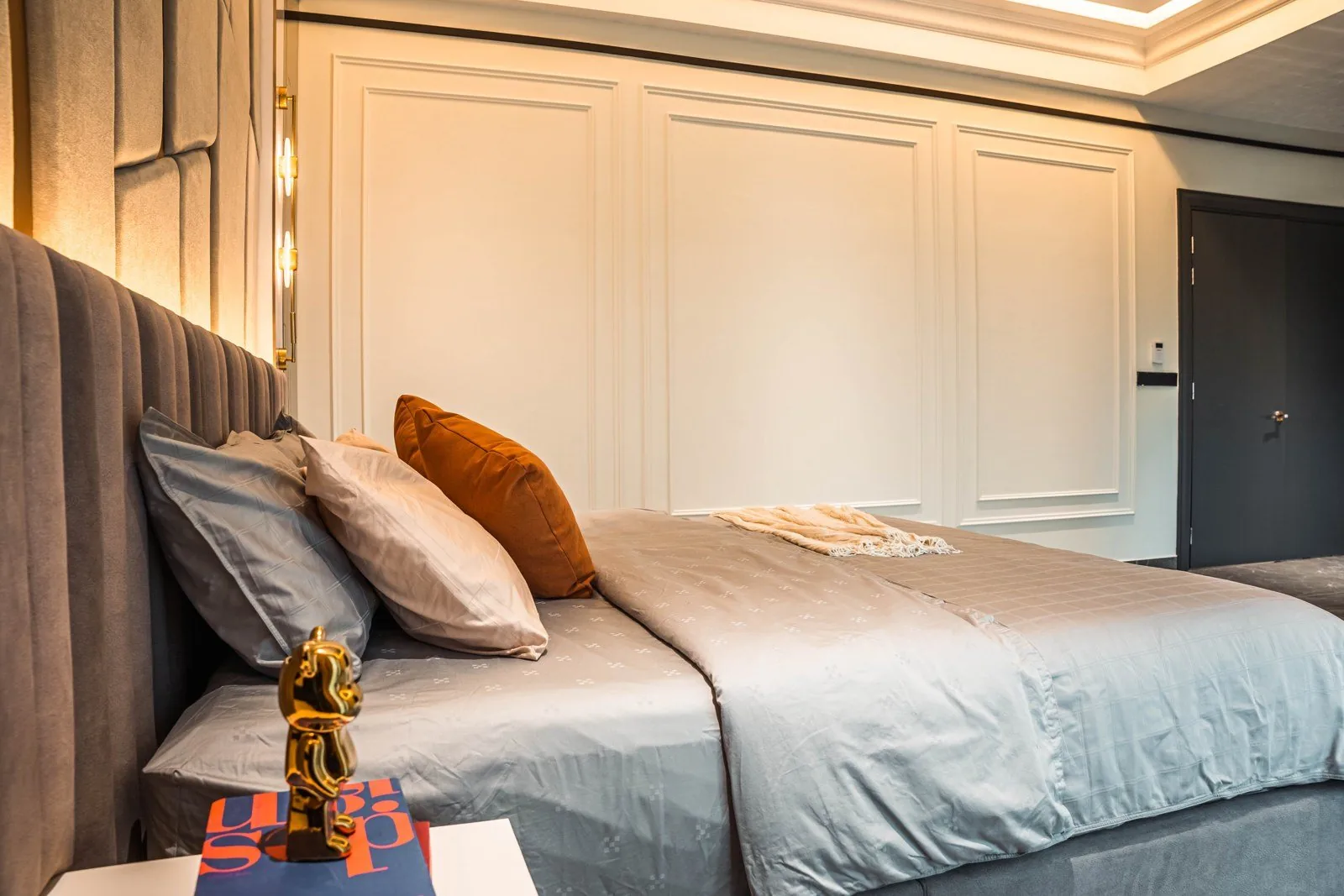
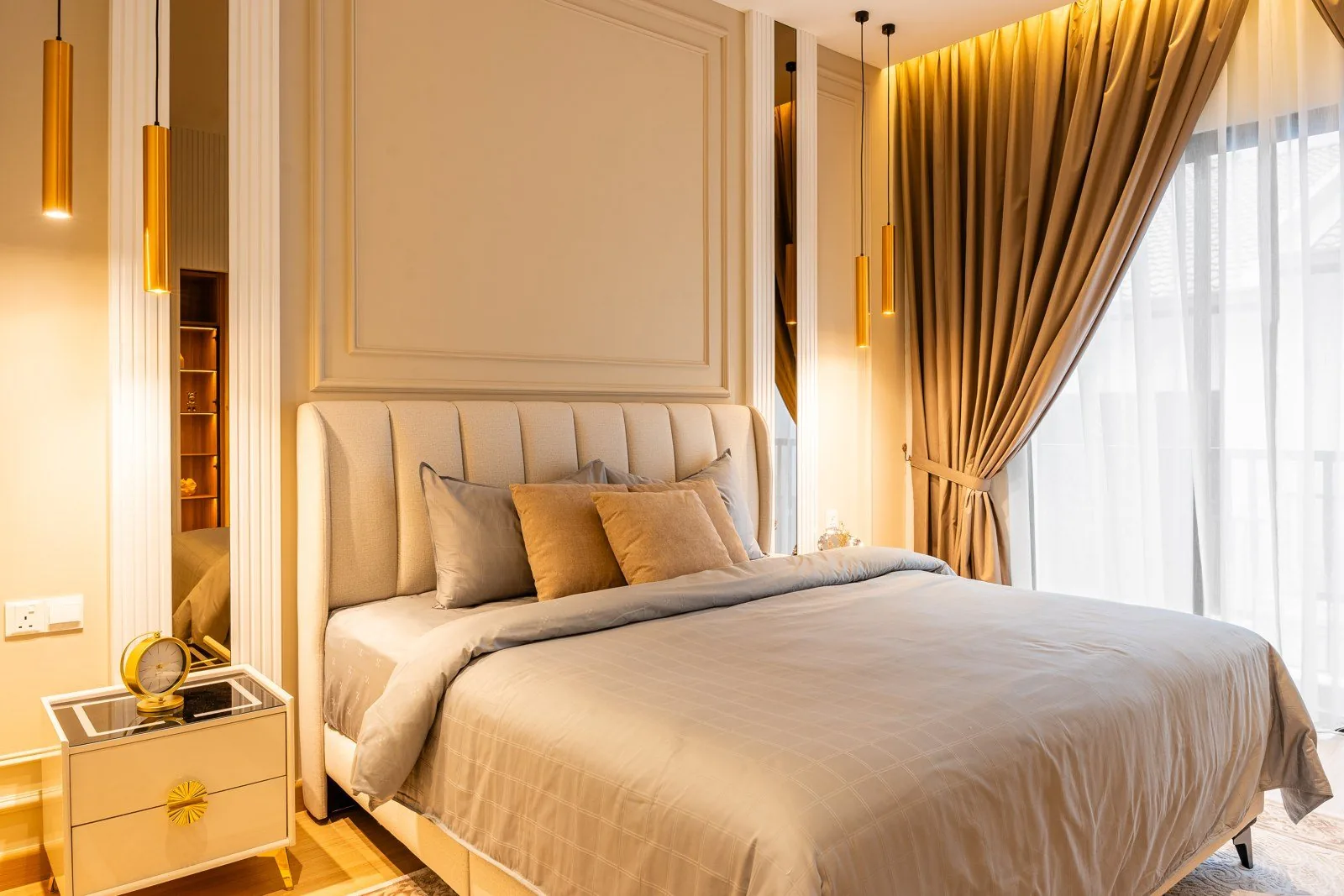
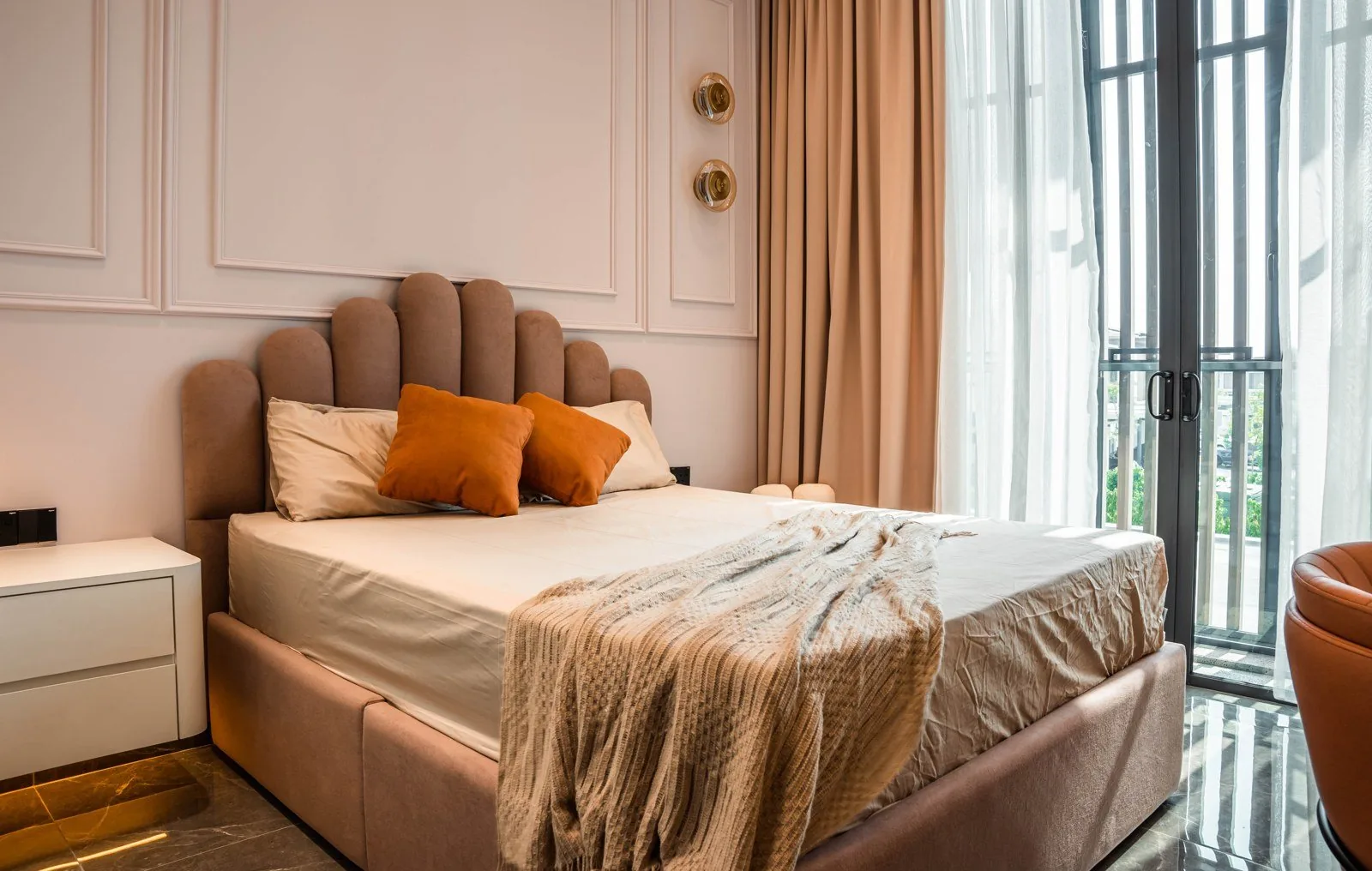
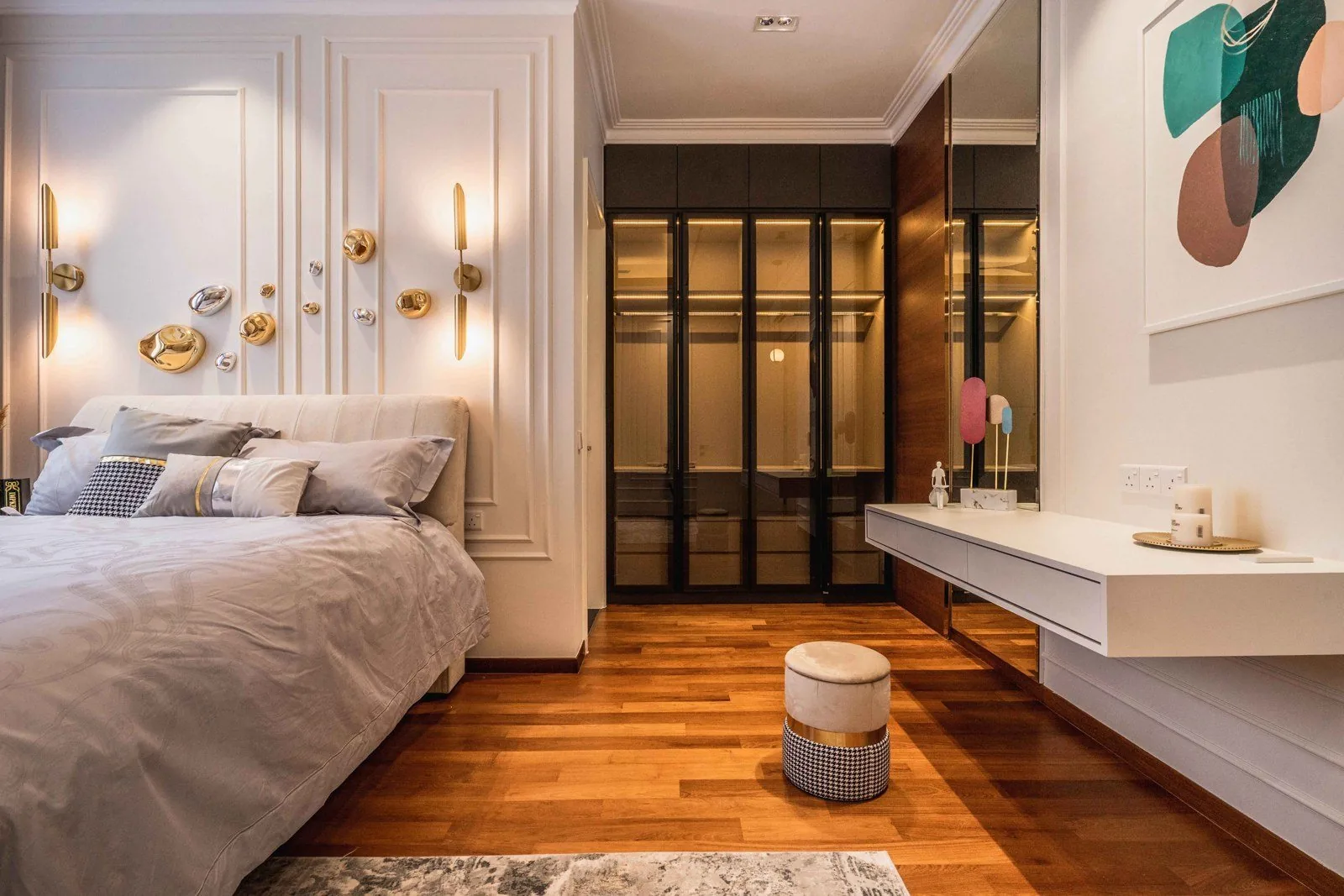
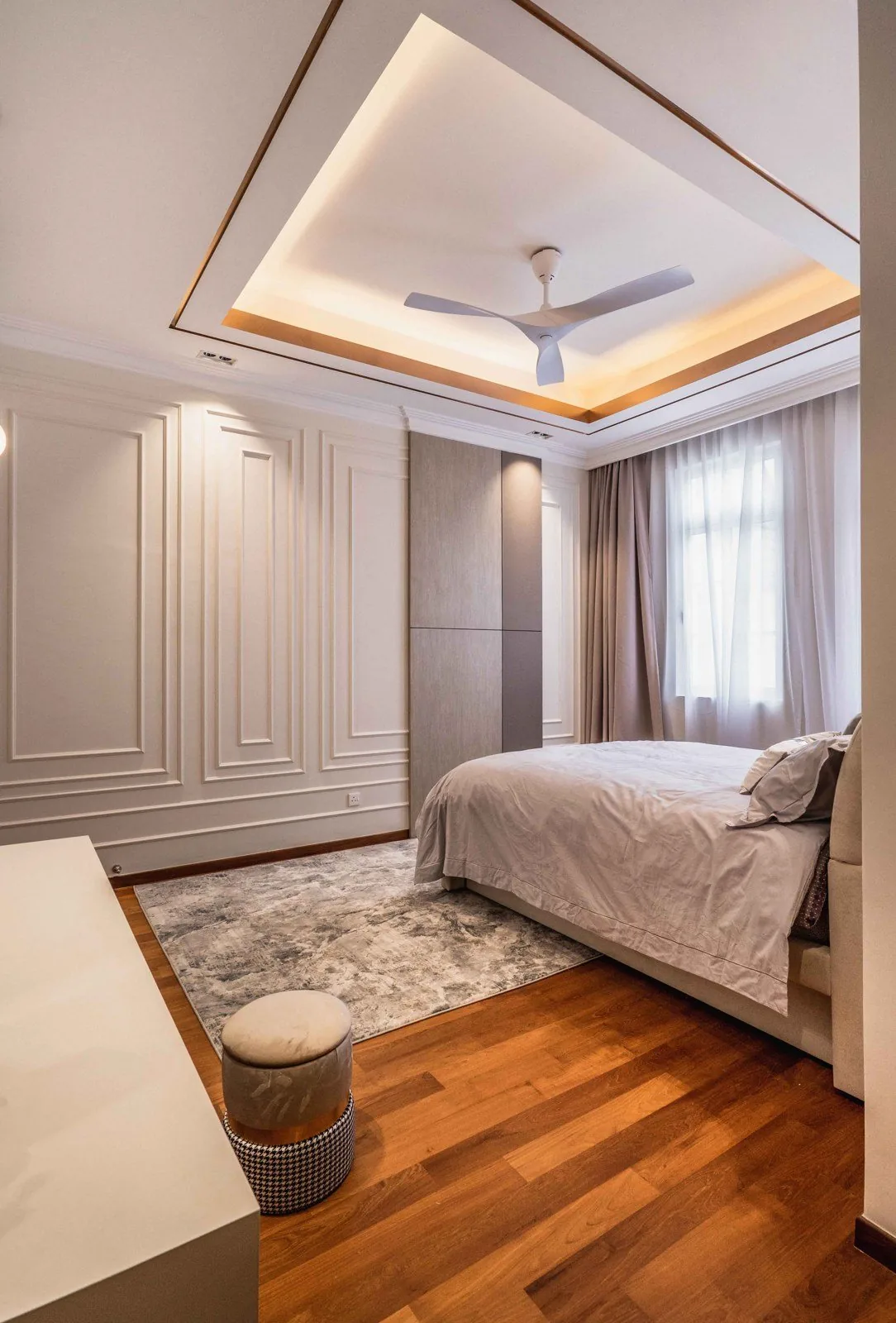
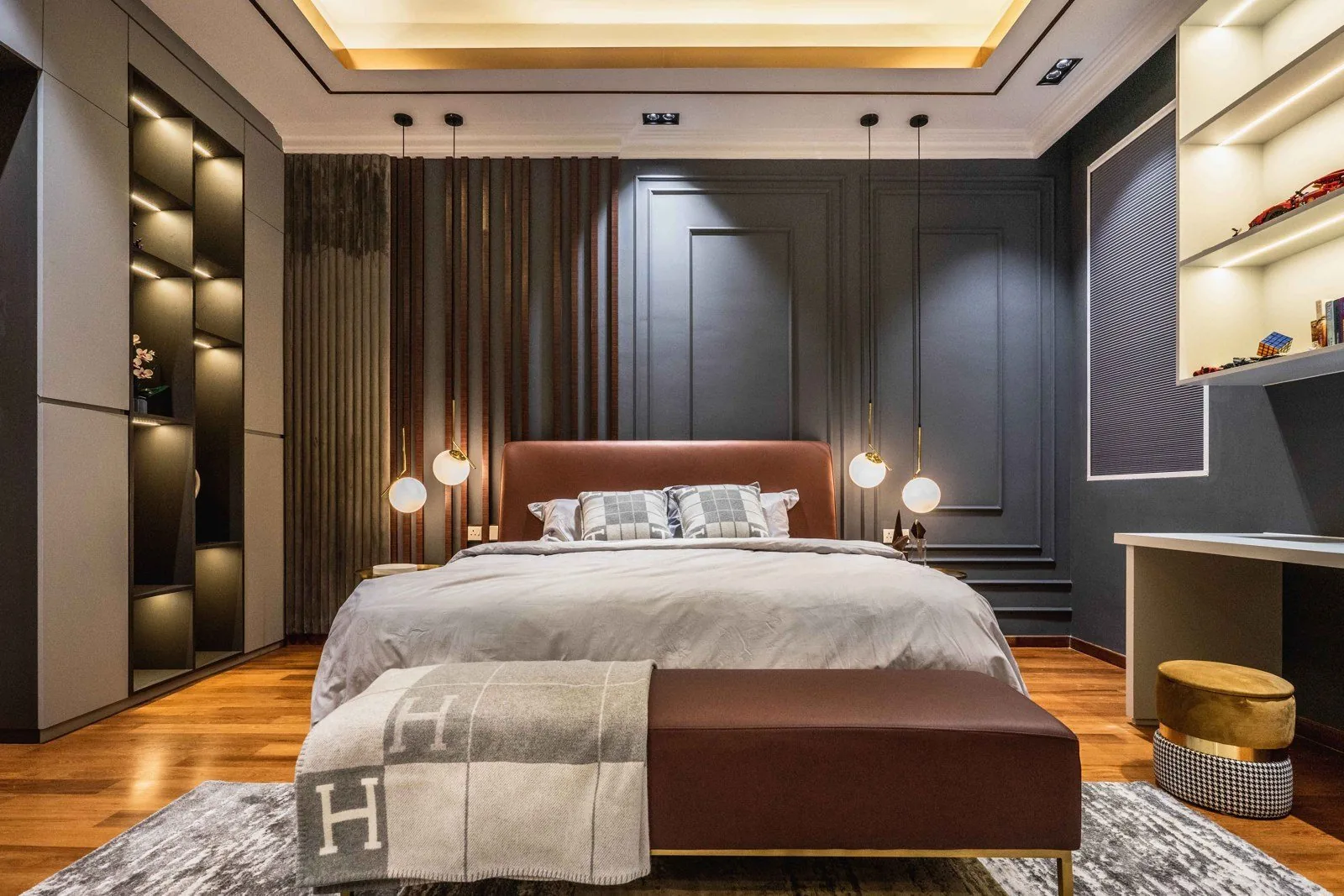
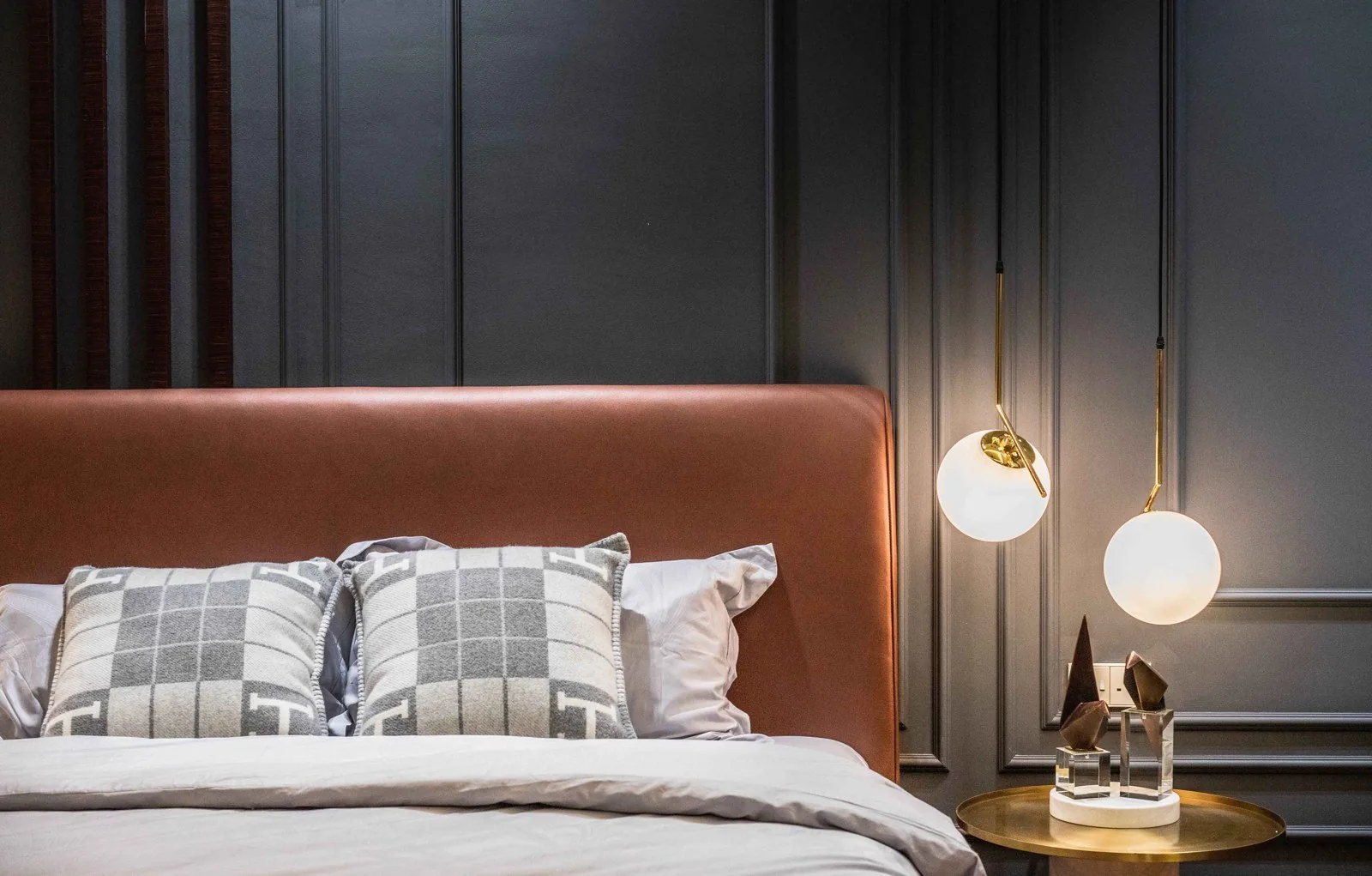
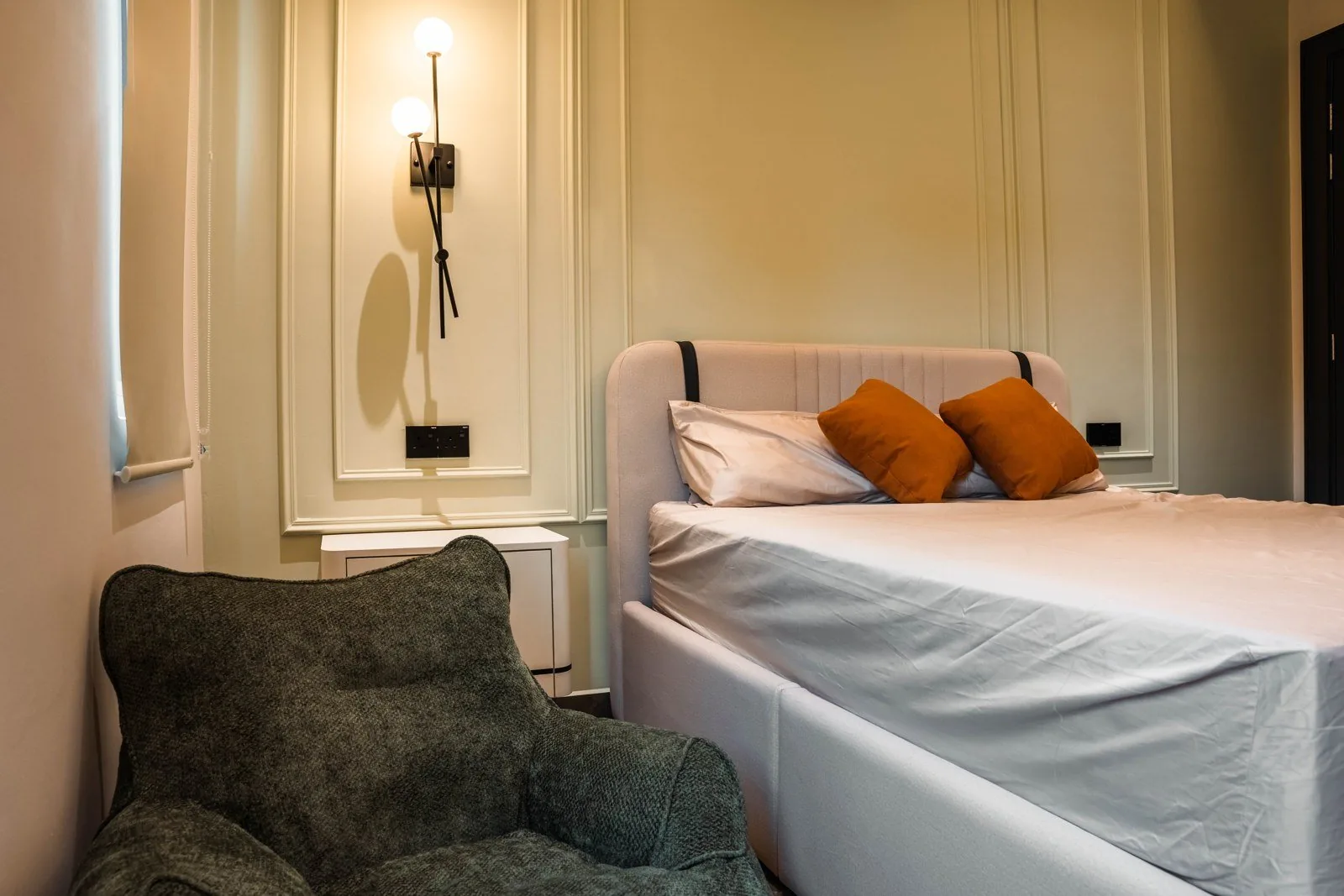
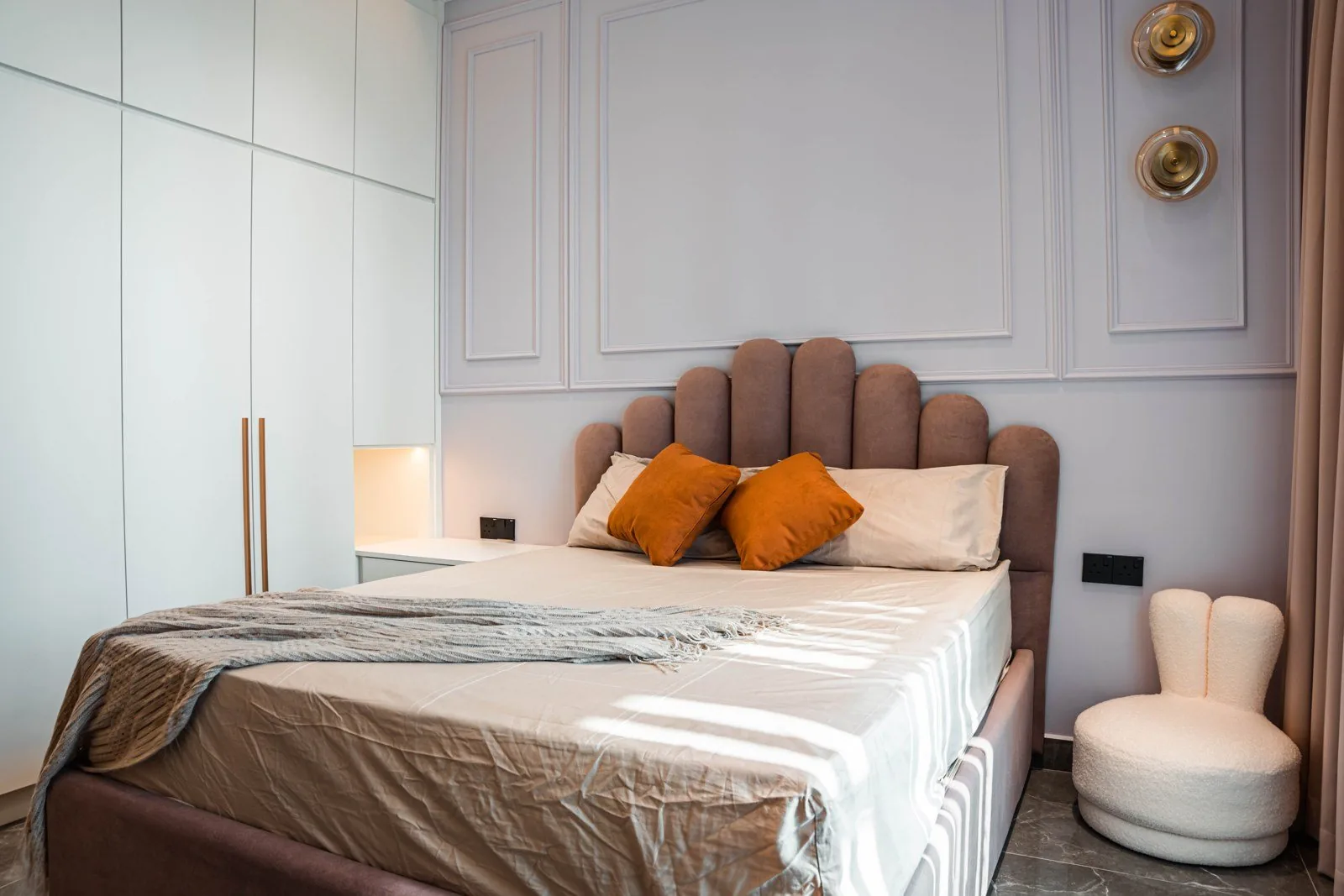
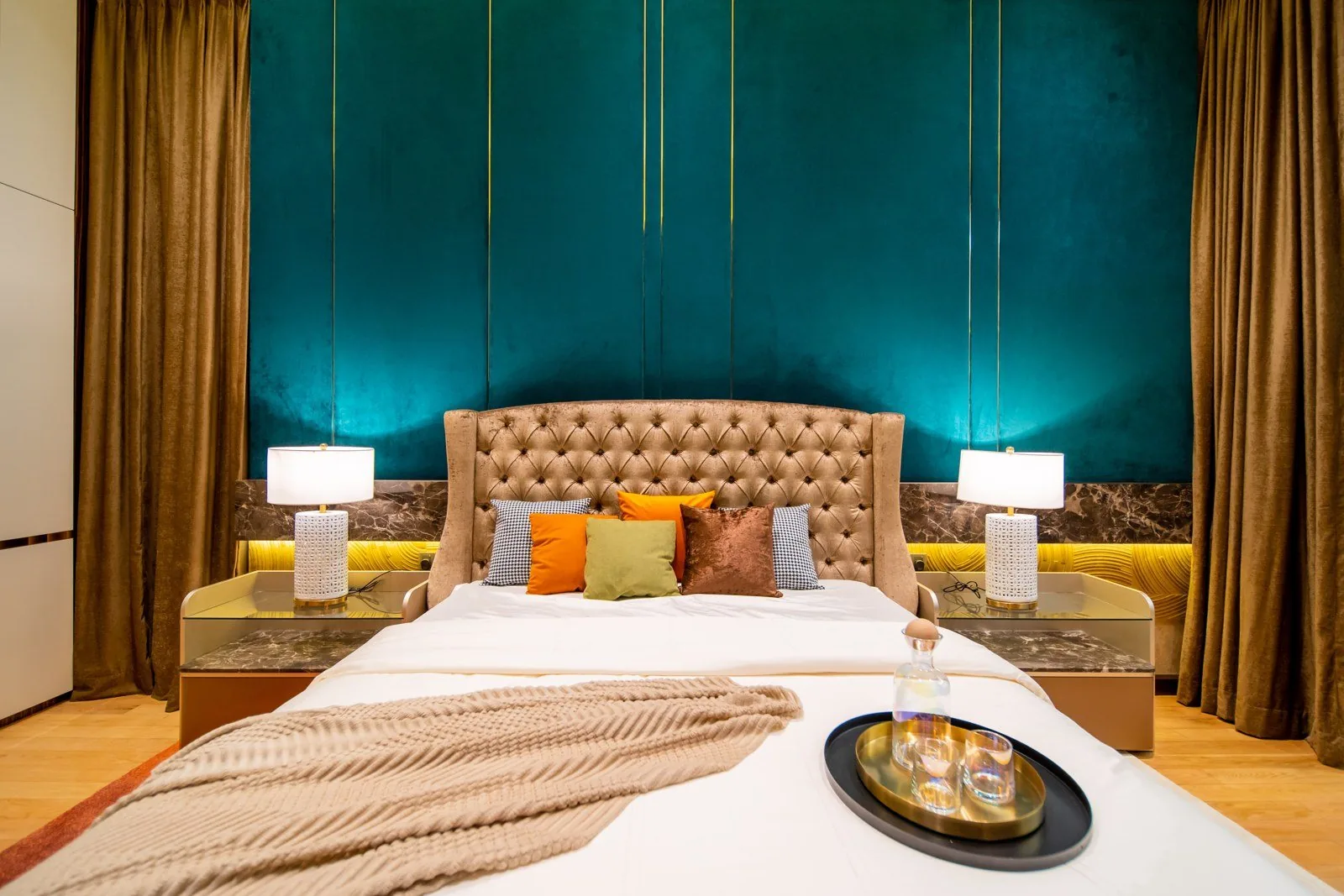
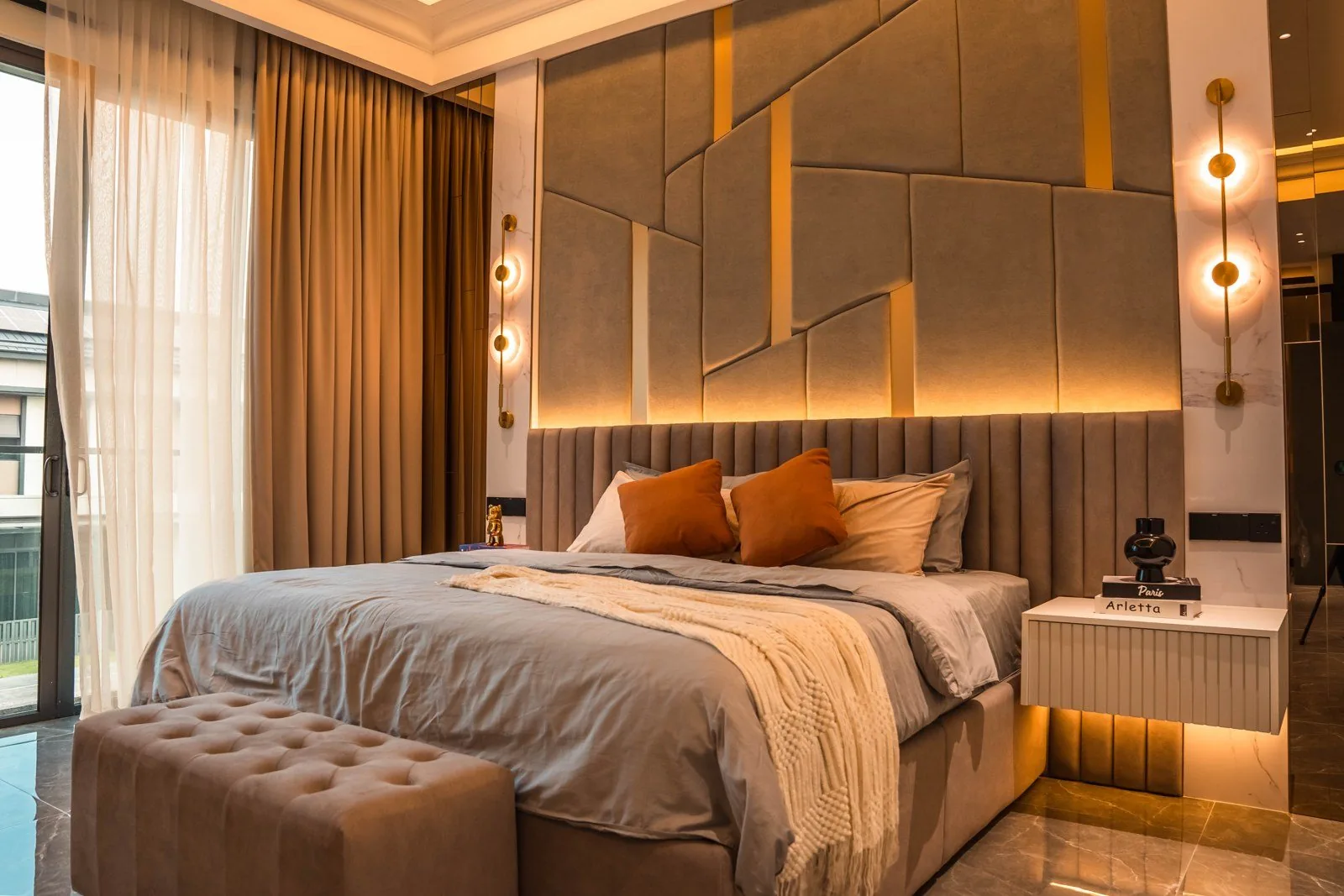
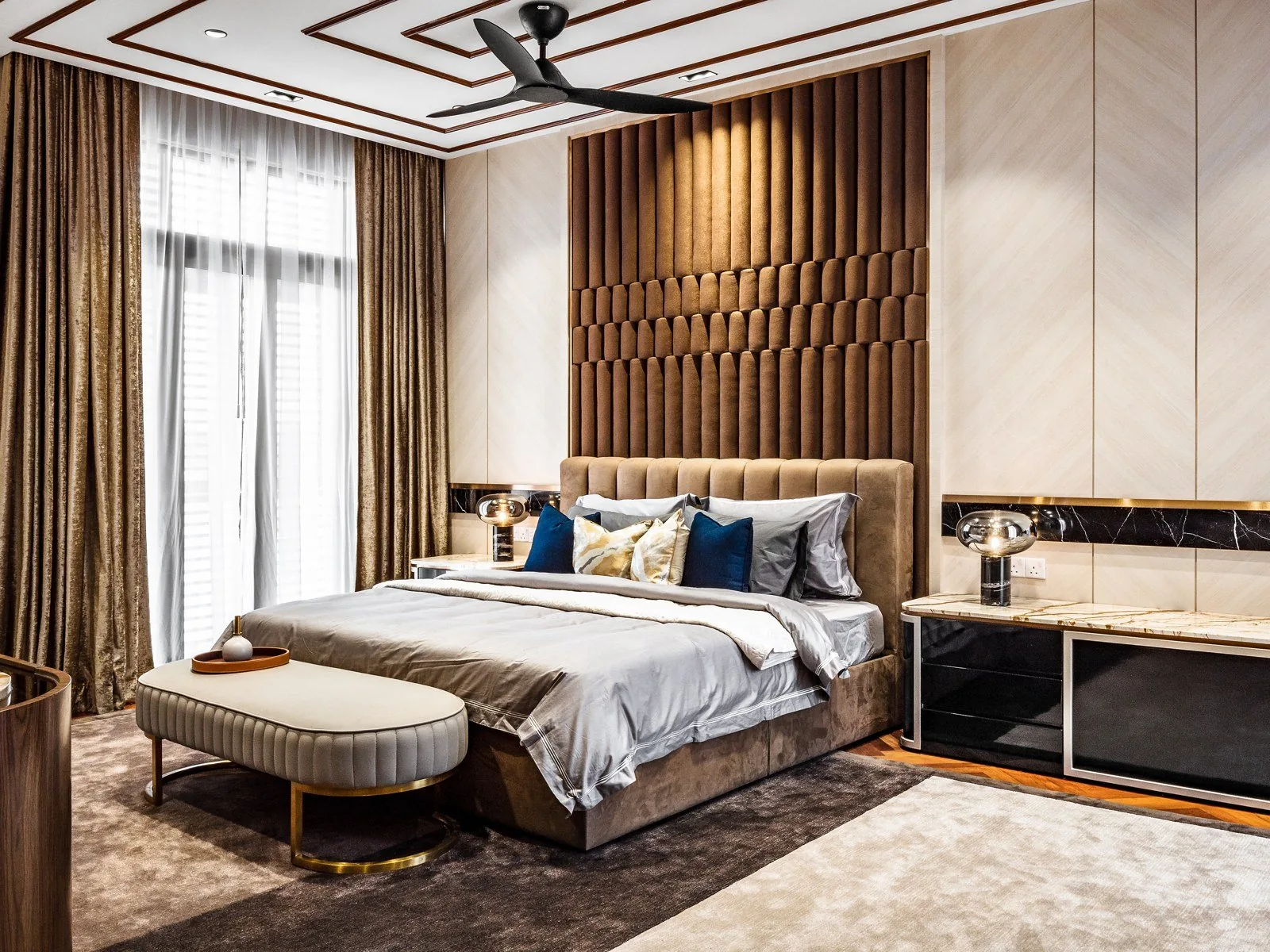
In a bedroom, wainscoting panels behind the bed act as a headboard wall. Two-tone colour schemes with wainscoting add contrast and interest to rooms.
See our bedroom design guide for more.
TV wall
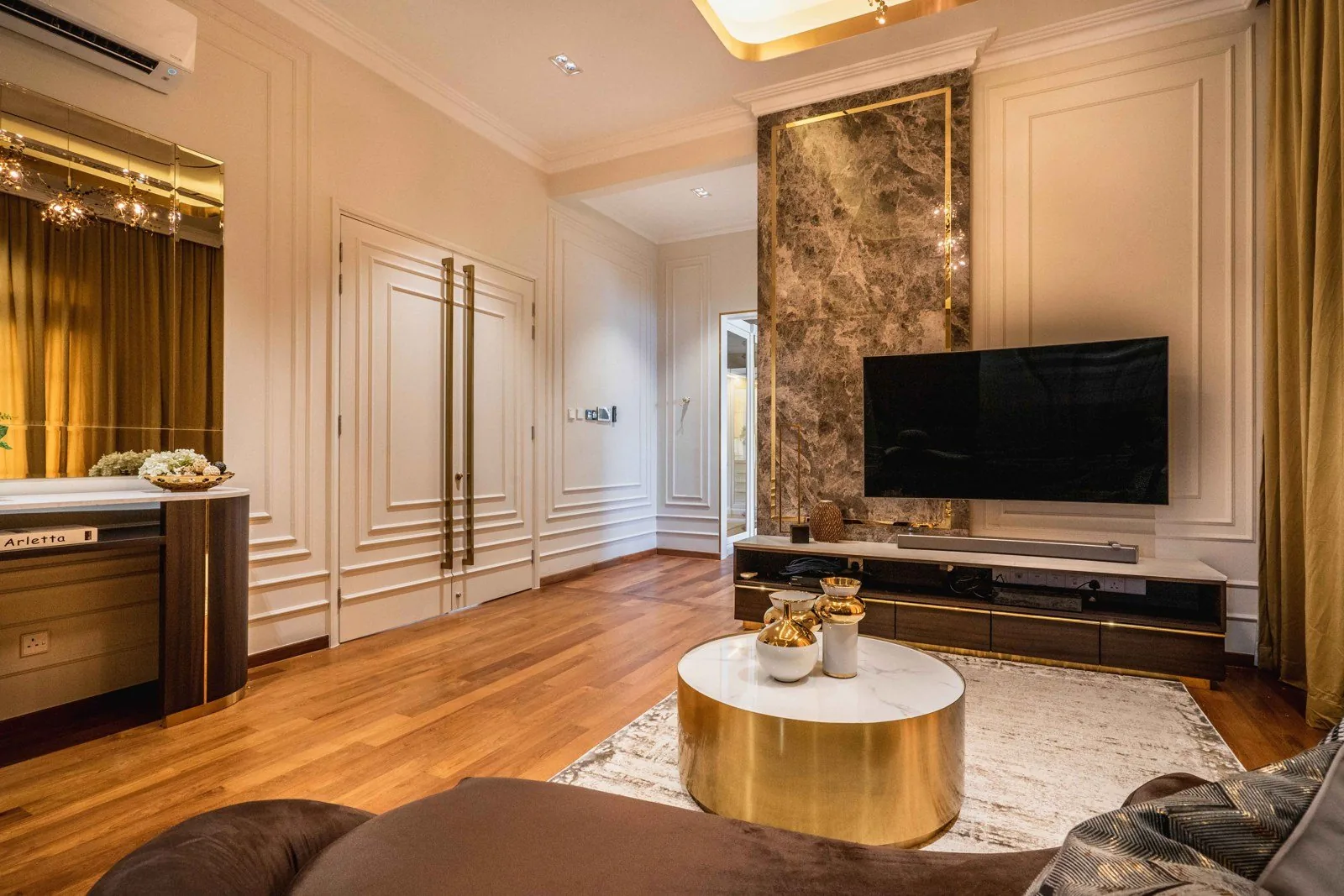
Molding around a stone TV wall, as at EcoSpring, frames the screen, with panels on either side. For more, see our TV cabinet design guide and feature wall guide.
Kitchen, bathroom and laundry rooms
Moisture-resistant materials are crucial for wainscoting in bathrooms and kitchens. Ceramic tile wainscoting is traditional for bathrooms.
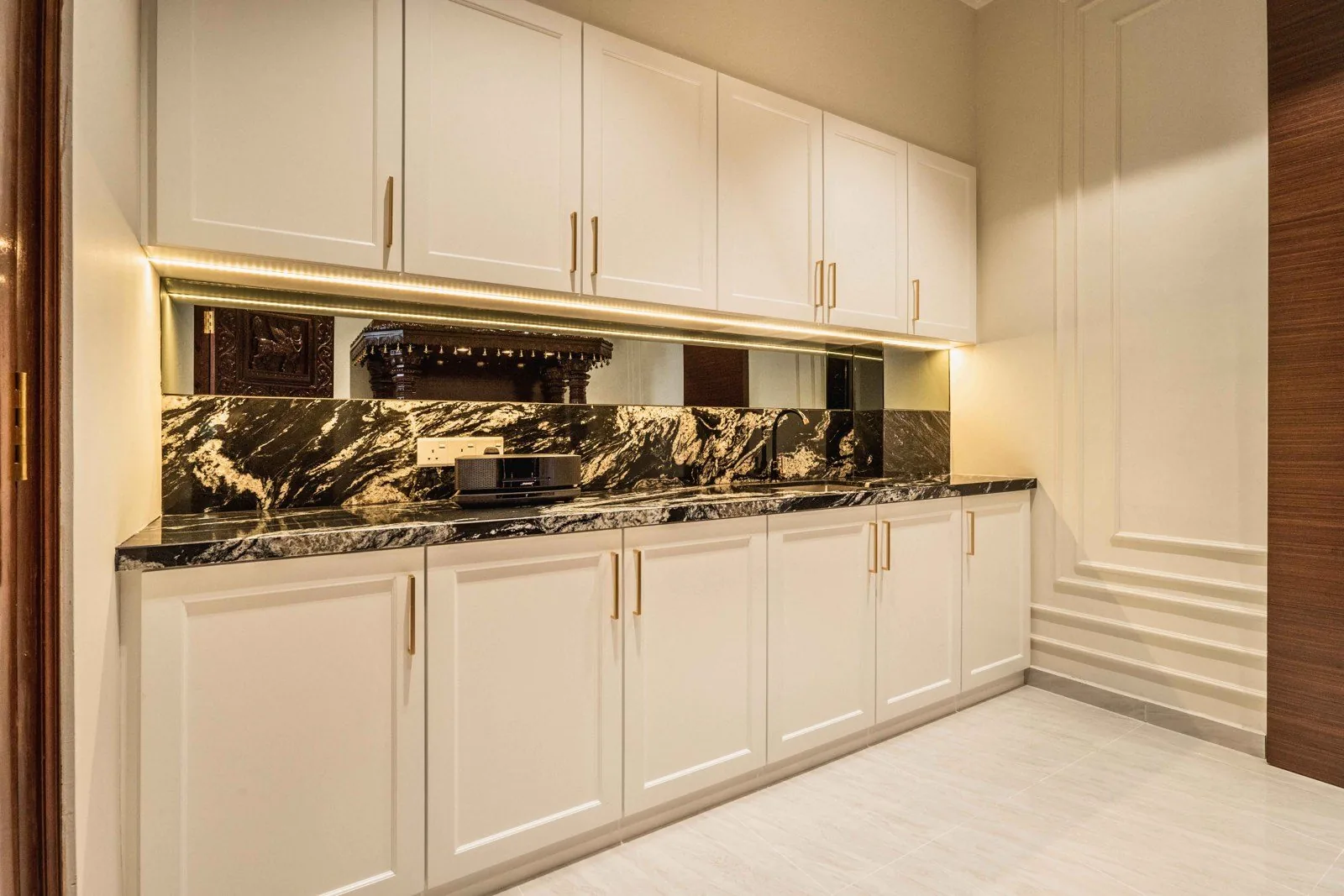
In a pantry, raised panel cabinets can repeat the molding and panels on the wall.
How high should wainscoting be?
Wainscoting is typically installed between 30 and 40 inches (760–1,015 mm) high, about one-third of the wall.
In a bathroom it often rises to around 40 inches; in a double-volume space, higher still.
What is the golden rule for wainscoting?
The golden rule for wainscoting is that its height should be about one-third of the wall, and no more than half.
Align the chair rail with window trim and switches so the overall appearance stays calm.
Wainscoting materials for Malaysian homes
Humidity decides the materials. Malaysia's air is humid all year, and solid wood moves with it.
| Material | Strengths | Watch for |
|---|---|---|
| MDF (medium density fiberboard) | MDF is more stable than solid wood; once painted, MDF wainscoting can be indistinguishable from more expensive materials | Seal every edge; swells if water gets in |
| Solid wood | Warm grain for wood wainscoting and durability | Seasonal movement in humidity |
| PVC and vinyl | PVC won't rot and isn't affected by moisture; vinyl panels are waterproof and ideal for high humidity areas | Moves with heat: leave expansion gaps |
| Ceramic tile | Traditional, waterproof | Grout lines |
How is wainscoting installed?
The wall is checked and leveled, then the baseboard goes on at the floor. The bottom rail, stiles and top rails follow, with the wainscoting panels set between them.
Cap molding finishes the top edge. PVC panels need small gaps at the joins, because PVC moves with heat.
Every joint is filled and painted, so the frame reads as one piece. Good preparation is what gives wainscoting its durability, and sanded edges create crisp shadow lines.
Colour and finish
Wainscoting offers flexibility in colour and style to suit various aesthetics. Painted panels in one colour give elegance; a darker painted lower wall adds contrast, and flat panels in a soft colour suit any decor style.
Wainscoting can introduce depth and texture to plain walls. A contrasting trim colour on the rails and cap molding can create a decorative outline around flat panels.
See our texture guide for more decor ideas for the rest of the space.
What are the different types of wall design?
The different types of wall design are paint, wallpaper, wainscoting, wood paneling, stone, tile and fluted or slatted panels.
Wainscoting gives the most aesthetic appeal for its cost and can enhance the perceived value of a home.
Luxury brands to pair with wainscoting
Classical panels suit Italian furniture, which owners in Kuala Lumpur often choose to decorate a room with wainscoting:
- Molteni&C has a Kuala Lumpur flagship at The Gardens Mall with living, kitchen and bedroom settings.
- Poltrona Frau has a store on Jalan Maarof, Bangsar, for armchairs against panels.
- Minotti has a Kuala Lumpur store at The Gardens Mall for living room sofas.
- Bang & Olufsen has a store at The Gardens Mall for a TV wall with wainscoting.
Working with interior designers
Interior designers plan wainscoting with the room, so panels line up with doors, windows and furniture. In interior design, the panels are drawn at the same time as the lighting and furniture, so the space works as one.
Cost depends on style, materials and wall area; our interior design cost guide explains how a budget is planned.
Explore more in our home interior design guide, our staircase design guide and the gallery.
Planning wainscoting for your house? Talk to our designers about wainscoting design for your home.