
Modern contemporary interior design is the design style most of our clients in Kuala Lumpur describe when they want a home that feels current, calm and expensive without looking like a showroom. It keeps the clean lines and simplicity of modern design and lets them evolve with the present moment: warmer colour, curved furniture, natural materials and light used as art.
This guide explains what modern contemporary interior design is, how it differs from modern and from contemporary interior design on their own, what contemporary interiors are made of, and how our designers create it for Malaysian daylight and humidity. Every photograph is a completed Blaine Robert Design home.
Key takeaways
- Modern design is a fixed historical style from the early-to-mid 20th century; contemporary design reflects current tastes and trends and keeps moving.
- Modern contemporary interiors take the discipline of one and the freedom of the other: clean lines, open floor plans, neutral colour palettes, bold colours as accents, natural wood and stone, statement lighting.
- In Malaysia strong daylight and humidity decide the materials and colour.
- The current trends inside contemporary interiors are warm minimalism, curves, earthy tones, biophilic elements, oversized artwork and bold dark kitchens.
- It suits a condominium as well as a bungalow, which is why designers recommend it so often.
What is modern contemporary interior design?
The short definition
Modern contemporary interior design is a hybrid design style, and the one contemporary living asks for most. It keeps the structure of modern interior design, meaning straight lines, open spaces, smooth surfaces and a minimalist aesthetic, and layers on the organic elements that define contemporary interiors today: a space that reads as ordered and light, yet warm and lived-in.
A living room with a low sofa, a stone wall, a sculptural pendant and a palette of greige, sand and walnut is modern contemporary style, the most requested of the contemporary styles in Malaysian luxury homes.
Where the two words come from
Modern design, the older of the two styles, refers to a historical era. It originated in the early-to-mid 20th century with the Bauhaus designers and carries a fixed vocabulary of forms and materials: flat planes, chrome and leather, function first. Modern design emphasises minimalism and clean lines, and it does not change.
Contemporary design describes the present moment. It started to take shape in the 1970s, when designers began mixing modernism with other styles, and it has been ever-evolving and fluid since. Contemporary design reflects current tastes and trends, incorporates elements from various styles, and now integrates sustainable materials and smart technology as standard.
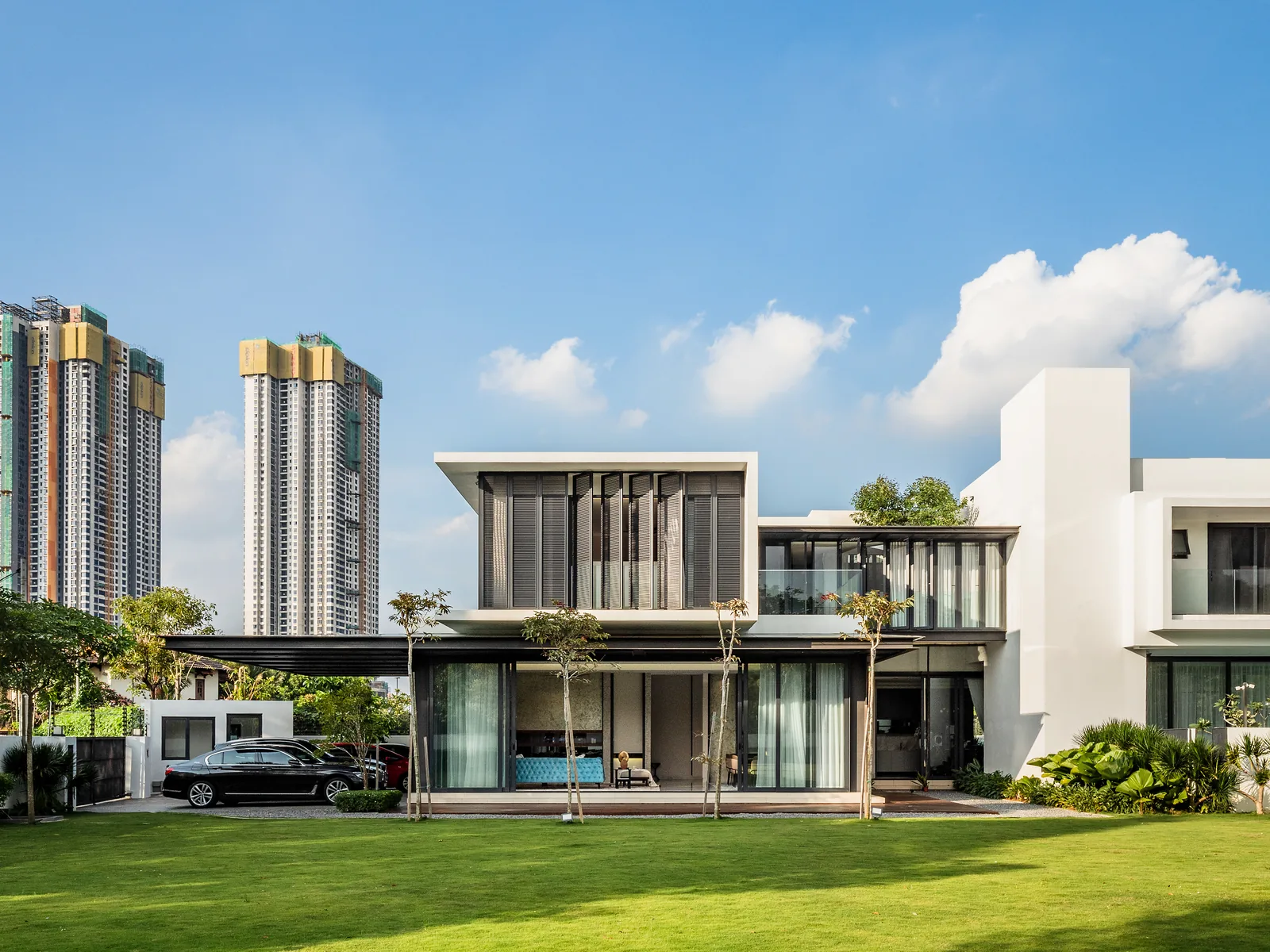
Modern vs contemporary: the difference that matters in a Malaysian home
Modern design
A modern interior is a period piece: Eames, Le Corbusier, tubular steel, a rug in one flat colour. In Kuala Lumpur it is rare in its pure form, because a strict mid-century room feels hard under tropical light and against the way Malaysian families use a living space.
Contemporary design
A contemporary interior is a living document. It borrows the clean lines of modern styles, then adds what the moment values: curves, texture, planting, concealed technology. Because contemporary interiors reflect current trends, they date fastest when created without judgement, so we anchor them on a neutral base and keep the trend-led pieces changeable.
Modern contemporary: the blend
Modern contemporary design takes the simplicity and sleek lines of modern styles as the bones and contemporary design as the flesh. A modern contemporary interior is recognisable by five things: clean lines, an open floor plan, a neutral base palette, natural materials with metal accents, and lighting chosen as a statement. Everything below is how we create those five things in Malaysia.
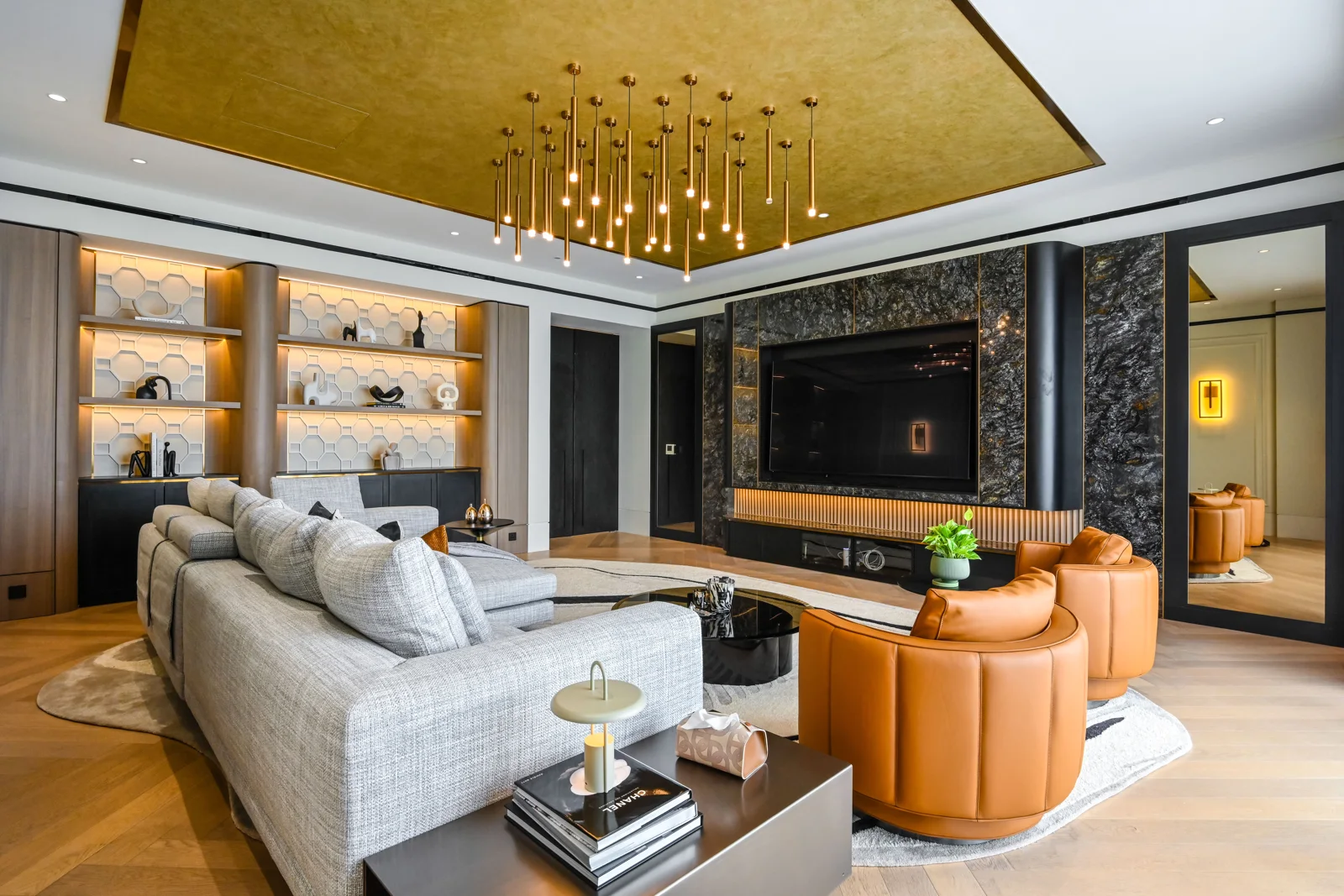
The elements of modern contemporary interiors
Clean lines and simplicity
The frame of every modern contemporary interior is a set of clean lines: flush joinery, shadow gaps instead of skirting, doors that align with wall panels. Simplicity is the removal of anything without a job, so the few pieces with one take centre stage. That restraint is where the timeless elegance of contemporary interiors comes from: rooms created not to date.
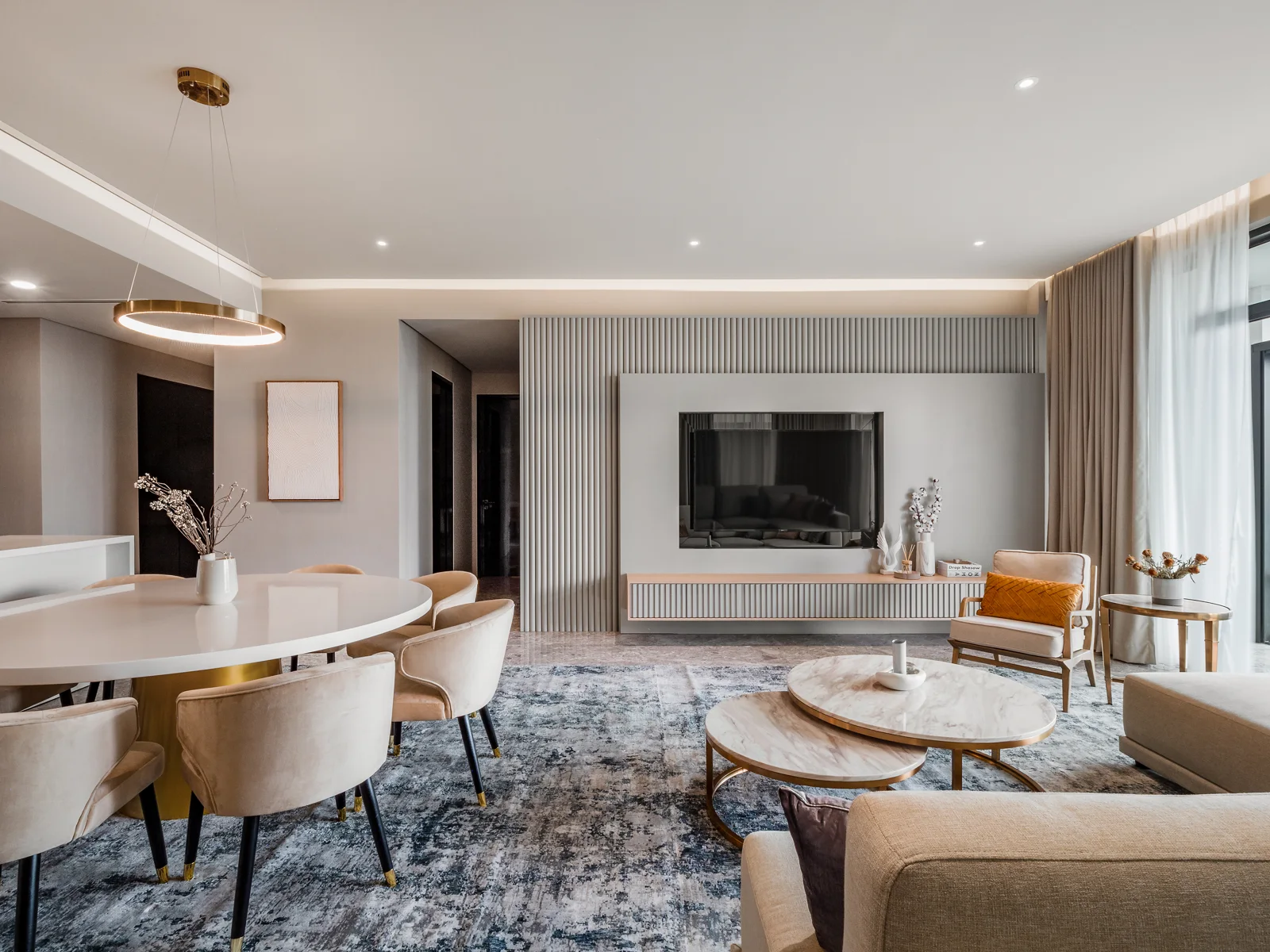
Open floor plans and open spaces
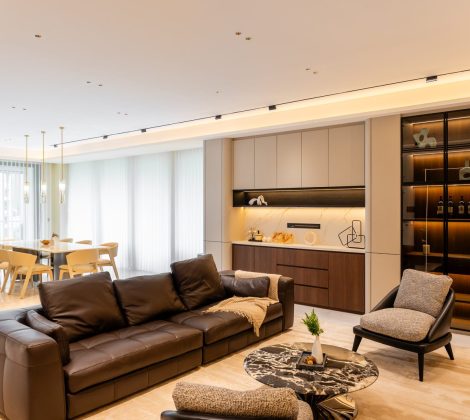
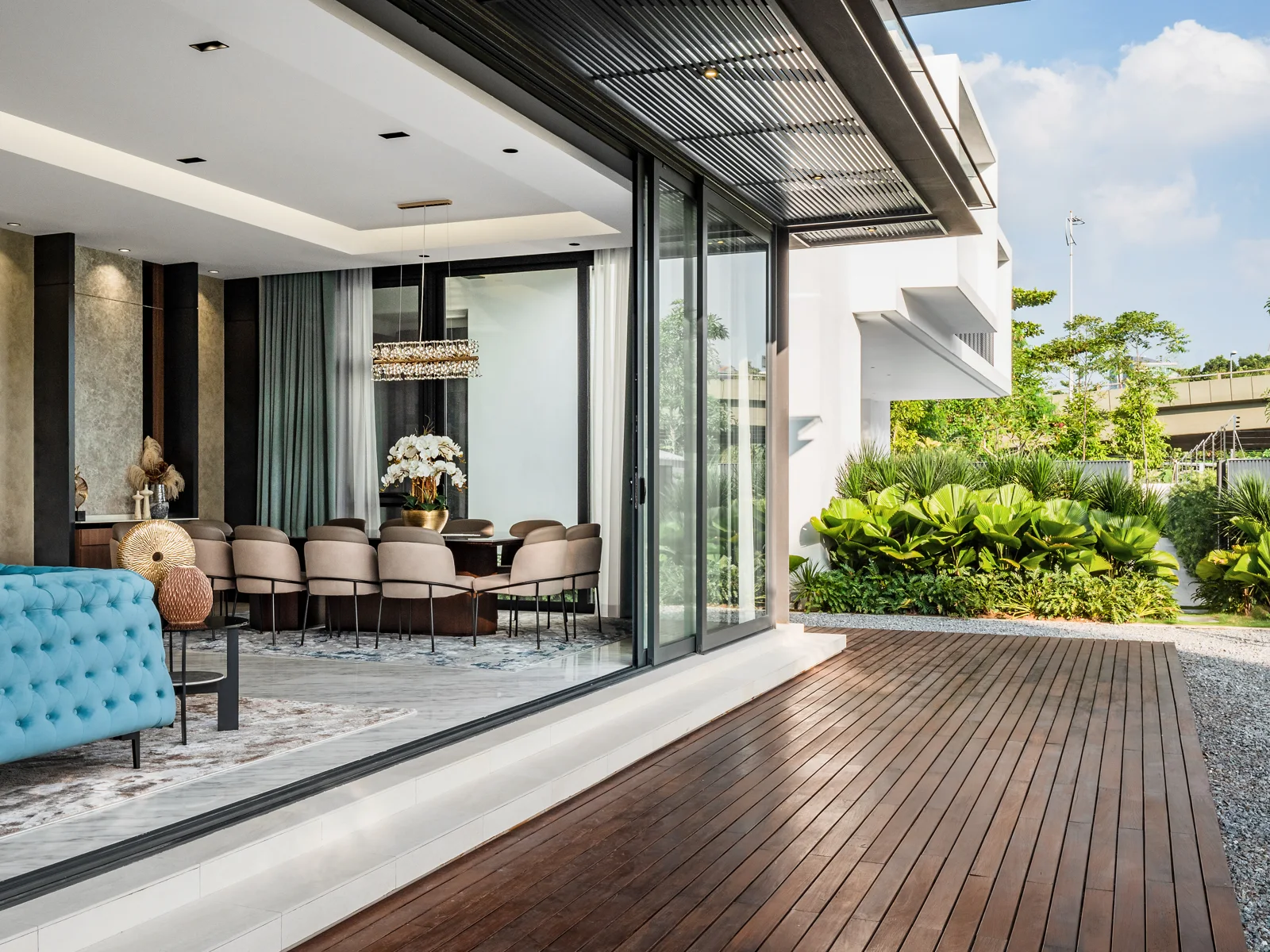
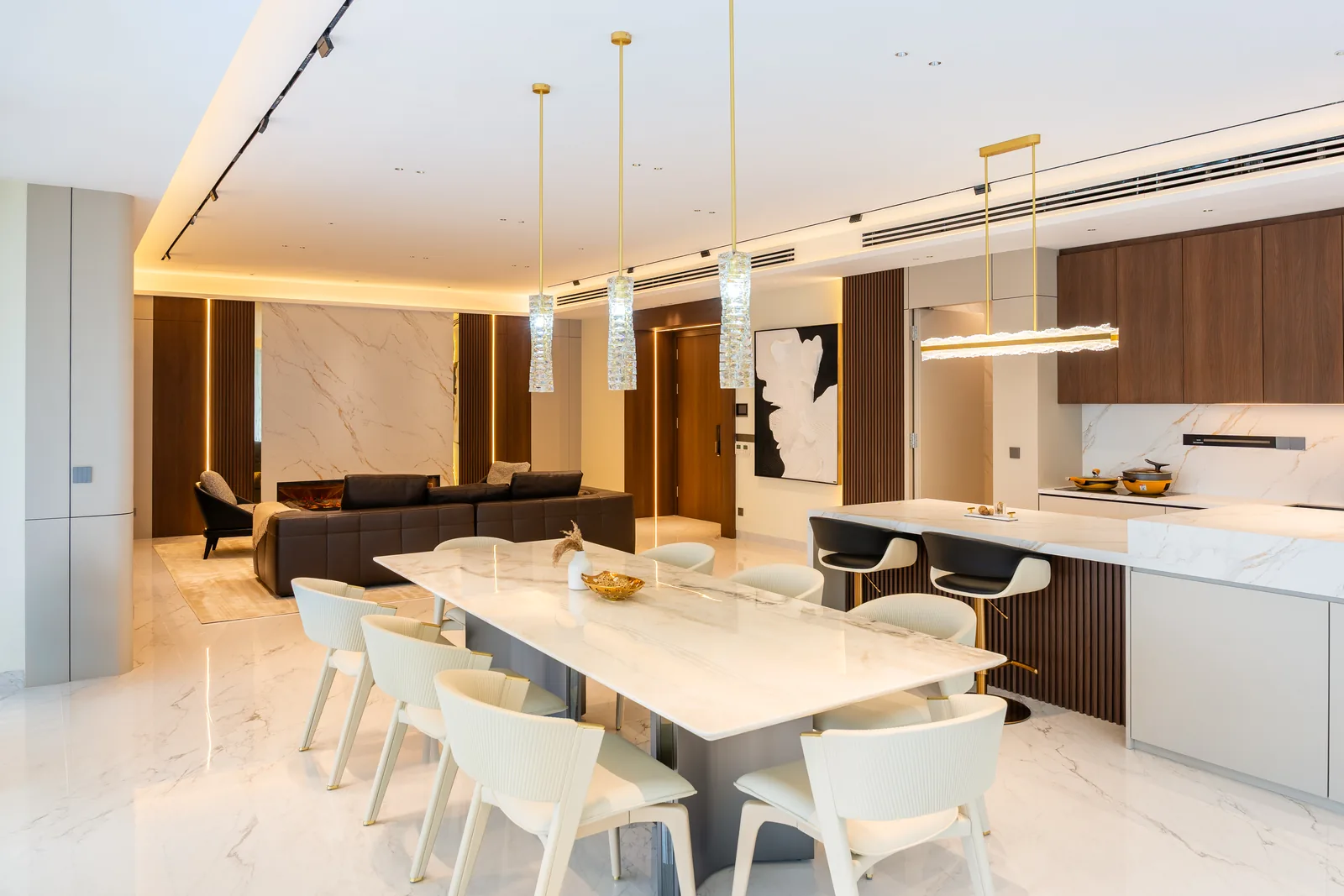
Contemporary interiors often feature open floor plans. In Malaysia that means one continuous living space from the entrance through the living room and dining area to a dry kitchen, with the wet kitchen closed off behind glass doors. Open spaces work because zones are defined by lighting, flooring and furniture rather than walls.
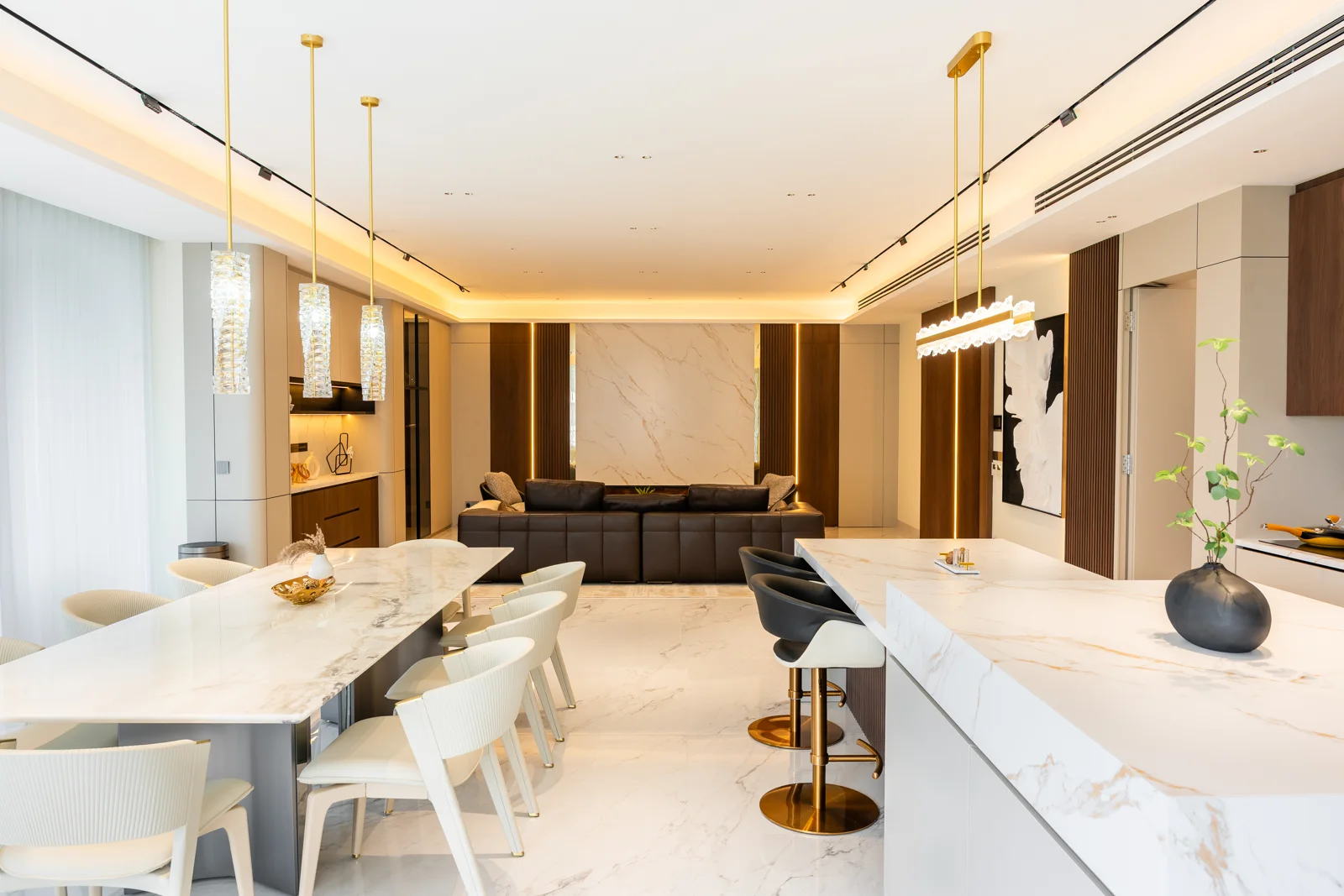
Natural light and large windows
Natural light is the most valuable material in any contemporary space. Large windows and glass walls stay unobstructed, curtains are sheer, and pale floors and white walls bounce light deep into the plan. In a high-rise it is what makes a 1,500-square-foot space feel twice its size.
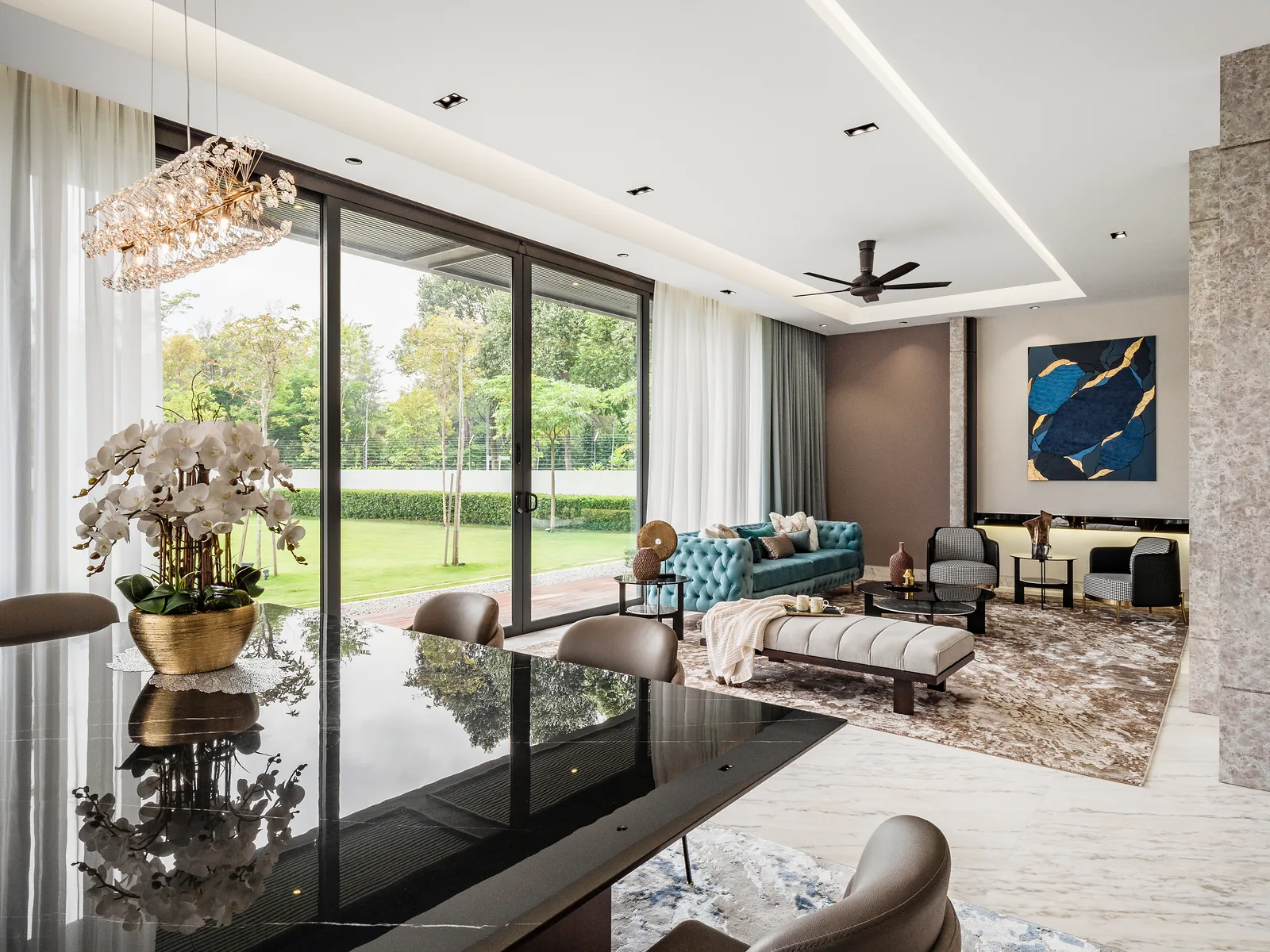
Natural materials: wood and stone
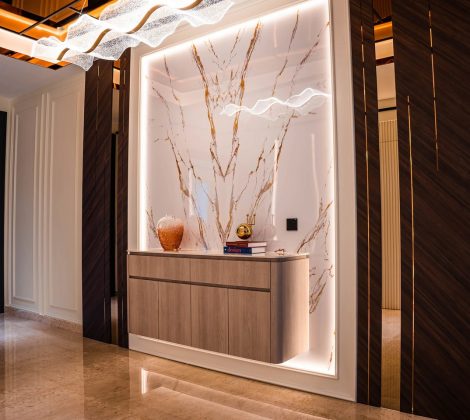
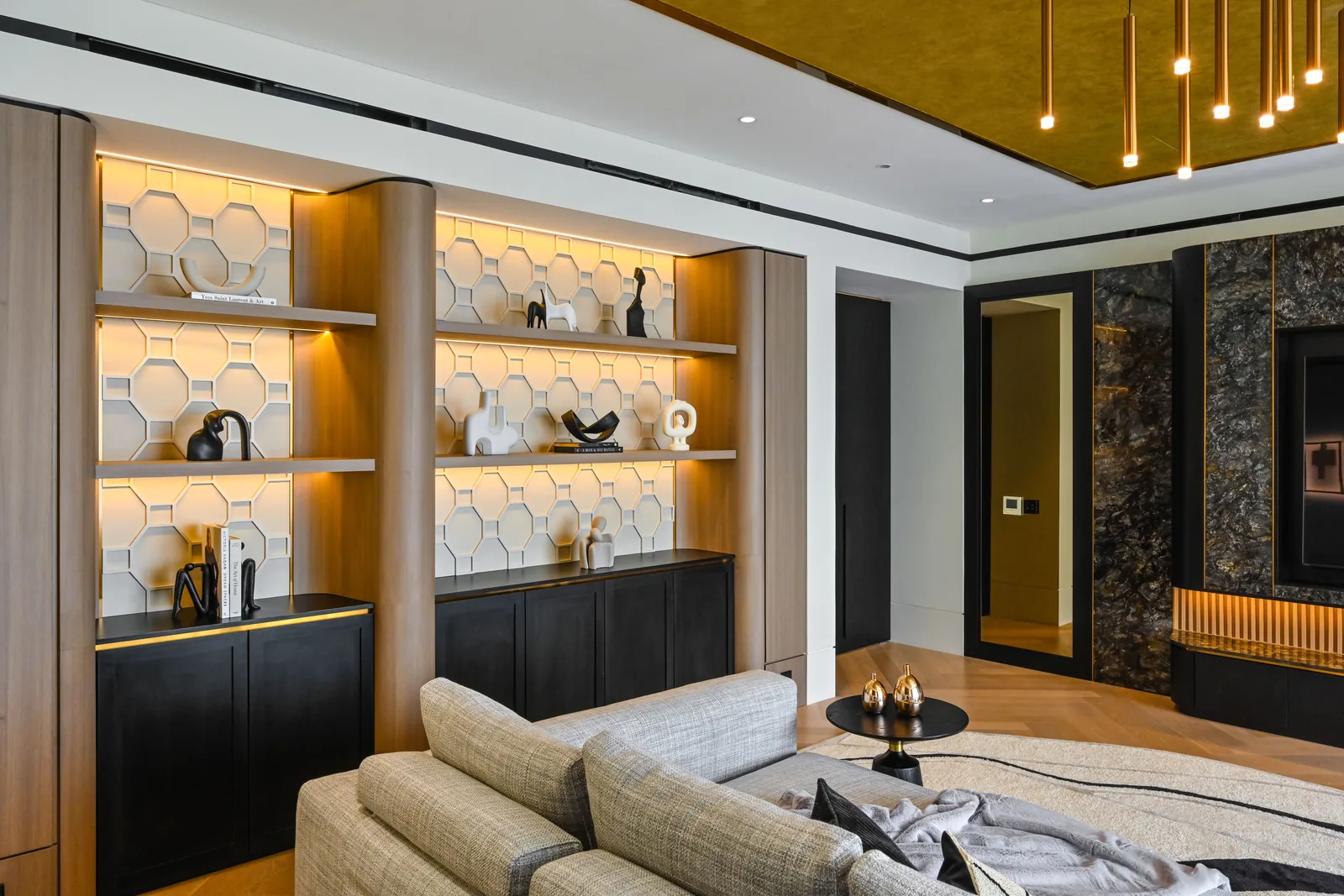
Natural materials like wood and stone add warmth to spaces that would otherwise read as cold. In contemporary interiors the stone is a book-matched marble or quartzite on one surface that earns it, and the wood is natural wood veneer or solid timber in walnut, oak or teak tones. Together they bring nature inside and a sense of warmth without a single plant.
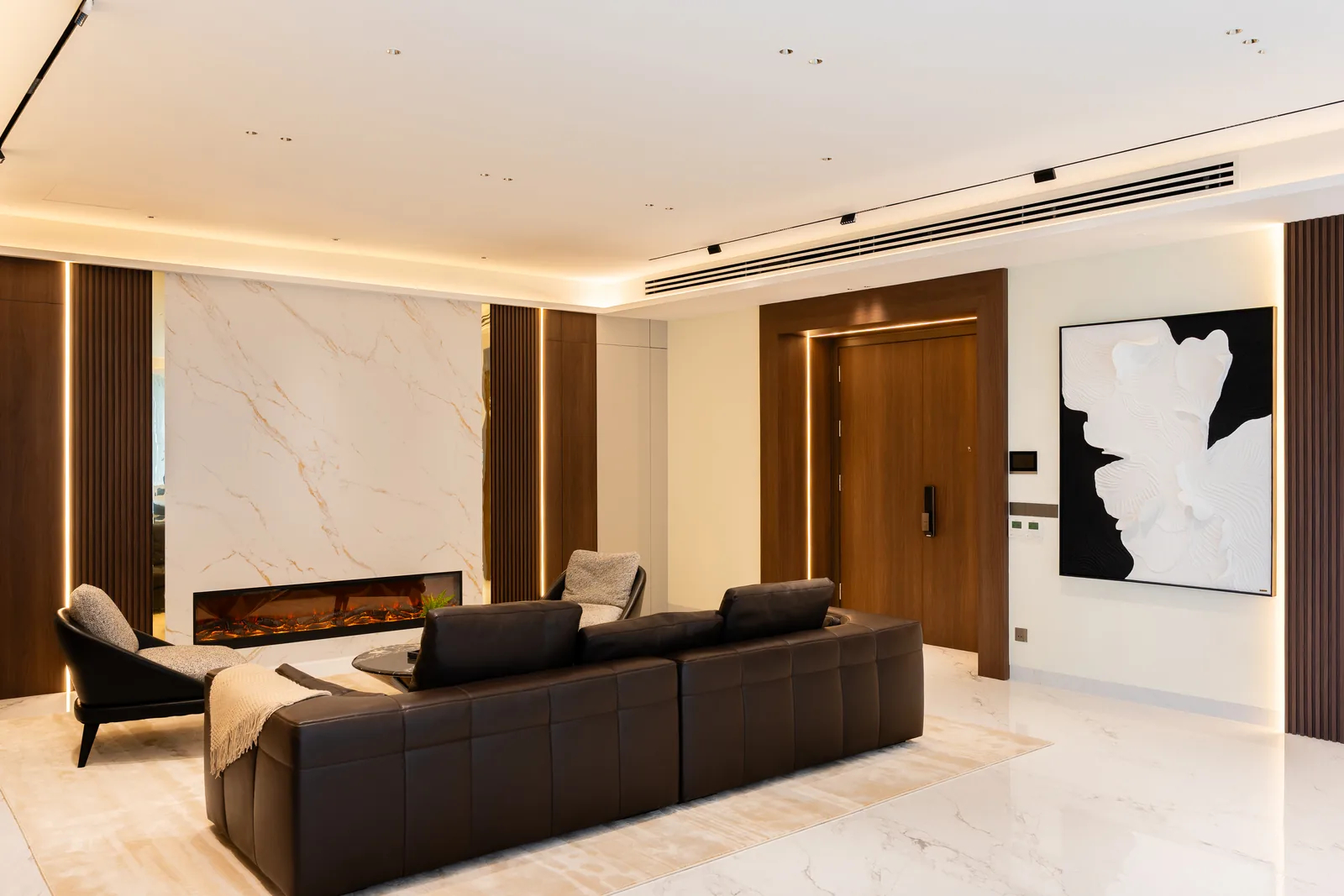
Neutral colour palettes with a base and accents
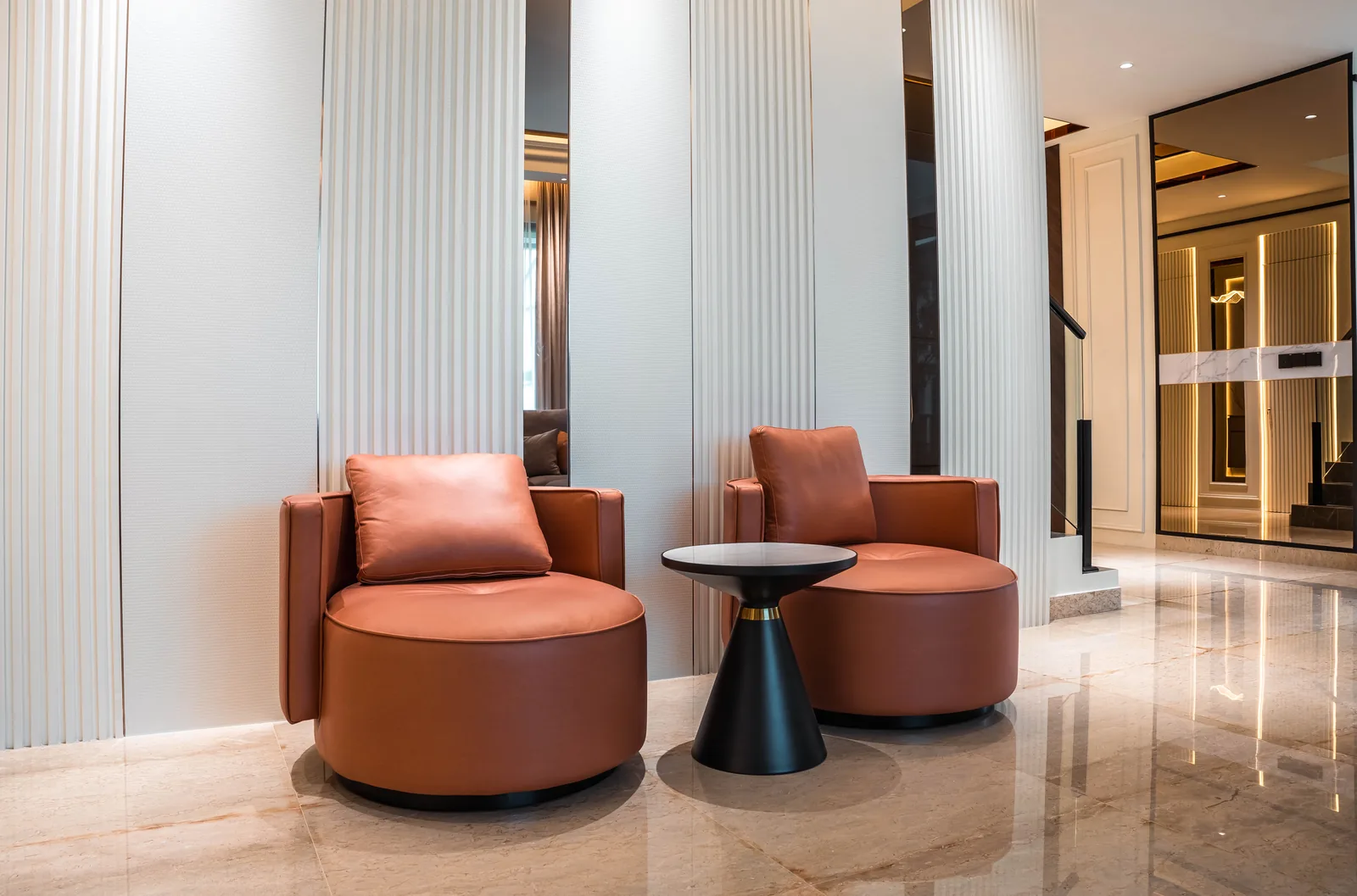
Neutral colour palettes are common in modern contemporary design because they let light, texture and form do the work. Designers build the palette in layers: a neutral base of warm white, greige or sand on the large surfaces; neutral tones in upholstery and rugs; then bolder tones as bold accents, a rust leather chair or a deep green ottoman, used sparingly enough to stay special.
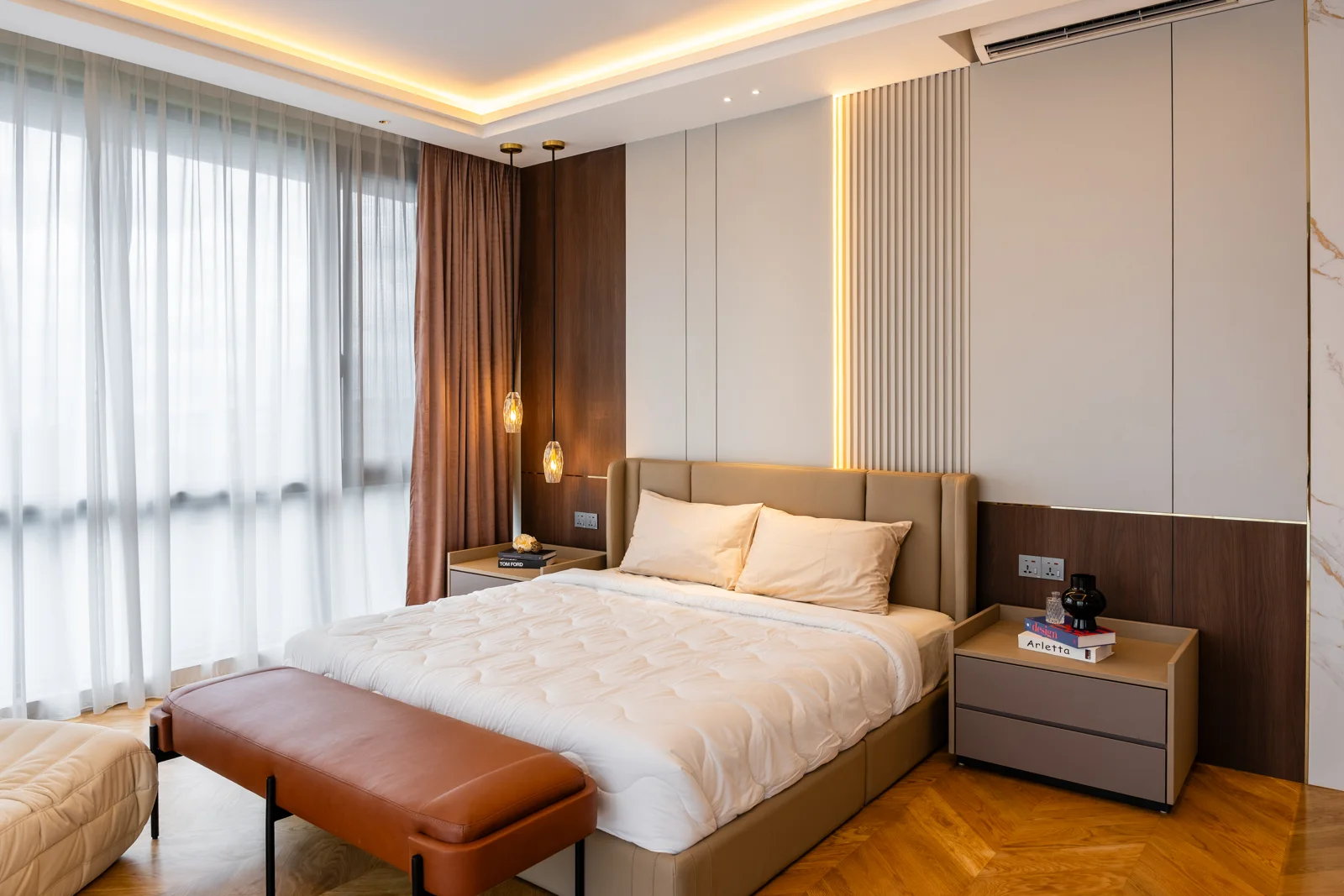
Statement lighting as functional art
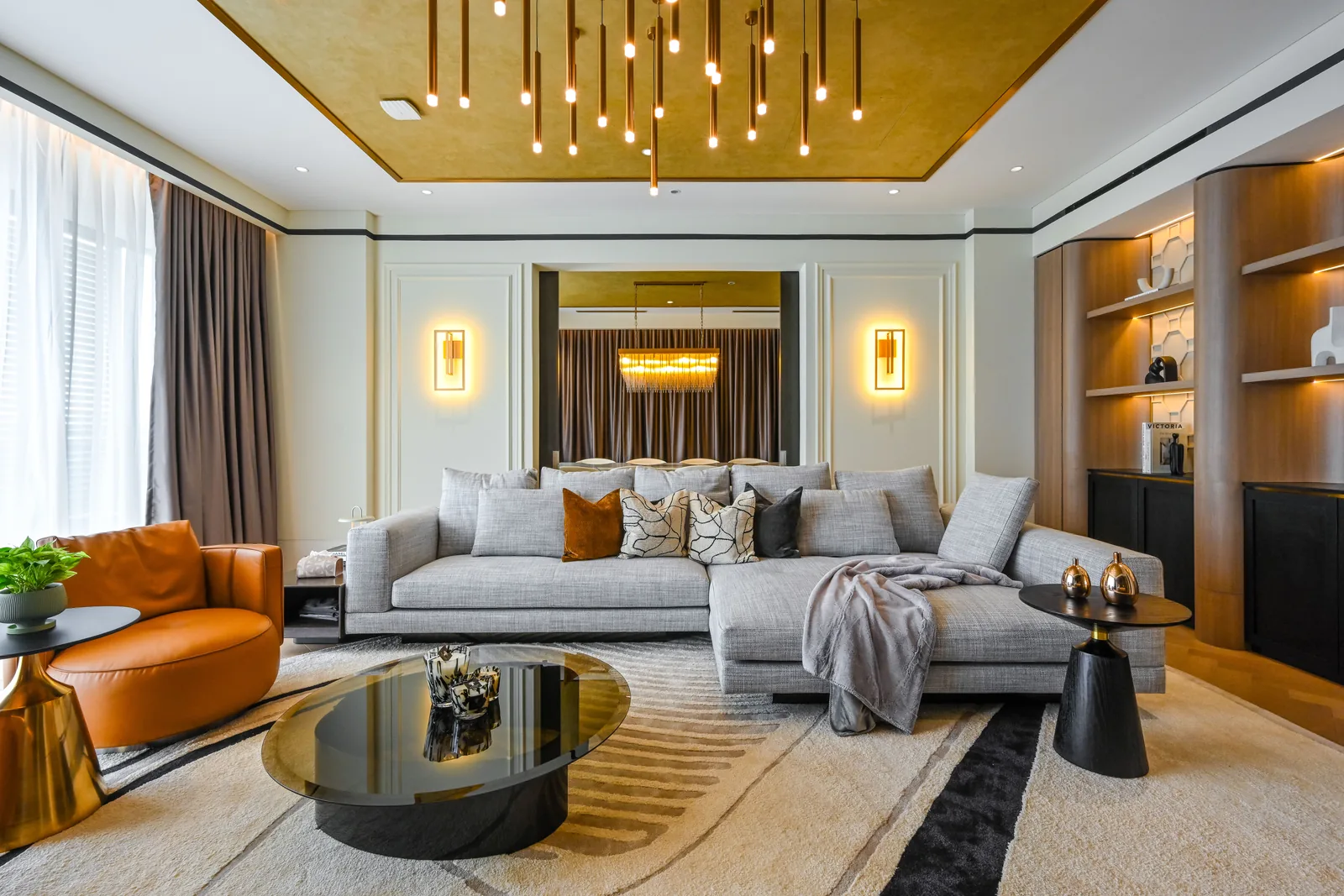
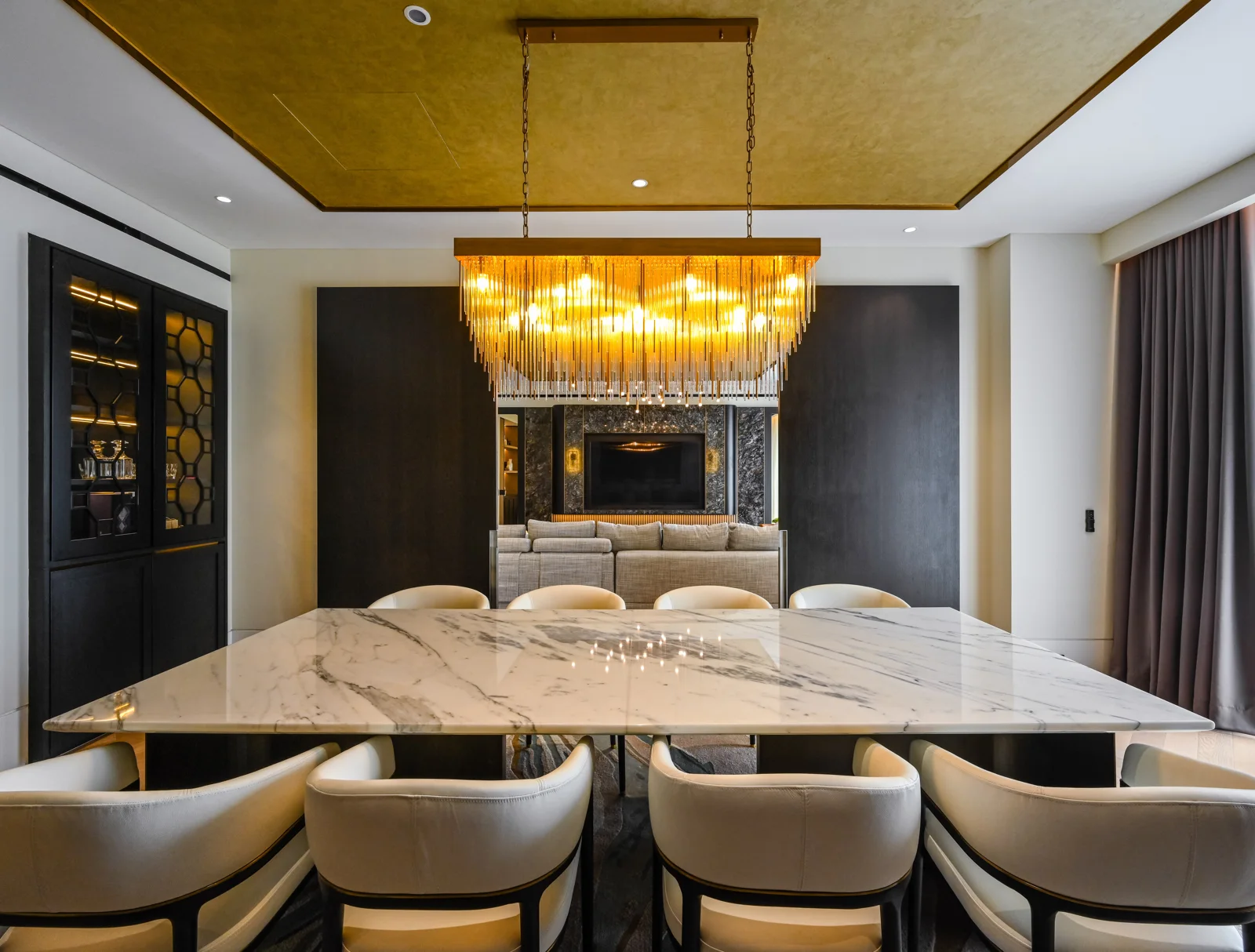
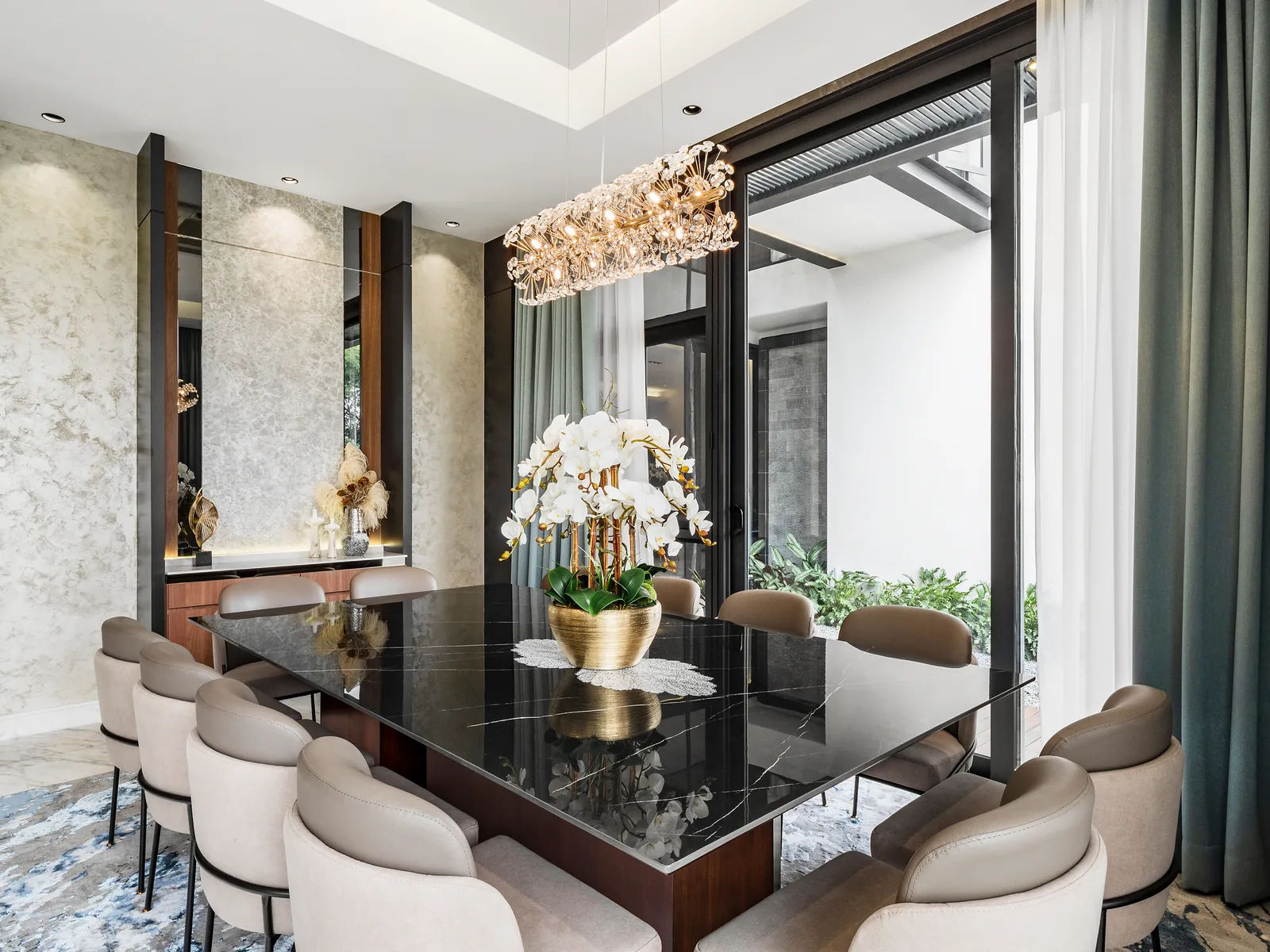
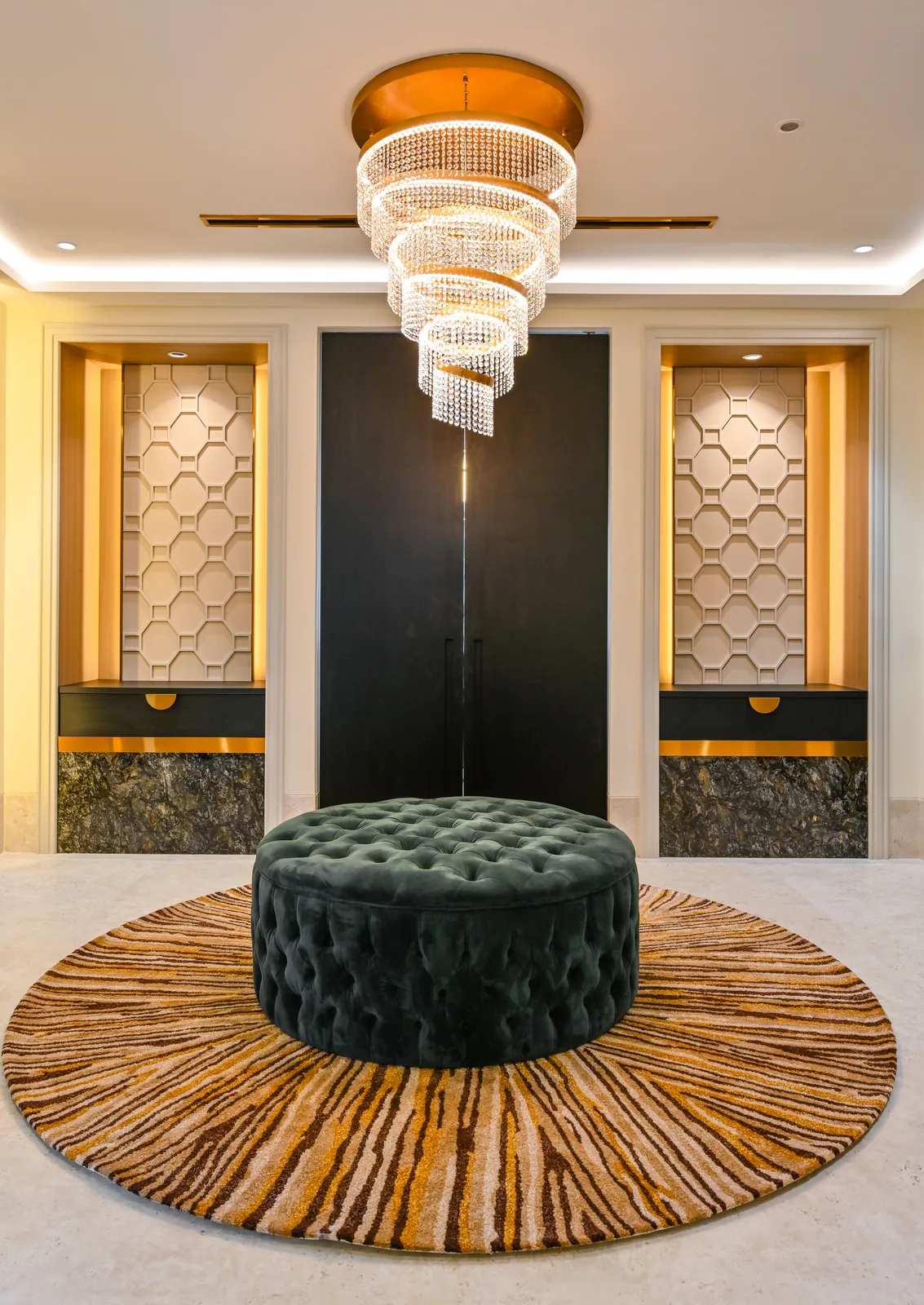
Lighting plays a crucial role in the overall aesthetic of contemporary spaces, and statement lighting serves as functional art in modern contemporary design: a sculptural pendant over the dining table, brass drops in the living room, a tiered chandelier in the foyer. Behind them sits the working layer of concealed coves and dimmable downlights.
Tactile, organic textures without clutter
Texture is how a neutral room avoids feeling flat. Tactile and organic materials add depth without creating clutter: a bouclé sofa against smooth stone, a fluted panel beside plain plaster. Layering different textures is important for visual interest in neutral palettes, and it is what makes contemporary interior design feel good to live in.
Designing it for Malaysia: climate, light and property type
Tropical daylight and humidity
Malaysian daylight is strong, high-angle and slightly warm, and it changes how colour behaves. A cool grey that looks sophisticated in a Scandinavian catalogue reads blue in a KL condominium at two in the afternoon. Humidity is the other constant: solid timber moves and untreated stone stains, so contemporary interior design is specified here with engineered timber, sealed stone and sintered surfaces.
In a condominium
In a condominium, modern contemporary interior design is a question of continuity: one floor finish end to end, one ceiling language, joinery wall to wall, and the open plan pushed as far as the management allows. Our condo interior design guide covers what a JMB will approve; the Four Seasons Place residence shows dining, kitchen and living room as one contemporary space.
In a landed home
In a landed home the design style opens up: a double-height living room, an indoor-outdoor deck, a stone feature wall at full scale, and a garden that becomes part of the colour through a glass wall onto greenery. Our Setia Marina One home in Cyberjaya and the Kelana Jaya bungalow are contemporary interiors built for exactly that; our bungalow design guide covers the architecture and our design-and-build service delivers both under one contract.
Modern contemporary interior design, room by room
Living room
The contemporary living room is the room this design style was made for: a low, curved or sectional sofa in a neutral fabric, oriented to the view or the television wall; a feature wall in stone or timber behind the screen as the focus; restraint everywhere else. The entrance deserves the same focus: a considered floor, one statement light, one sculptural object. Our living room design ideas explore the layouts.
Dining rooms
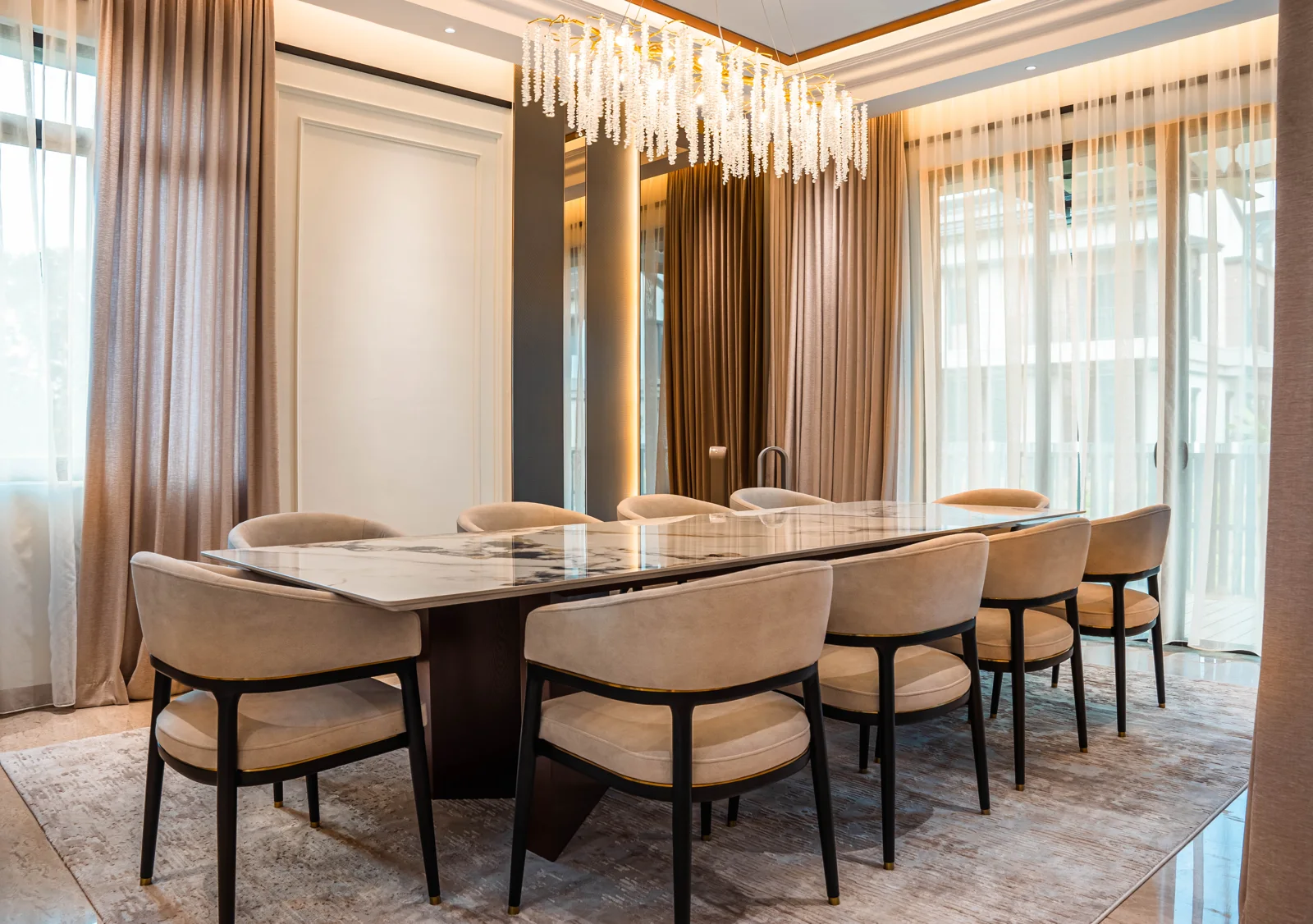
Dining rooms in modern contemporary interiors are built around two objects: the table and the light above it. A table with a sculptural base, chairs in bouclé, a pendant scaled to the table. In an open plan the dining area carries the boldest lighting, because it can be seen from every other space.
Kitchen
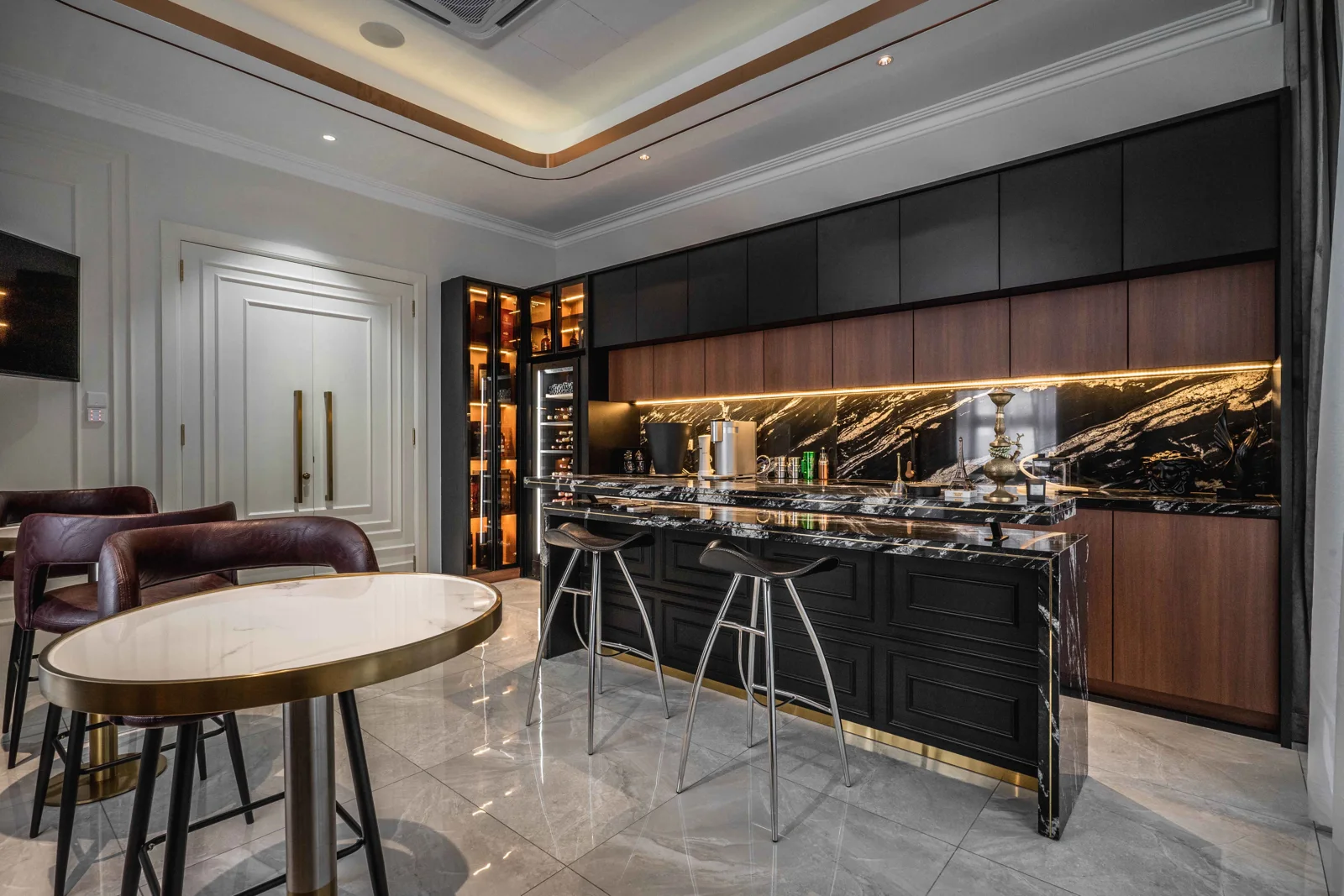
Bold kitchen designs, especially in black, are increasingly popular, and they suit the Malaysian dry-and-wet split: the dry kitchen is the showpiece, with dark matt cabinets, a stone island and concealed appliances from the Gaggenau or Miele tier, while the wet kitchen behind glass doors does the daily work. A bar in the same black joinery gives a landed home its playful touch. Our kitchen design guide covers the layouts.
Bedroom
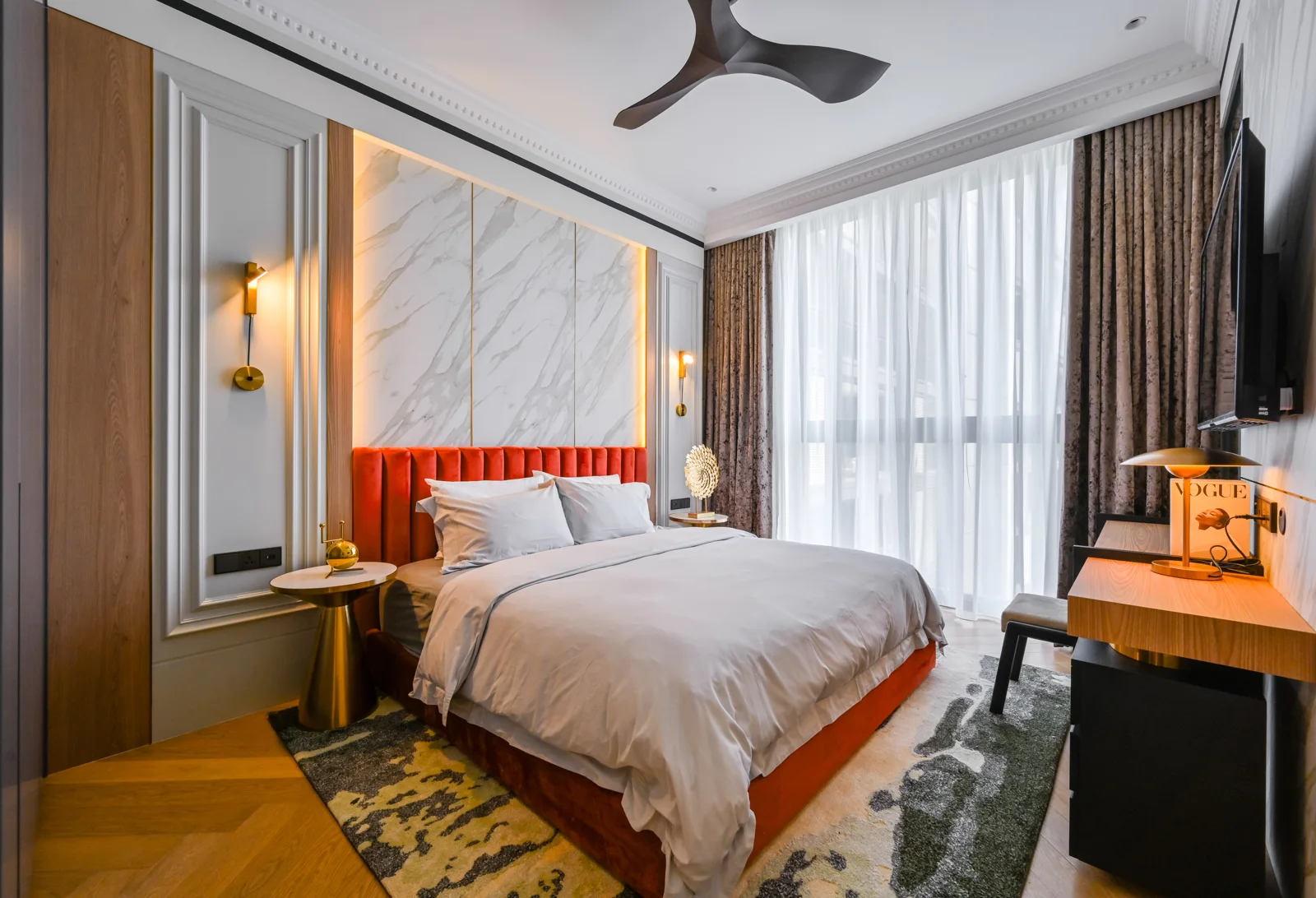
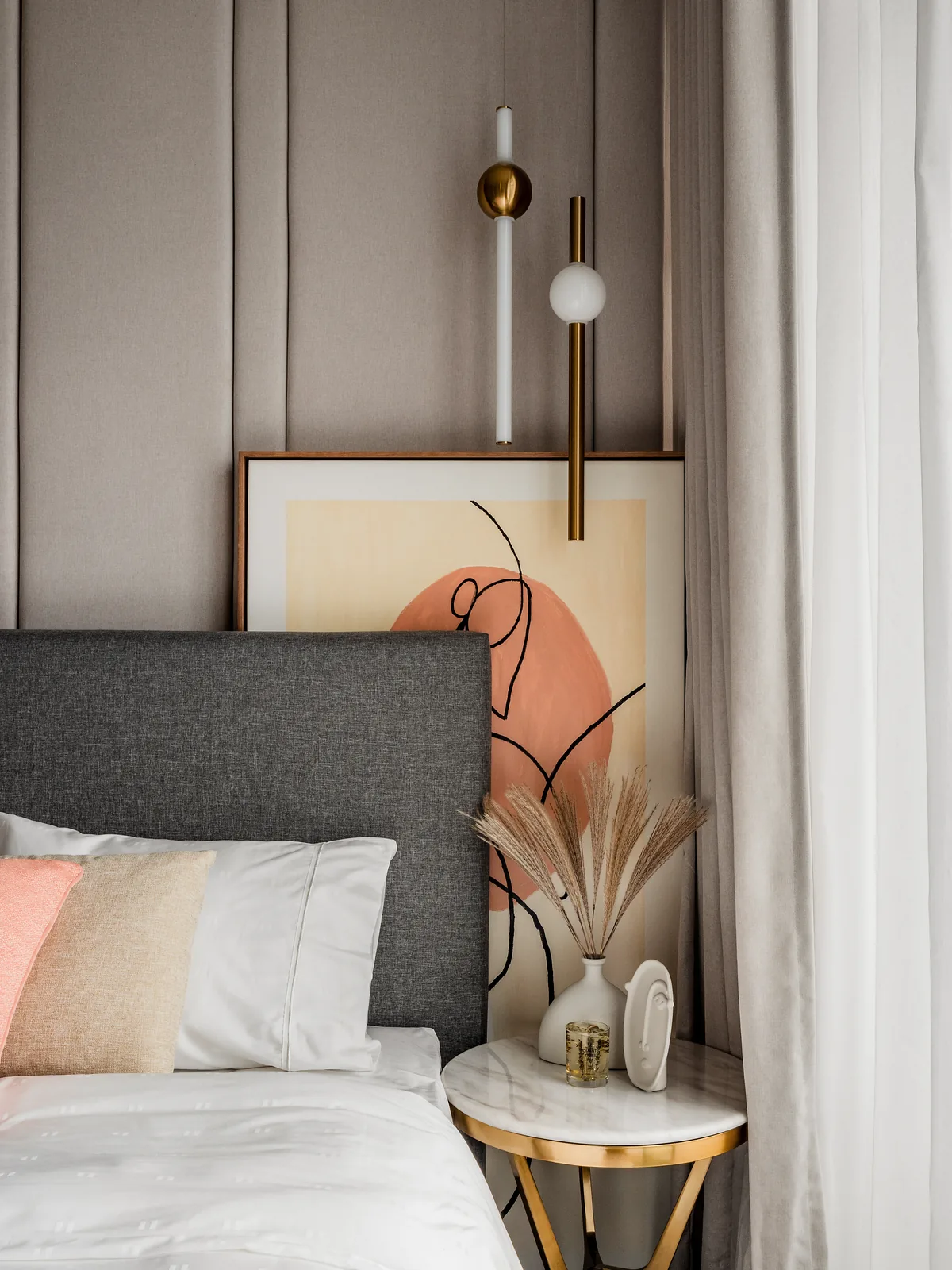
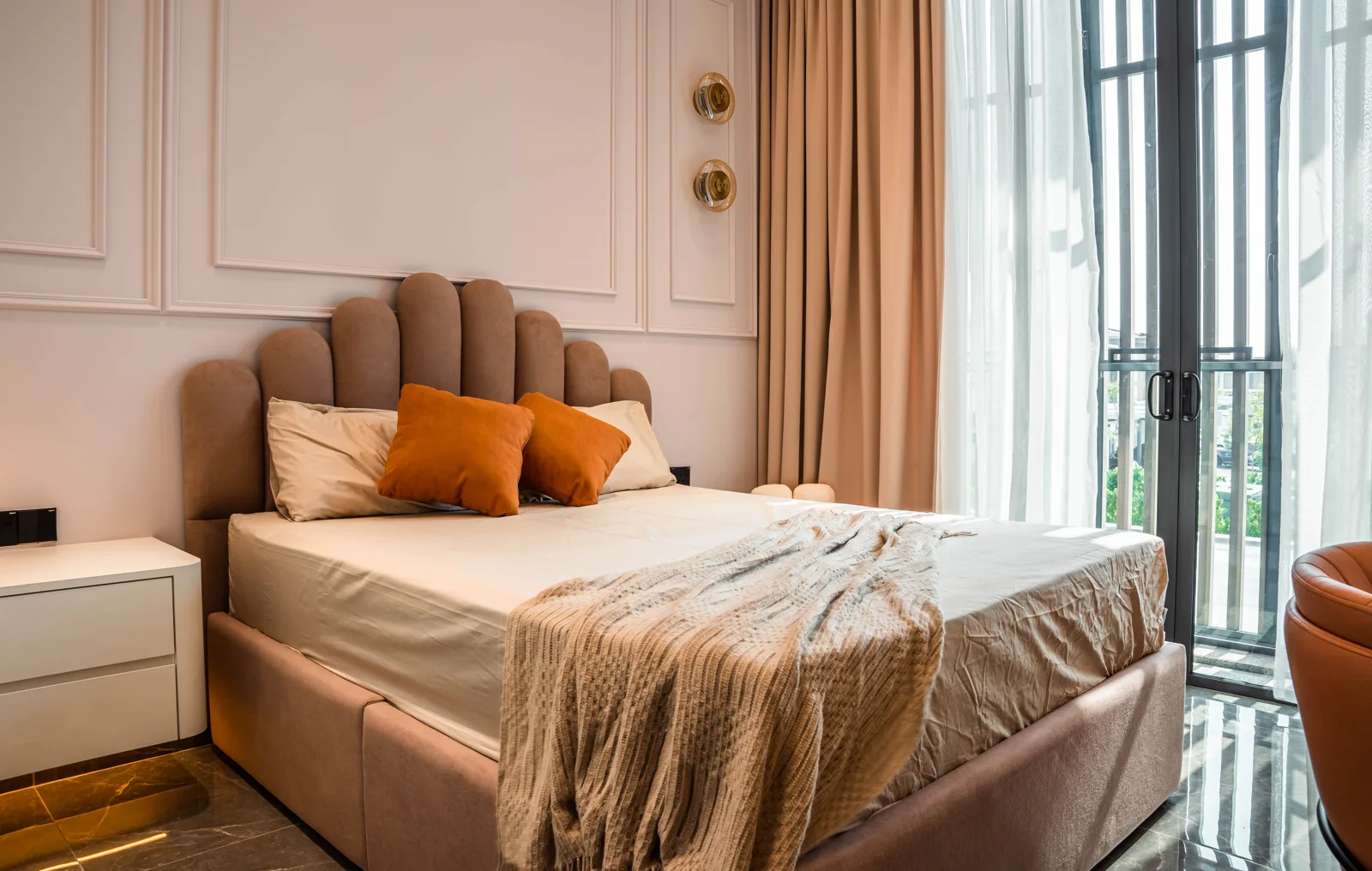
The bedroom is where contemporary interiors turn quiet: a headboard wall in marble, fluted timber or upholstered panels, bedside pendants instead of lamps, one accent colour as the focus, and joinery that disappears. Our bedroom design ideas and walk-in wardrobe guide cover the storage side.
Bathroom
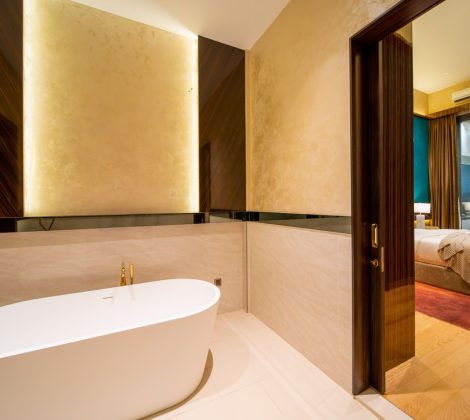
Contemporary bathrooms follow the kitchen's logic and create one calm space: one large-format stone or porcelain, frameless glass walk in showers, a floating vanity and brushed brass or matt black fittings from the Axor or TOTO tier as the metal accents. Our bathroom design ideas go further.
Colour in contemporary design
Neutral colours dominate contemporary interior design palettes, but neutral is not beige. The colour scheme has four registers, and designers use two or three in one space:
- The base: warm whites, greige, sand and stone on walls, ceilings and floors, the neutral base that bounces light and lets the materials speak.
- Earthy tones: terracotta, olive, ochre and clay are increasingly popular in upholstery, rugs and ceramics, and they share the warmth of Malaysian light.
- Monochrome: black and white schemes provide high contrast and visual drama on a kitchen, a bathroom or one wall.
- Pastels and bold colours: pastel colours add gentle vibrancy without overpowering spaces, and bold accent colours enhance minimalist contemporary designs when limited to one object.
Whatever the scheme and whichever of the styles you lean to, build it from a sample board under the home's own daylight and evening light, never from a screen. Our feature wall ideas show how one strong colour or material can carry a room.
The 2026 trends inside modern contemporary interiors
Contemporary design evolves, so the design style is a direction rather than one look. The current trends our designers see shaping contemporary interiors in Malaysia this year, and the inspiration behind most briefs we receive:
- Warm minimalism and rich earthy palettes: the discipline of minimalism in warmer colour and softer materials, popular trends because they survive tropical light.
- Curves: curved furniture shapes are trending in contemporary design; sofas, round tables and arched joinery soften a room of straight lines.
- Biophilic design: natural elements inside, from a planted courtyard to timber, stone and daylight, so nature is part of the room.
- Oversized artwork enhances contemporary interior spaces: one large canvas creates a single focus where a wall of small objects competes.
- Bold kitchens: black and dark timber dry kitchens with stone islands, the boldest of the current styles.
- Innovative technology that disappears: lighting scenes, motorised blinds and climate control from the Lutron or KNX tier, felt and never seen.
Modern contemporary vs minimalist, Japandi and modern luxury
Because contemporary design borrows from various styles, the design style is confused with its neighbours. The distinctions between these design styles are practical:
- Of the neighbouring styles, minimalist interior design removes the most. A minimalist home keeps the palette and the furniture count lower; modern contemporary interiors allow more texture, colour and personality.
- Japandi and Scandinavian styles are lighter and more rustic; our guide to Scandinavian versus minimalism explains that family.
- Modern luxury pushes richer materials, more gold and more drama, the version in our modern luxury penthouse guide. Modern contemporary interior design sits one step calmer.
All of these styles share the same bones; if you are drawn to more than one, modern contemporary is usually the right home. Our home interior design guide walks through the styles Malaysian homes carry best, and our gallery is the place to explore them for inspiration.
Mistakes to avoid
- Copying a northern-hemisphere palette. Cool greys and pure whites go flat under Malaysian daylight; contemporary interiors here are tested in the room itself.
- Buying the trend, not the base. Curves, terracotta and black kitchens belong in the changeable layer; floors, joinery and stone should outlast the styles that come and go.
- Under-lighting. One grid of downlights kills the look; plan three layers and fit dimmers from day one.
- Letting the furniture arrive last. Furniture scale decides contemporary interiors, so designers draw pieces from houses like Minotti or Poliform into the 3D before the joinery is confirmed.
How our designers create a modern contemporary interior
At Blaine Robert Design the style begins with how you live, not with a mood board. Our designers plan the space, design the lighting, specify materials that behave in your building, and show the space in 3D before anything is ordered. Design, joinery and construction sit under one contract, which keeps the contemporary interiors we create clean: the shadow gaps line up because the same team drew and built them.
The Aira Residence home in Damansara Heights, photographed throughout this guide, is our most complete expression of modern contemporary interior design and contemporary living: warm neutrals, curved leather, a stone television wall, a gold-leaf ceiling and a dining pendant the apartment is arranged around, elegance built for everyday life. Our designers create the same balance in Desa ParkCity, Damansara Heights, Cyberjaya and across the Klang Valley.
Frequently asked questions
What is modern contemporary interior design?
A design style that combines the clean lines, simplicity and open floor plans of modern interior design with the warmer, ever-evolving elements of contemporary interior design: neutral colour palettes, natural wood and stone, curved furniture, layered light and a few bold accents.
What is the difference between modern and contemporary design?
Modern design is a fixed style from the early-to-mid 20th century with a set vocabulary of forms and materials. Contemporary design is whatever is current; it began to take shape in the 1970s and borrows from many styles. Modern contemporary interior design blends the two.
How much does a modern contemporary interior cost in Malaysia?
It depends on the property, the scope and the materials rather than on the style. Our interior design cost guide explains what drives the number, and we confirm a figure only after a site visit.
What is modern contemporary house design?
The same principles applied to the building: flat or low-pitched roofs, boxed volumes, large windows, a restrained palette of render, timber and stone, and an interior planned as one composition with the exterior, usually delivered as a design-and-build project.
Modern contemporary interior design rewards a studio that can hold two things at once: the discipline to keep the lines clean and the judgement to know which of the current trends in contemporary interiors will still look right in ten years. If that balance of elegance and practical sense is what you want for your life in Kuala Lumpur, and the contemporary interiors here are the inspiration, talk to us about your home.