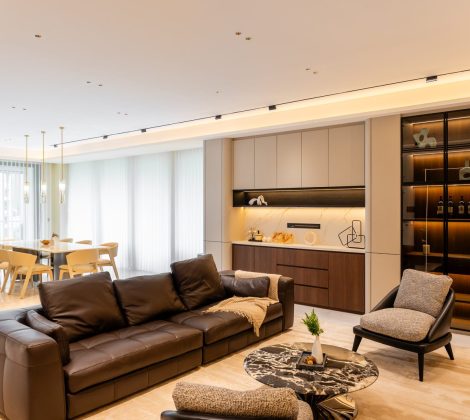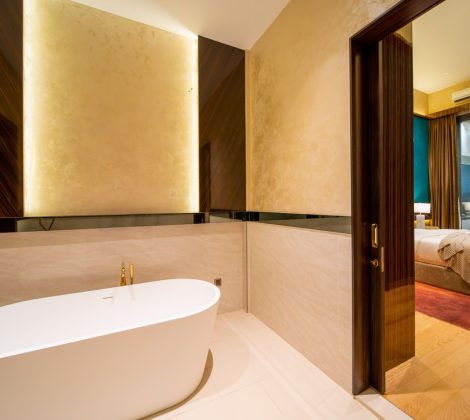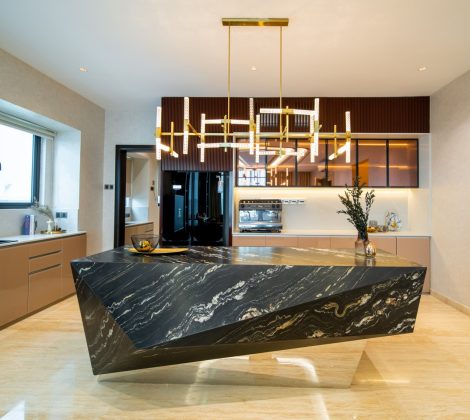

Home interior design in Malaysia has its own rules — a tropical climate that punishes the wrong materials, homes that range from 600 sq ft condominiums to multi-generational bungalows, and a multicultural design language you will not find anywhere else. This guide covers the styles, layouts, materials, lighting and costs that shape Malaysian homes today, drawn from our work as a Kuala Lumpur design-and-build studio — so you can plan your own project with real information rather than guesswork.
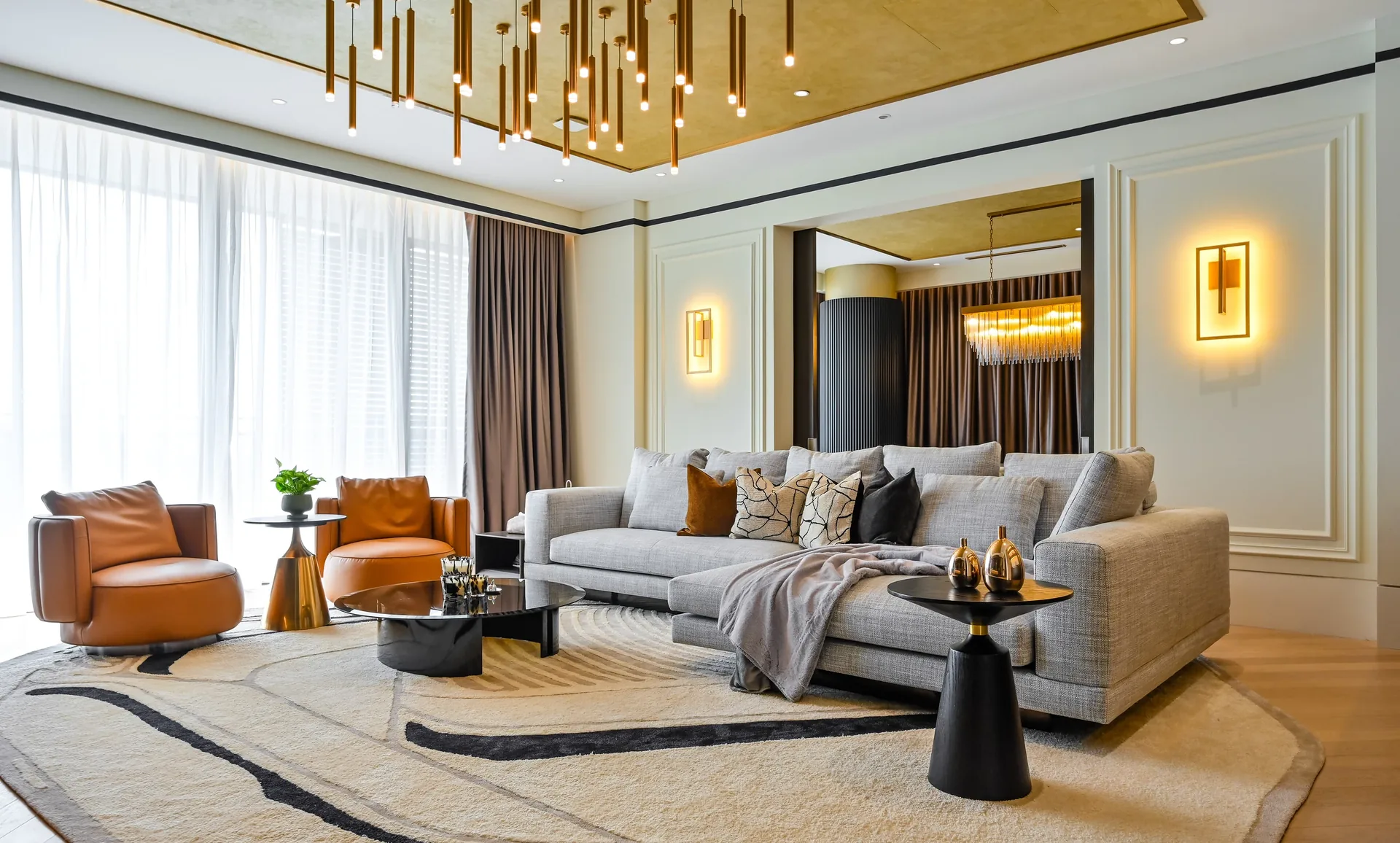
How to Approach Interior Design for Your Home
Every well-designed home starts the same way: not with paint colors or furniture, but with an honest reading of how you live. Before any designers work begins, walk your rooms and note what functions each space actually serves, where daily traffic flows, and what the current layout gets wrong. Interior design is decision-making in the right order — and the order matters more than most people expect.
Six simple steps to start
- Define how each room is used — and by whom. A bedroom that doubles as a study has different must haves than one that only sleeps.
- Measure accurately. Rooms in Malaysian homes are often smaller than owners estimate, and furniture that is even 10cm too large disrupts traffic flow for years. Scale is the first discipline of layout.
- Set your total budget at the start — the full figure, not room by room — and hold back an additional 10–20% as a contingency fund for the costs no one predicts. This is the single most repeated piece of advice among experienced interior designers, and the most ignored.
- Choose your interior style before buying anything. A consistent design style is the foundation every furniture piece, material palette and lighting decision rests on.
- Plan lighting early — especially in a renovation, while walls are open and wiring is easy to move. Lighting added last always looks added last.
- Decide who executes: yourself, an interior designer, or a design and build firm that carries the entire home from concept to construction under one roof.
The 3-5-7 rule, briefly
A styling shorthand many designers use: group decorative objects in odd numbers — threes, fives, sevens — because odd groupings read as natural and curated where even ones read as staged. It is worth noting this is a finishing principle, not a planning one; it makes a console table look right, it will not rescue a poor layout. Get space, light and storage correct first, then let the 3-5-7 rule polish the surfaces.
Key takeaways
- Read your routines before choosing a style — function first, aesthetics second.
- Set the full project budget upfront and reserve 10–20% contingency.
- Plan lighting and storage while walls are open, not after.
The Interior Design Styles Malaysian Homes Carry Best
Style is the vocabulary of a home, and Malaysian homes speak several fluently. Malaysian interiors often reflect a multicultural design aesthetic — Malay, Chinese, Indian and colonial influences layered over decades — which is why the strongest local work rarely copies a Pinterest board wholesale. These are the interior design styles that dominate serious Malaysian projects today, and what each asks of your space.
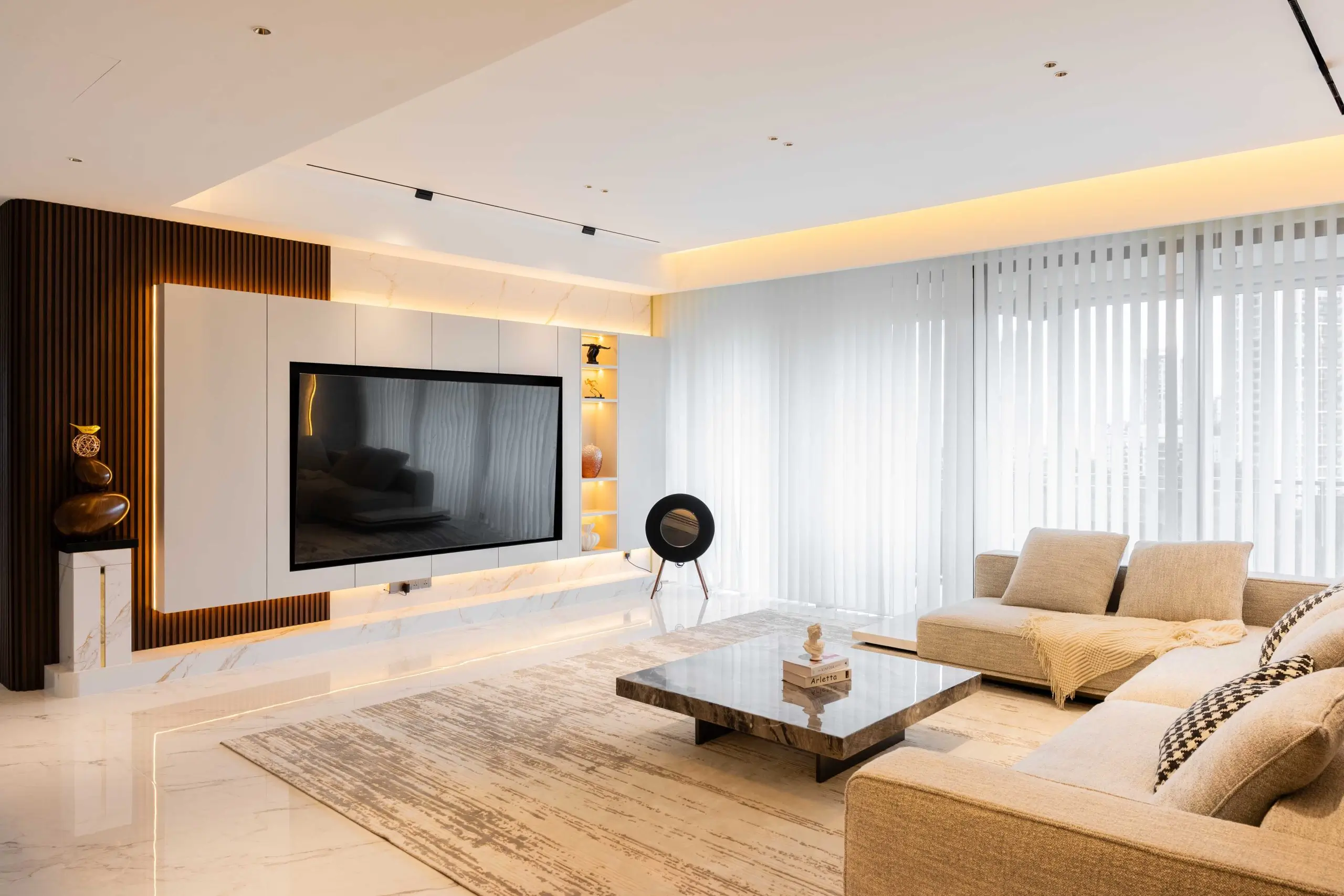
Minimalist
Minimalist interiors are the dominant style in Malaysian condos, and for practical reasons: clean lines and disciplined storage make 600 to 1,200 square feet feel composed rather than crowded. True minimalism is not emptiness — it is concealed storage doing silent work, a restrained material palette, and every visible object earning its place. It is also the most unforgiving style: with nothing to hide behind, workmanship and alignment must be exact.
Japandi
Japandi — the meeting of Japanese restraint and Scandinavian warmth — is widely reported as the fastest-growing design style in Malaysia. It suits our light beautifully: natural wood in pale tones, low-slung furniture, warm neutrals, and tactile textures in linen and paper. Of the two styles it blends, the Japanese half contributes stillness and the Scandinavian half contributes comfort; the result feels serene without feeling cold.
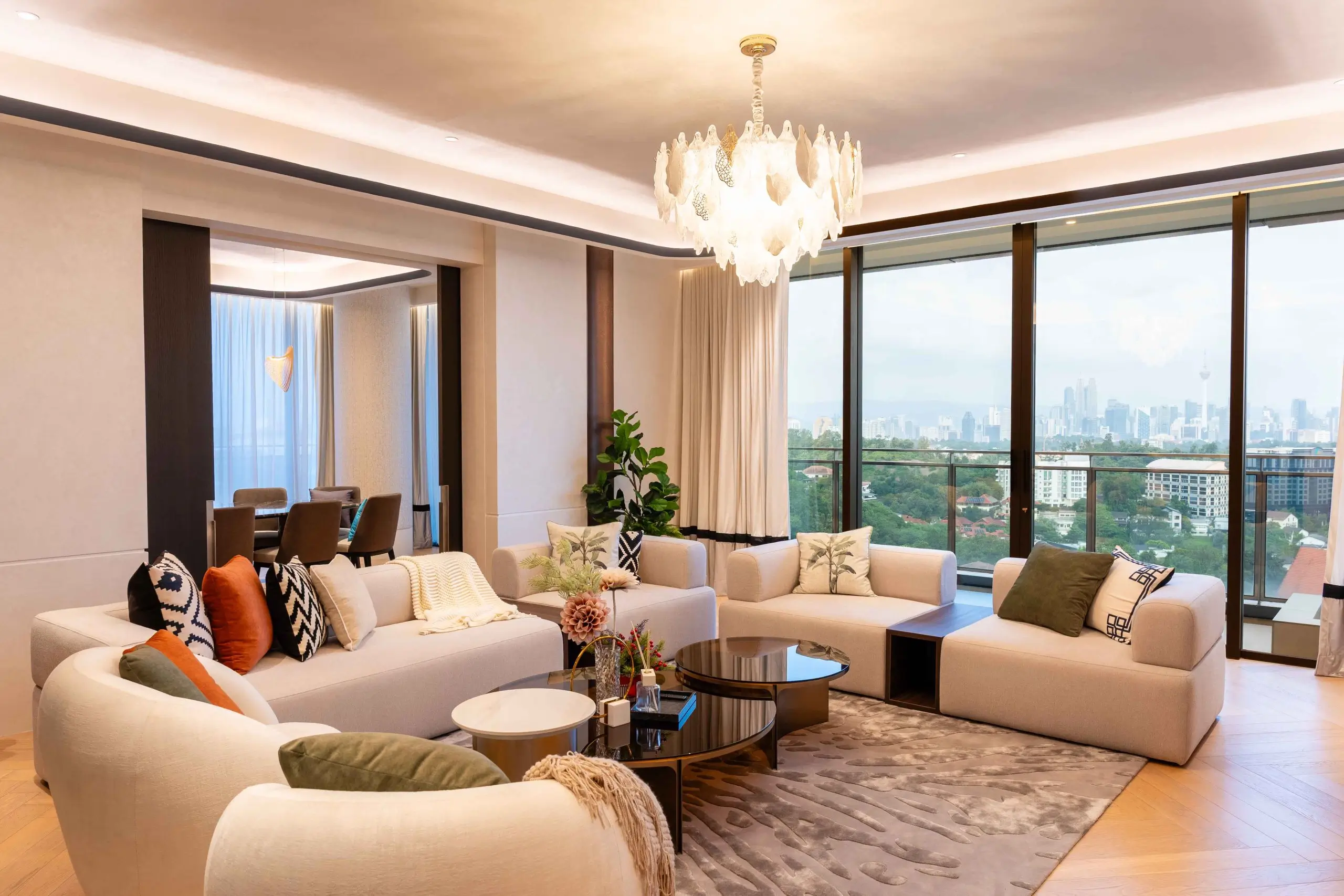
Contemporary
Contemporary design is a moving target by definition — it reflects the present. Right now that means curved furniture forms, warm palettes over stark whites, and a softer take on open plan layouts. Contemporary interiors work across nearly every Malaysian property type, which is why homeowners who are consistently drawn to more than one look often land here: it absorbs influences without collapsing into clutter.
Industrial
Industrial style uses raw materials and exposed structural elements — bare concrete, blackened steel, visible services — and turns them into the aesthetic itself. In Malaysia it appears most often in lofts, shophouse conversions and bachelor units. It is a committed look: done halfway it reads unfinished, done fully it has more character per square foot than almost any other direction.
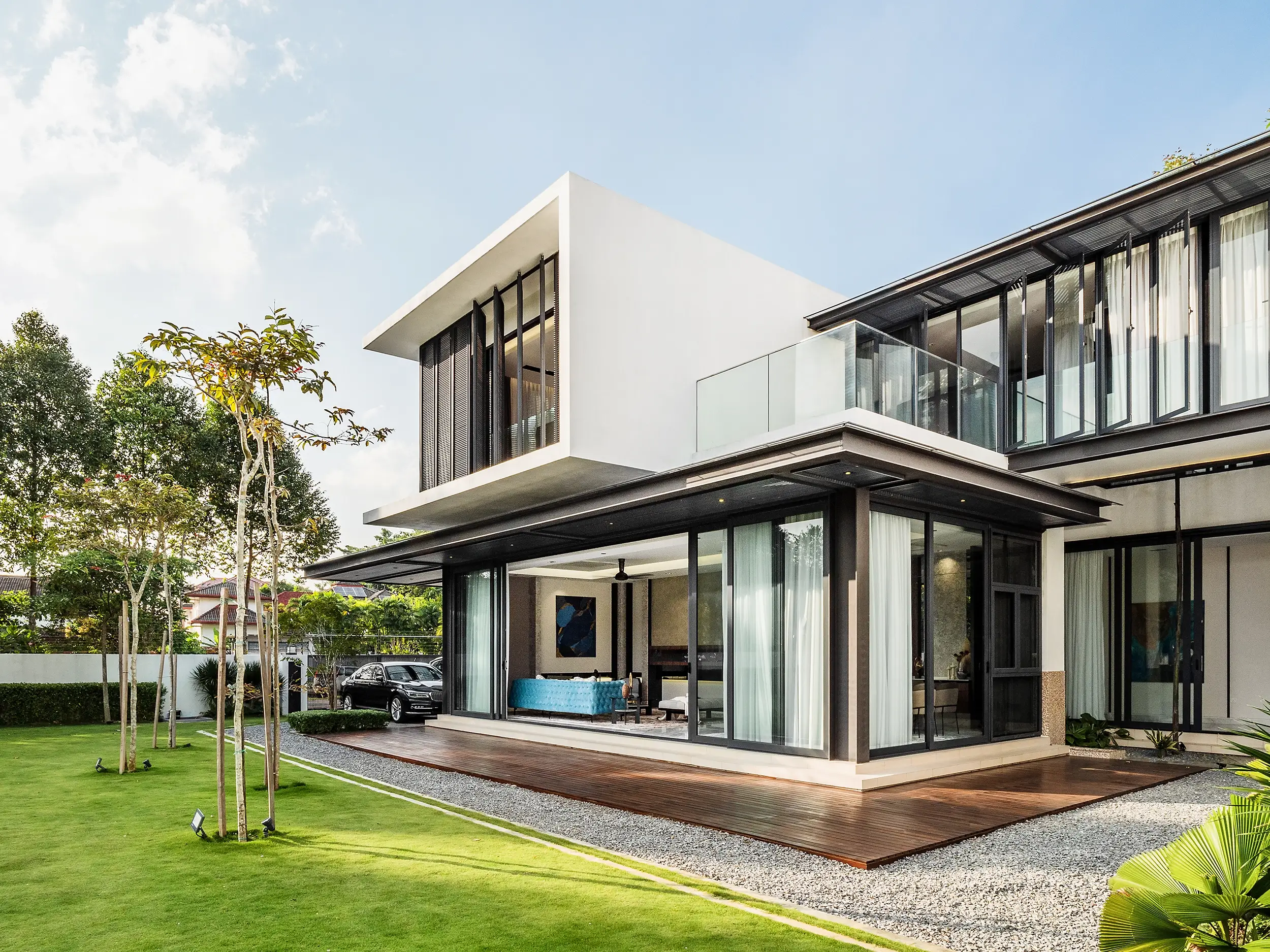
Tropical biophilic
Tropical biophilic design incorporates natural materials and indoor plants to connect the interior to the landscape — rattan, bamboo, timber, stone, and greenery placed where sightlines actually land. In a climate like ours, biophilic design is less a trend than a homecoming: deep overhangs, cross-ventilation and garden views were how Malaysian houses worked long before air-conditioning. Modern versions keep the connection and add comfort.
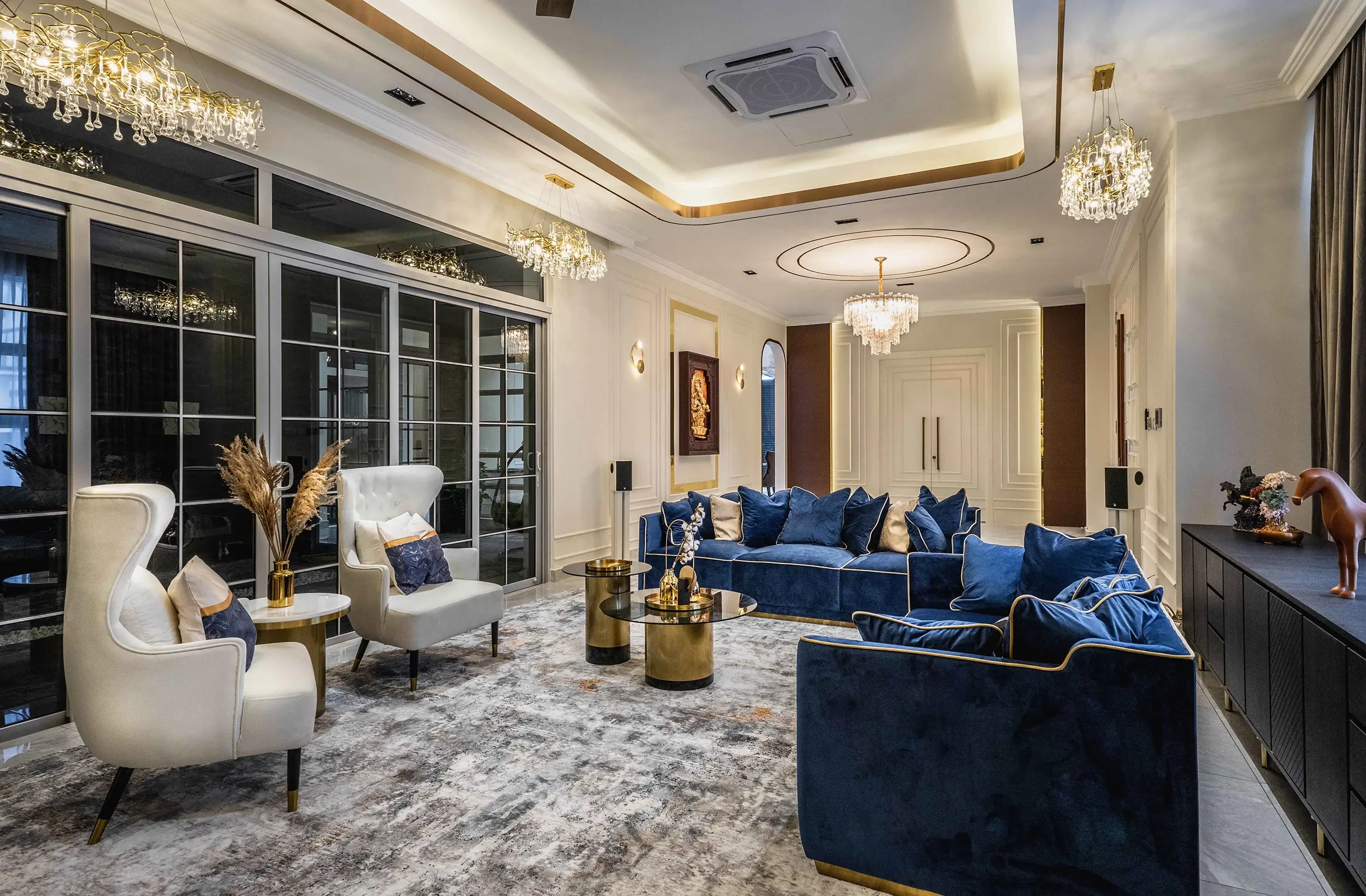
Transitional
Transitional style blends modern and traditional design elements — classic proportions carried by current materials and a quieter palette. It is the style we recommend most often for multi-generational Malaysian homes, because it lets a house honour the furniture, art and memories of one generation while serving the daily life of the next.
Where Malaysian interiors are heading in 2026
Toward warmth, and away from showroom cool. Contemporary interiors are softening: curved silhouettes, deeper earth tones over flat greys, natural wood in richer finishes, and paint colors chosen to flatter tropical light rather than fight it. Smart home technology keeps disappearing into the walls, biophilic ideas keep moving from feature to default, and the sharpest trend of all is restraint — interiors that create calm because their owners finally stopped adding. Treat trends as a direction of travel, not instructions; the interiors that age best borrow selectively and answer to the house first.
Key takeaways
- Minimalist rules the condo market; Japandi is the fastest riser; tropical biophilic is the most naturally Malaysian.
- Choose the style that fits your architecture and climate exposure, not the algorithm.
- Commit — every style fails when applied halfway.
Designing by Property Type: Condo, Terrace, Bungalow
Property type sets the constraints before taste enters the room. The same design ideas that transform a bungalow can suffocate a 700 sq ft unit, so honest interior design starts from what the building allows.
Condominiums and small spaces
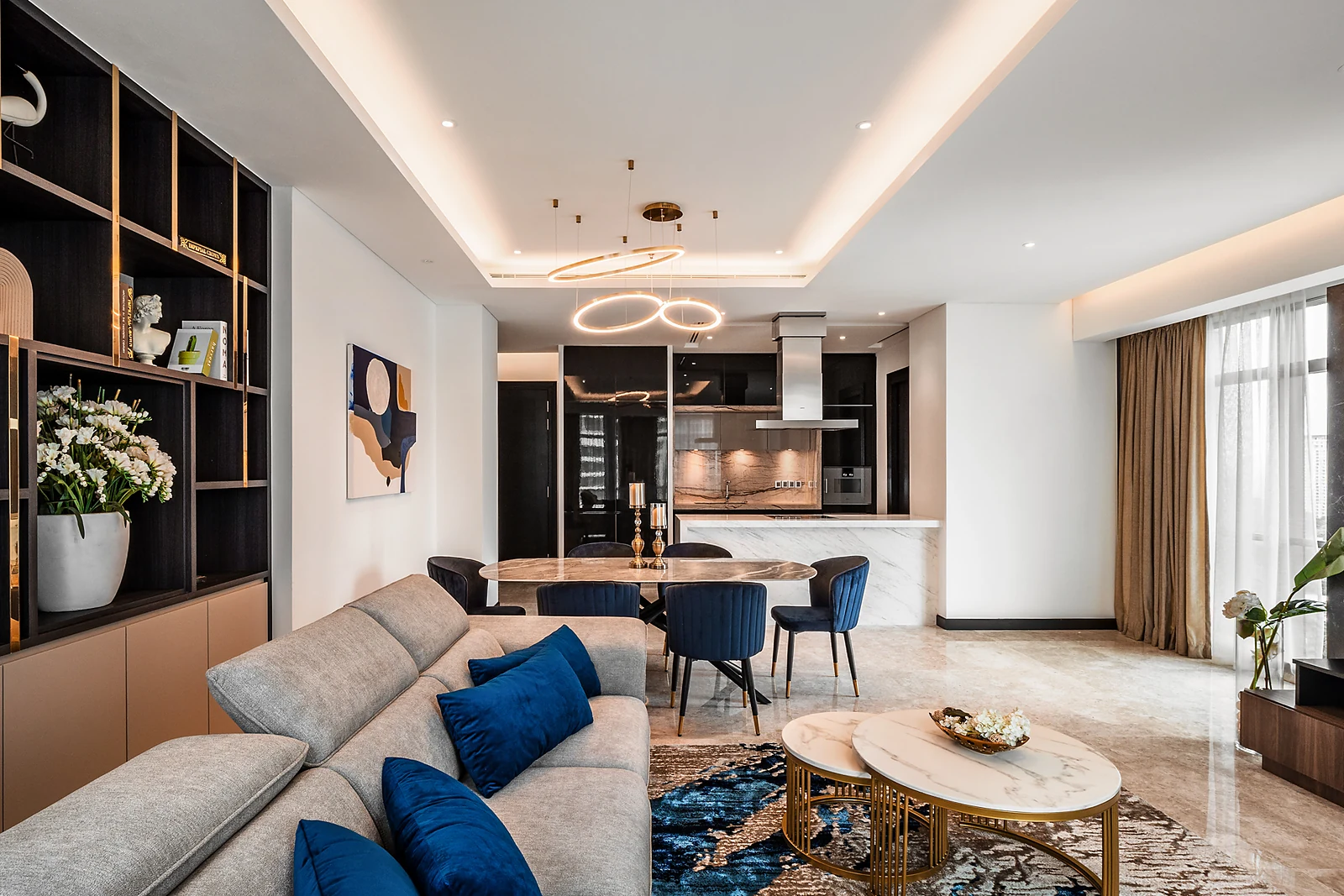
Malaysian condos typically range from 600 to 1,200 square feet, and compact luxury is its own craft: multi-utility furniture, smart storage solutions built into walls and platforms, and zoning that creates distinct functional areas — dining, living, work — without a single partition wall. Smart storage is not an accessory in Malaysian condo interiors; it is the architecture of the room. Consider traffic flow first in every layout decision; in a small home the difference between generous and cramped is often a walkway of thirty centimetres. Mirrors, continuous flooring and consistent paint colors stretch perceived space further than any single furniture purchase.
Renovating a condominium also carries house rules: management approval before work starts, refundable renovation deposits, and working hours commonly restricted to weekdays. A firm that manages condo project management as routine will save you weeks of friction.
Landed homes and bungalows
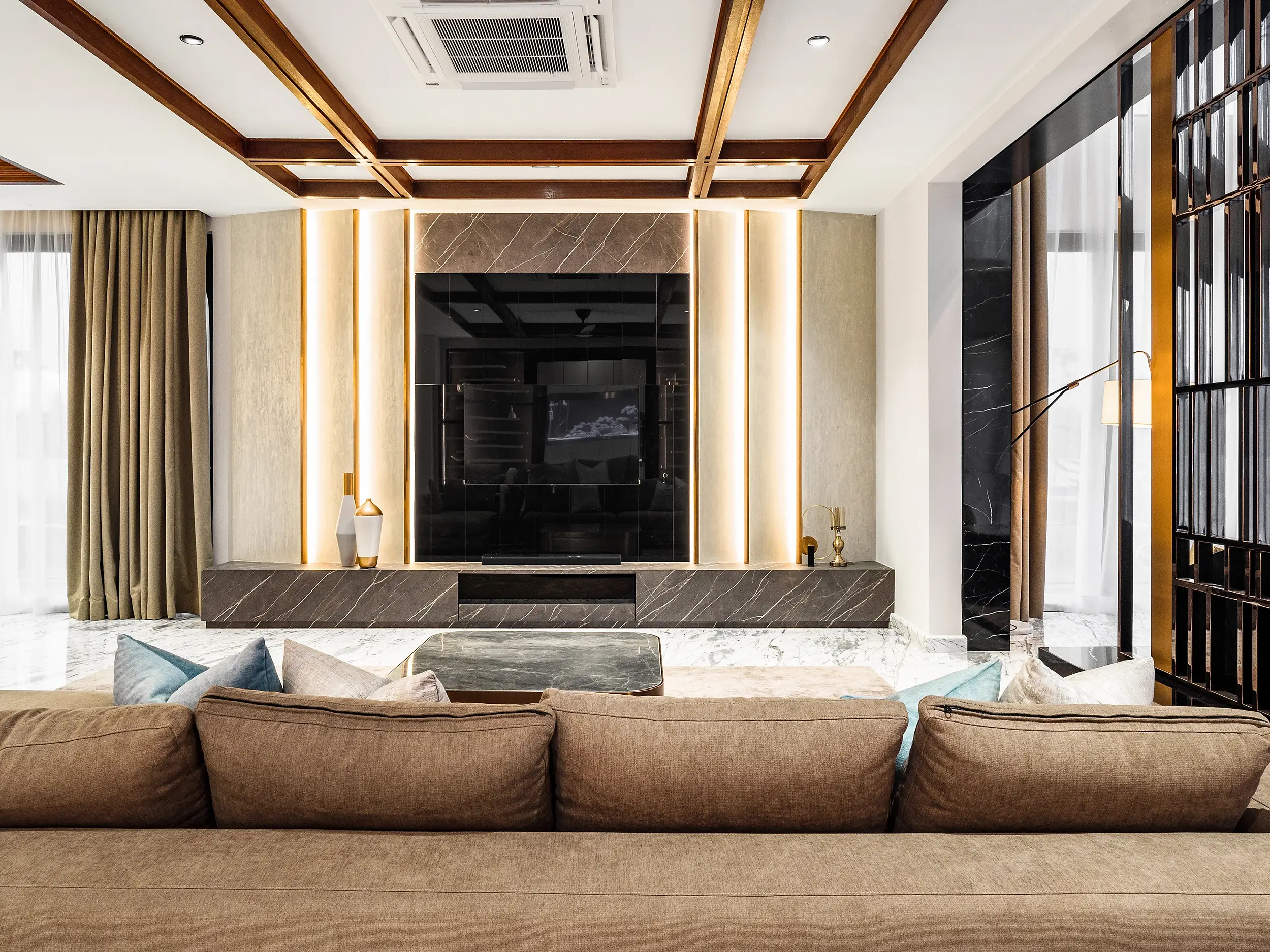
A landed house rewards thinking in architecture as well as interiors — staircases, double-volume spaces, the garden meeting the living room. Bungalows carry the most design freedom of any Malaysian property type: all four walls are yours, extensions are possible, and the entire home can be conceived as one composition. A semi-detached house shares one party wall, which shapes where an extension can go — our semi-D design and build page covers the approvals and the process. Our complete guides to bungalow design and penthouse design go deeper on both; the principle is the same — let the bones of the house lead, then furnish to the architecture. For the narrower landed plot, our terrace house design and double storey house design guides apply the same principle.
Key takeaways
- Condos: zone the open plan, build storage in, respect the management rules.
- Landed: architecture leads, interiors follow.
- Design freedom scales with property type — so does responsibility for coherence.
Room by Room: Where Design Effort Pays Most
Budgets are finite and rooms are not equal. Malaysian interiors reward effort in a predictable order — the rooms below are where design decisions compound, and where interior designers spend their clients’ money most deliberately.
The living room
The living room does a Malaysian home’s public work: family, guests, festivals, everyday evenings. Start with the conversation zone — seating arranged so people face each other, not just the television — then let the layout create a natural path around it rather than through it. Anchor the space with a rug scaled to the seating (all front legs on, minimum), give the walls one considered statement rather than many small ones, and treat the floor as a design surface, not a background. In open plan layouts, the living room’s materials set the tone every adjoining space must answer to. The dining room is usually the first of those spaces; our dining room design guide shows 12 ideas from real Malaysian homes.
Bedrooms
A bedroom has one job — recovery — and the best bedroom interiors protect it ruthlessly. Layered light with bedside controls, blackout provision behind sheer curtains, and a wardrobe wall planned around what you actually own. Keep the material palette quieter than the rest of the house and let texture, not colour, create the warmth. If the room must double as a study, zone it so the desk disappears from view when you are in bed; a bedroom that stares back at you with unfinished work is a badly designed room, whatever it cost.
Kitchens and bathrooms
Kitchens and bathrooms are where materials earn or lose their keep, because water, heat and daily use test every surface. In kitchens, quartz countertops have become the serious default for good reason — stain resistance and durability that natural stone struggles to match in a tropical kitchen. Plan the working triangle before the aesthetics, and ventilate honestly: Malaysian cooking deserves extraction that actually extracts. Bathrooms reward the same discipline — non-slip flooring, sealed surfaces, and lighting good enough to live with. Well-executed kitchens and bathrooms are also the two rooms valuers and buyers inspect first; they repay their cost more reliably than any other space in the house.
The garden connection
If your property type includes outdoor space, design the threshold, not just the garden. Full-height glazing, continuous floor levels and covered transition zones let a garden participate in daily life instead of decorating the window. Even a condominium balcony can carry the idea — planting, a place to sit, and lighting that invites the evening out. In Malaysian homes the garden is a room; treat it like one.
Key takeaways
- Living room first — it sets the standard every space answers to.
- Kitchens and bathrooms are where materials are tested and resale value is decided.
- Design thresholds, not just rooms: floor continuity and garden connections do quiet, constant work.
Materials That Survive the Malaysian Climate
Malaysia is generous to people and brutal to materials. Sustained humidity, heat and UV will find every shortcut in a specification, which is why materials must withstand the tropical climate — not just photograph well on handover day. Durability and maintenance deserve as much attention as appearance, especially in high-traffic areas and wet zones.
What holds: solid surfaces and quartz countertops in kitchens (quartz resists staining and humidity far better than porous natural stone, which is why quartz countertops have become the default in serious Malaysian kitchens); humidity-stable engineered timber over solid planks in air-conditioned rooms; powder-coated metals; performance fabric on daily-use seating. What struggles: untreated natural wood in direct sun, raw steel near coastal air, and any porous stone left unsealed. Think in surfaces the way designers do — the floor and four walls of every room each carry a material decision, and everything you place in the space answers to those planes. A considered material palette balances hard surfaces with soft elements — stone and timber against fabric, rattan and rugs — so rooms carry warmth as well as durability.
Sustainable choices
Sustainability in Malaysian interiors is mostly the art of choosing materials the climate already agrees with. Bamboo and jute are popular sustainable materials for good reason — fast-growing, biodegradable and naturally suited to heat. Rattan and certified timber carry tropical biophilic design honestly. Natural materials reduce environmental impact, and they age with more grace than their synthetic imitations; a rattan chair five years in looks lived-with, a vinyl one looks tired.
Key takeaways
- Specify for humidity first — every material decision is a climate decision in Malaysia.
- Quartz in kitchens, engineered timber in cooled rooms, performance fabric where life happens.
- Sustainable and tropical-appropriate are usually the same list.
Lighting: The Highest-Leverage Decision in the House
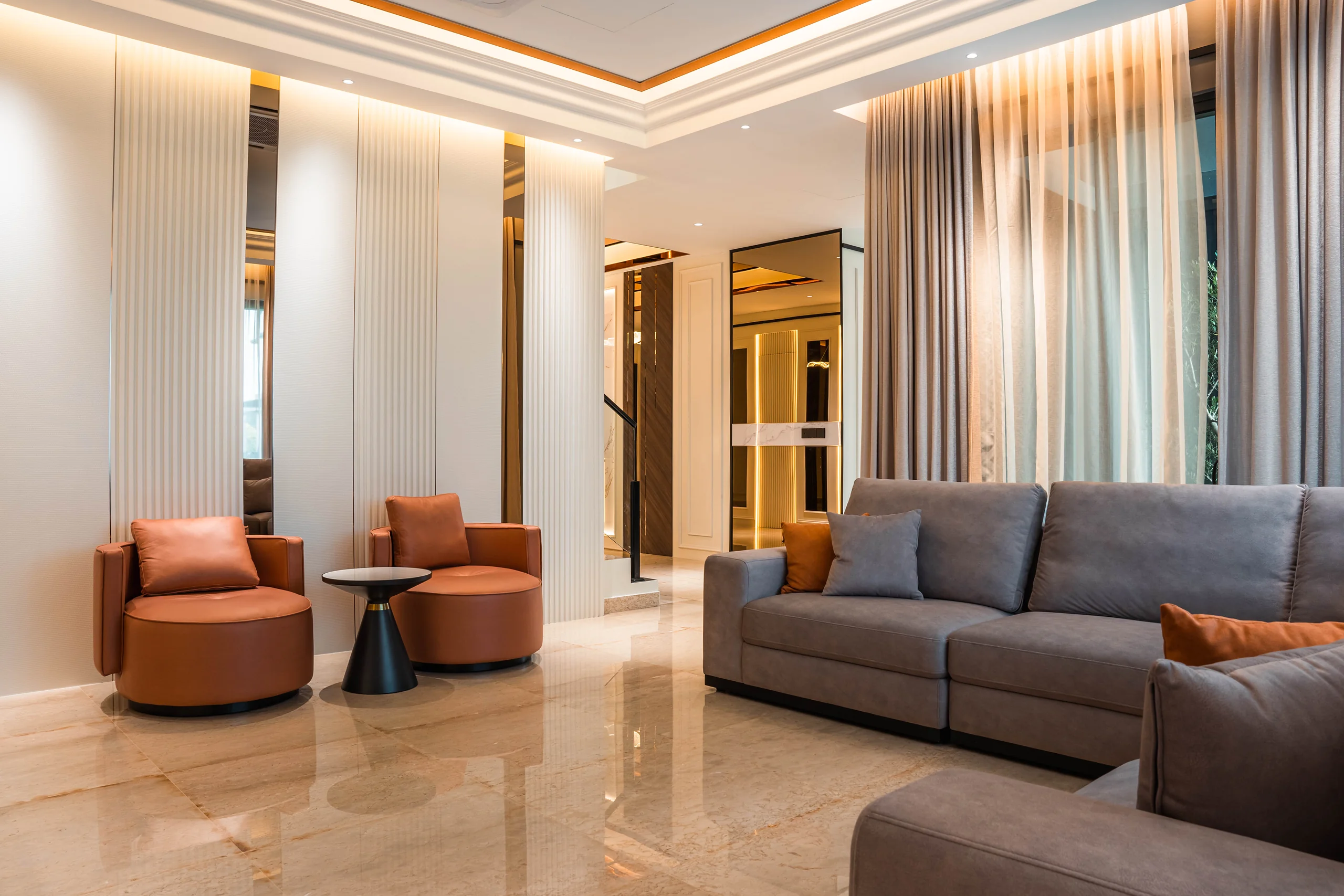
Nothing changes how a home feels per ringgit like light. The working rule is three layers: ambient light for general comfort, task light where work actually happens, and accent light to give walls, art and texture their depth after dark. Use a mix of all three in every significant room — a single ceiling source is why so many Malaysian living rooms feel flat at night. Our ceiling design guide shows how coves and trays carry that light.
Plan the layers early, while renovation walls are open. Moving a switch during design costs a line on a drawing; moving it after handover costs hacking, patching and repainting. And in high-end work, lighting is where smart home technology earns its keep — scenes that shift the whole house from day to evening in one touch, integrated so seamlessly you forget the technology is there.
Colour, Texture and Making Rooms Feel Like One Home
Rooms should feel cohesive — sharing visual elements like colors and materials — so the house reads as one composition rather than a corridor of separate decisions. Select a cohesive color palette for the entire home first, then let each room interpret it: same family, different emphasis. This is how designers create flow — the palette repeats, the emphasis shifts, and the interiors read as chapters of one book. Maintain similar flooring styles and finishes across adjoining spaces; continuity underfoot is the quietest trick in interior design and one of the most powerful.
Then let texture do what color alone cannot. Warm neutrals stay interesting when tactile textures carry the room — linen against timber, bouclé against stone, matte walls against one polished surface. Home decor completes the layer: use concealed storage alongside curated decor so the objects on display are chosen, not accumulated. If a shelf styling decision stalls you, the 3-5-7 rule above is the fastest way out.
Key takeaways
- One palette for the entire home, interpreted room by room.
- Continuous flooring = instant coherence.
- Texture is what keeps a neutral home from being a beige one.
Custom and Bespoke Furniture: When Off-the-Shelf Stops Working
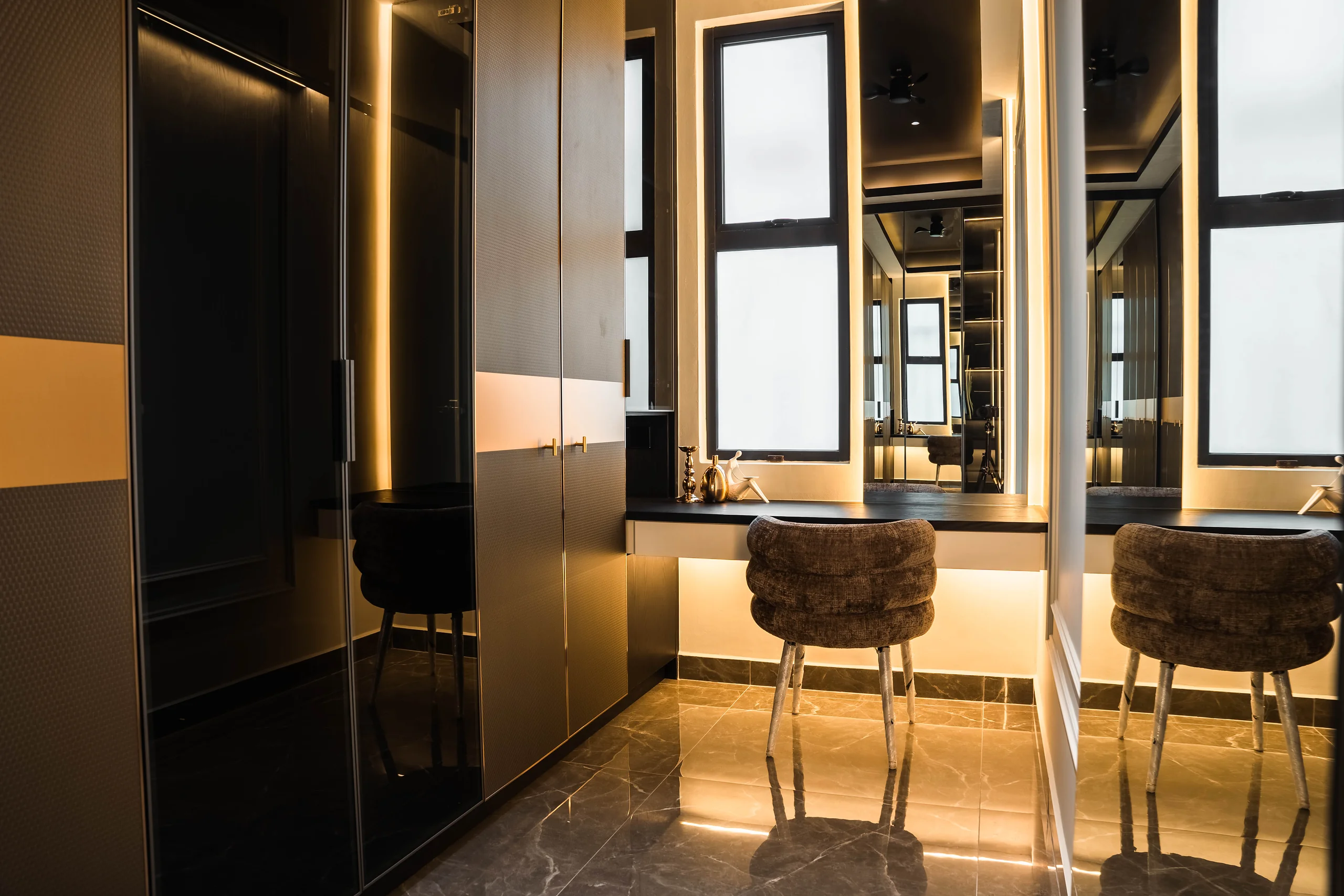
There is a point in most serious projects where retail furniture stops fitting — literally or stylistically. Custom furniture is tailored to your specifications; bespoke furniture is designed from scratch for a unique space. The difference matters most in Malaysian homes at both extremes of size: in compact condos, custom furniture maximizes space in ways no showroom piece can — platform beds with storage beneath, banquettes fitted to awkward corners, kitchen cabinets planned around how you cook, wardrobes built to the ceiling, a TV wall that hides its own wiring. In bungalows, bespoke designs reflect personal identity and lifestyle at a scale retail simply does not serve — this is where a brief you have dreamed about for years becomes drawings, then joinery, then daily life.
It is also an investment position: well-crafted custom pieces can enhance the value of a property significantly, because they read as part of the architecture rather than as contents. This is where our own bias shows and we will name it — custom furniture is central to how we work, not an add-on at the end. When Tatler Asia toured the Kelana Jaya bungalow we designed, it reported that everything in the home was bespoke and custom-made by Blaine Robert Design. Designing and making to a single standard is how proportion stays controlled to the millimetre, rather than compromised to a supplier’s catalogue.
Turnkey and Design-and-Build, Explained
Two phrases appear everywhere in Malaysian renovation and are worth defining precisely, because they decide who is accountable when something goes wrong.
Turnkey interior design manages the entire design process — concept development, sourcing, construction, styling — and hands you a finished home. You receive a single point of contact throughout the project rather than refereeing a designer, a contractor and a carpenter with three different phone numbers. Turnkey services often include warranties on completed work, and the seamless client experience from brief to handover is the whole product.
Design and build is the structure that makes turnkey real: one firm integrates design with construction, managing all project aspects under one roof. The process ensures cohesive execution — what is drawn is what is built, because the drawing team and the build team answer to the same management. Design and build firms often provide fixed pricing for projects, and the model removes the coordination gap where most renovation disputes, delays and variation orders are born. Done well, a design and build project can significantly increase property value: buyers and valuers alike read coherent, documented work as quality.
Key takeaways
- Turnkey = one contact, one accountable team, a finished home.
- Design-and-build is the structure that makes it work — design and construction under one roof.
- One accountable team is the single best predictor of a calm renovation.
What Home Interior Design Costs in Malaysia
The honest interior design cost conversation in Malaysia has three layers. First, scope: furnishing-and-decor projects and full structural renovations are different orders of spending, and most published numbers blur them. Second, the market bands: independent Malaysian renovation guides put full condominium fit-outs anywhere from roughly RM120 to RM450+ per square foot depending on finish level, with landed and luxury work above that. Third, the premium tier: luxury interior design in Malaysia commands a significant premium because the inputs are different — bespoke joinery, imported stone, architectural lighting and senior expertise on every decision.
At Blaine Robert Design, full residential design-and-build projects start from RM200,000, and full-home luxury projects can exceed millions of ringgit at bungalow scale. Whatever your tier, two principles hold: establish a realistic total budget before design begins, and protect a 10–20% contingency — not because good firms routinely overrun, but because renovation occasionally uncovers what walls were hiding, and a planned buffer keeps discoveries from becoming crises. A line-itemised quotation is your best protection; it turns “how much” into “how much, for exactly what”.
Investment Guide
From RM200,000
Full residential design-and-build projects with Blaine Robert Design start from RM200,000, shaped by floor area, structural scope and the specification of finishes.
Key takeaways
- Market fit-outs: ~RM120–450+ psf by finish level (independent guides).
- BRD full projects: from RM200,000.
- Always: full budget upfront + 10–20% contingency + itemised quote.
Finding Design Ideas and Inspiration — and Editing Them
There has never been more inspiration available to Malaysian homeowners, and never more need to edit it. Explore widely at the start — save the interiors that stop your scroll, collect design ideas from local portfolios as well as international boards, and pay attention to which images you are consistently drawn to across weeks, not days. The pattern that emerges is more honest than any single saved image; most people discover they gravitate to two styles at most, and the overlap between them is usually their real taste.
Then edit against reality. An idea photographed in a Melbourne terrace may fight your floor plan, your light and your humidity. The useful question is never “do I love this image?” but “what exactly do I love in it — the palette, the proportions, the one material?” Extract that element and let it inspire the design rather than dictate it. Local project galleries are worth more than global ones here: interiors photographed in Malaysian homes show you ideas that have already survived the climate, the property types and the way we actually live. That is the difference between inspiration and evidence — and good briefs are built from evidence.
Working With Interior Designers in Malaysia
You can create a beautiful home yourself. What professional interior designers compress is time, risk and the cost of mistakes — the expertise to know which wall can move, which materials will still look right in year five, and which contractor quote hides a variation order. Understanding how designers work makes you a better client: most Malaysian firms follow the same spine of concept, design development, documentation and construction, and the meaningful differences are in who carries responsibility at each stage and how the project management actually runs.
Come to a first meeting with three things: your saved inspiration (edited, per the section above), your property type and floor plan, and an honest budget figure. A good designer creates more with an honest number than an inflated one — the figure shapes every material and scope decision, and discovering the real one at week six wastes everyone’s time. Ask how the firm charges (design fee, percentage, or design-and-build where the design is integrated into the project cost), ask who builds, and ask who answers when the built work must match the drawings. The answers separate firms that design interiors from firms that deliver them. When you are ready for that conversation, our contact page is the fastest route to a consultation — and your shortlist, whoever is on it, should make the same offer this easily.
Frequently Asked Questions
How do I start interior design for my own home?
Follow the six steps at the top of this guide: define each room’s use, measure accurately, set the full budget with a 10–20% contingency, choose one consistent style, plan lighting early, and decide who executes. If you engage professionals, bring inspiration images and a realistic figure to the first meeting — a good designer turns both into a plan within weeks.
What is the 3-5-7 rule in interior design?
Group decorative objects in odd numbers — threes, fives, sevens — because odd groupings read as natural rather than staged. It is a styling principle for shelves, consoles and coffee tables, not a planning rule for rooms.
Can ChatGPT design a room?
AI tools can genuinely help you explore ideas — style directions, color palettes, layout options and different options you had not considered. What they cannot do is measure your site, know Malaysian material behaviour in 90% humidity, coordinate a contractor, or take responsibility when the built result must match the picture. Use AI for inspiration; use professionals for execution.
How much does home interior design cost in Malaysia?
Independent Malaysian guides put full fit-outs at roughly RM120–450+ per square foot depending on finish. Full design-and-build projects with Blaine Robert Design start from RM200,000, with bungalow-scale work able to exceed millions of ringgit. Set the full budget first and keep 10–20% aside as contingency.
Which interior design style is most popular in Malaysia?
Minimalist leads in condominiums, Japandi is widely reported as the fastest-growing direction nationwide, and tropical biophilic design remains the most naturally Malaysian — rattan, timber, plants and shade doing what they have always done here.
What is turnkey interior design?
A model where one firm manages the entire project — concept development, sourcing, construction and styling — and hands over a finished home, with a single point of contact throughout. It is how design-and-build firms like ours deliver an entire home without the owner project-managing three separate vendors.
How do I choose an interior designer in Malaysia?
Look for a documented portfolio in your property type, named and checkable credentials, a line-itemised quotation, and clarity about who does the construction. Ask one revealing question: “who is accountable if the built work does not match the drawings?” The quality of that answer tells you most of what you need to know.
Design a Home That Fits the Life Inside It
Great interiors are not about following every trend — they are about a home that works for your life, in this climate, built to a standard you can feel. Blaine Robert Design is an award-recognised Kuala Lumpur studio (Luxury Lifestyle Awards 2021, ATAP Design Awards 2021, Qanvast Design Awards 2021 and 2023, MIIP 2022) with interior design and construction under one roof, serving Mont Kiara, Damansara Heights, Desa ParkCity, Bangsar and the wider Klang Valley. Contact us for a consultation — bring the rooms you have been dreaming about, your property type and your honest budget, and we will bring the expertise to shape them into a home.