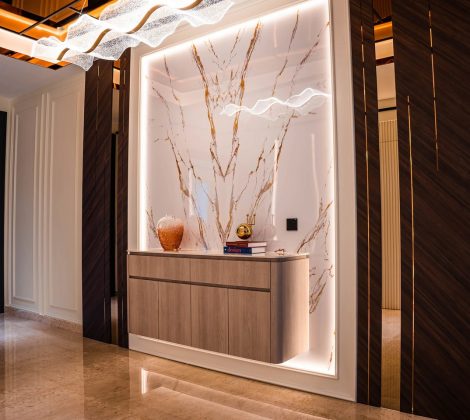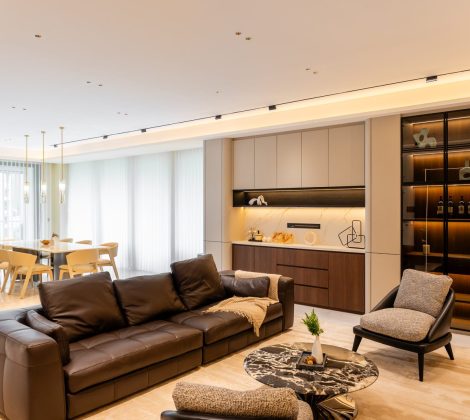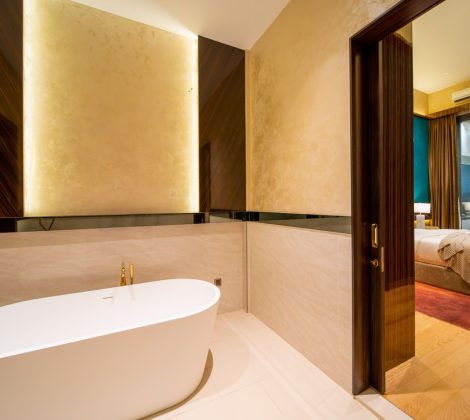

Ceiling design is the part of interior design most homeowners leave until last, yet the ceiling changes how every room feel is read, whatever the style. A ceiling hides the air-conditioning and the wiring, carries the light and, done well, draws the eye upwards. Good ceiling design also plays a crucial role in a Malaysian home, where low slabs, beams and humidity shape what works.
Below are 12 ceiling design ideas from homes we have completed, then rooms, lighting, materials and the questions clients ask most. Every photo shows a ceiling in a room Blaine Robert Design has completed.
Key takeaways
- Consider room function and dimensions when planning ceiling designs.
- Simple designs paired with good lighting age better than complex structures.
- Integrate lighting design with ceiling structure for improved ambiance.
- Select ceiling materials based on the room's function: plaster or gypsum for living spaces, PVC panels for wet areas.
- False ceilings can conceal electrical wires and HVAC systems.
Types of ceiling design at a glance
| Ceiling type | What it is | Best for |
|---|---|---|
| Tray ceiling | A recessed centre framed by a lower border | Living rooms, dining rooms, bedrooms |
| Coffered ceiling | A grid of sunken coffers | Formal rooms with good height |
| Cove ceiling | A drop hiding an LED strip | Any room needing a soft glow |
| Drop ceiling | A lowered false ceiling over the slab | Condos, hiding ducts and wiring |
| Vaulted ceilings | A pitched ceiling that follows the roof | Landed homes, top floors |
| Stretch ceilings | A tensioned membrane on a track | Gloss, colour, backlit panels |
12 ceiling design ideas for Malaysian homes
1. Tray ceilings for architectural depth
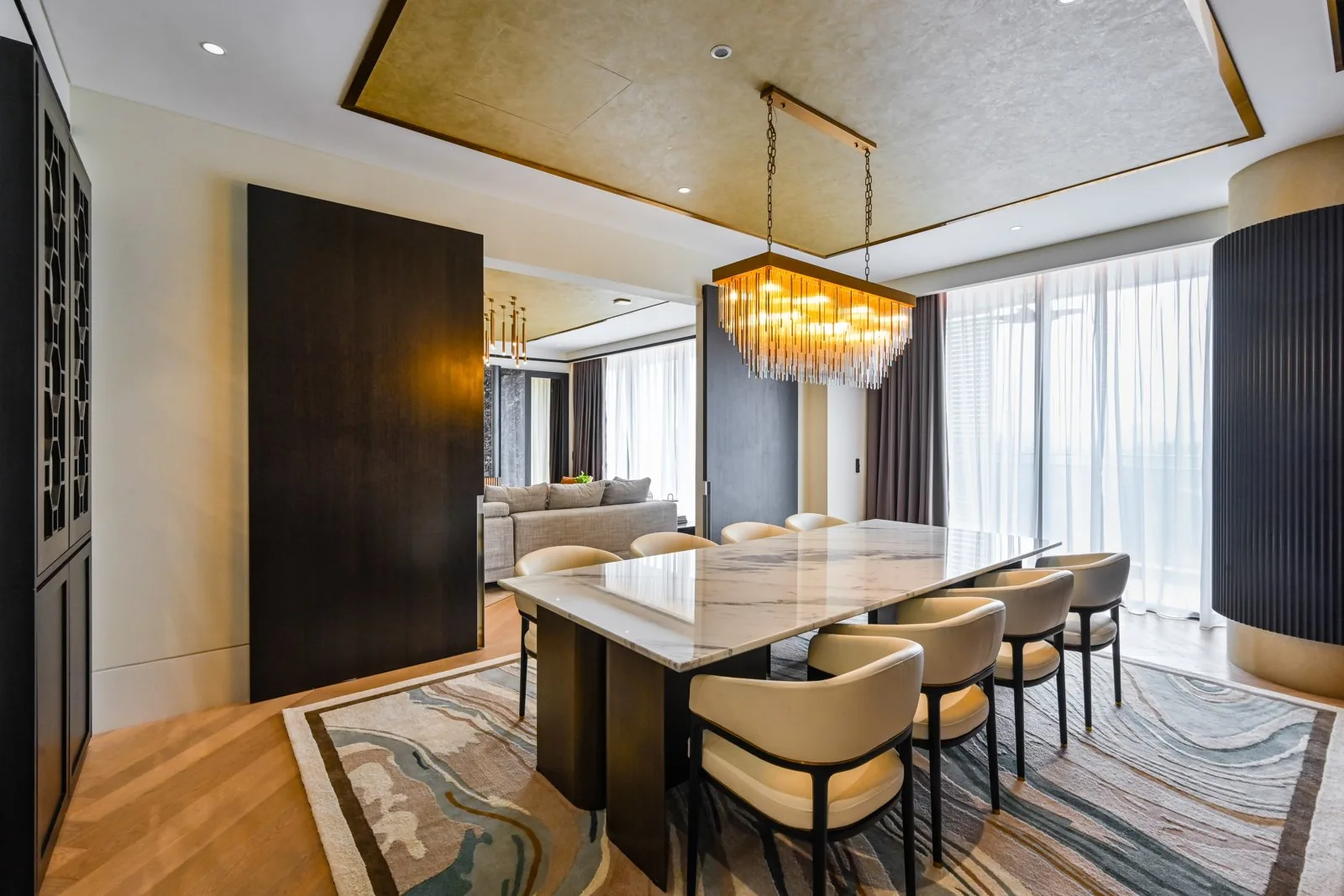
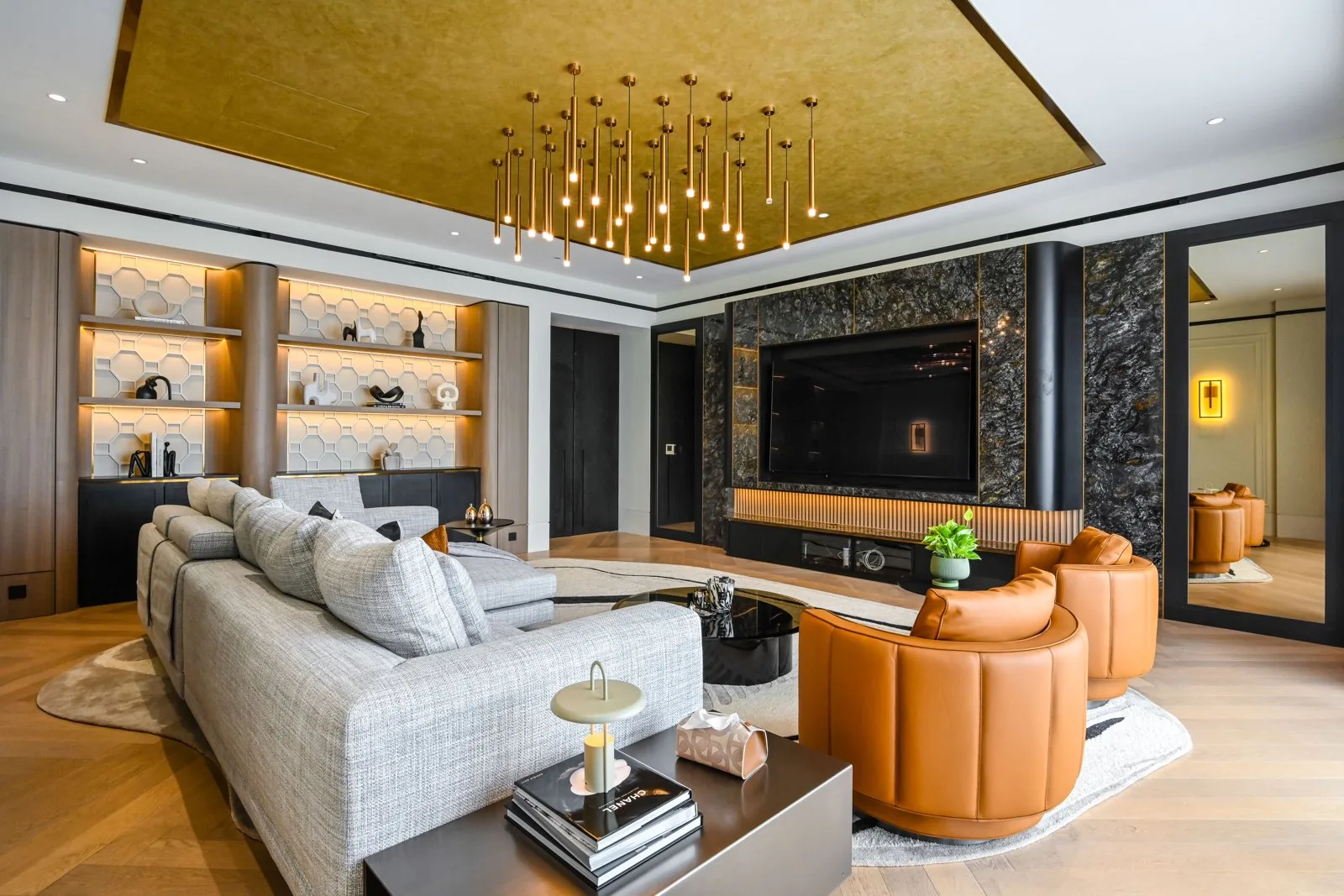
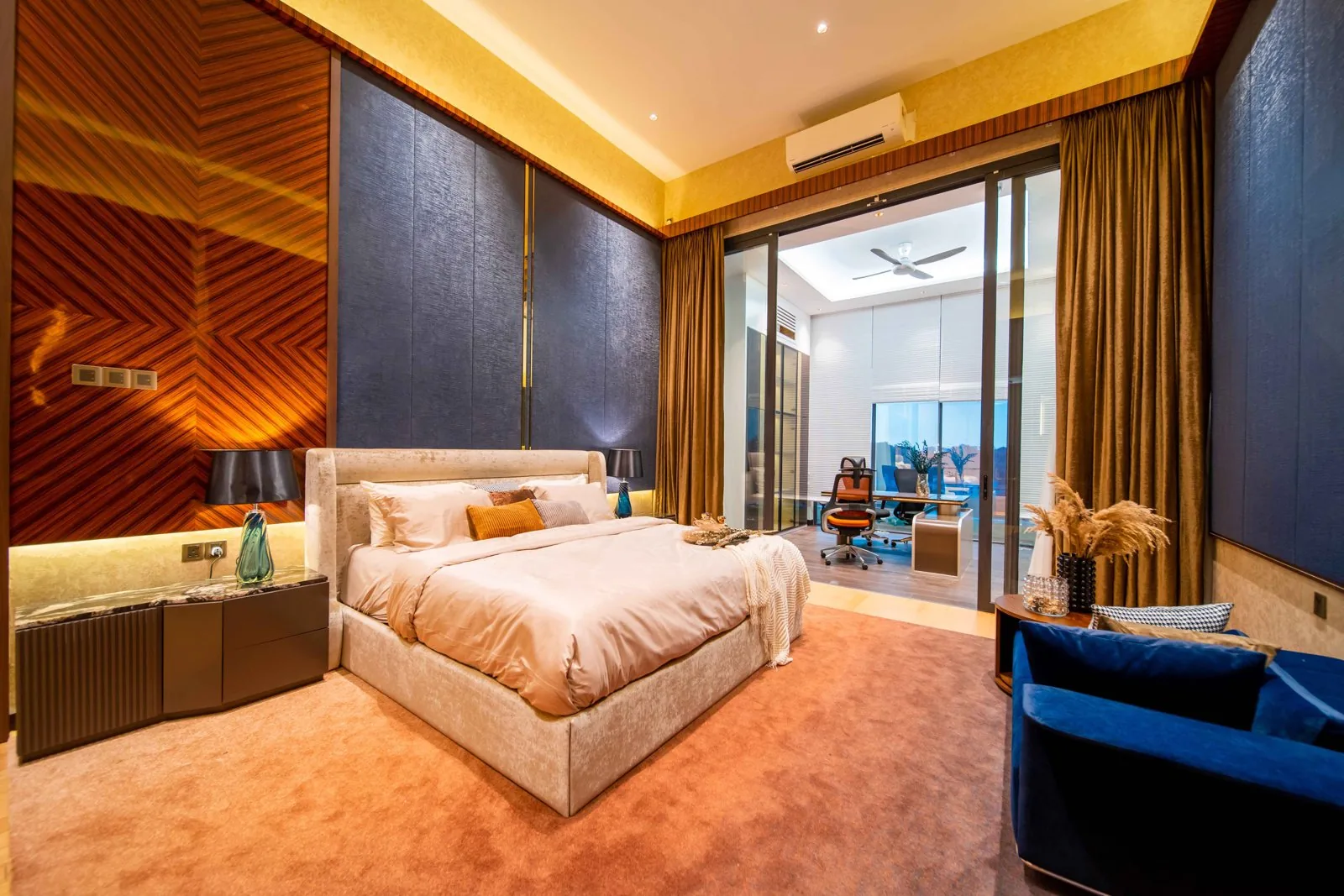
Tray ceilings feature a recessed central section that adds architectural depth. At Aira Residence in Damansara Heights, the living room tray (top of this page) and the dining tray are lined in gold leaf, so each tray ceiling becomes a focal point over the sofa or the table. Tray ceilings have a hollow centre for added depth; we keep the ceiling border slim to protect the space.
2. A coffered ceiling for scale and style
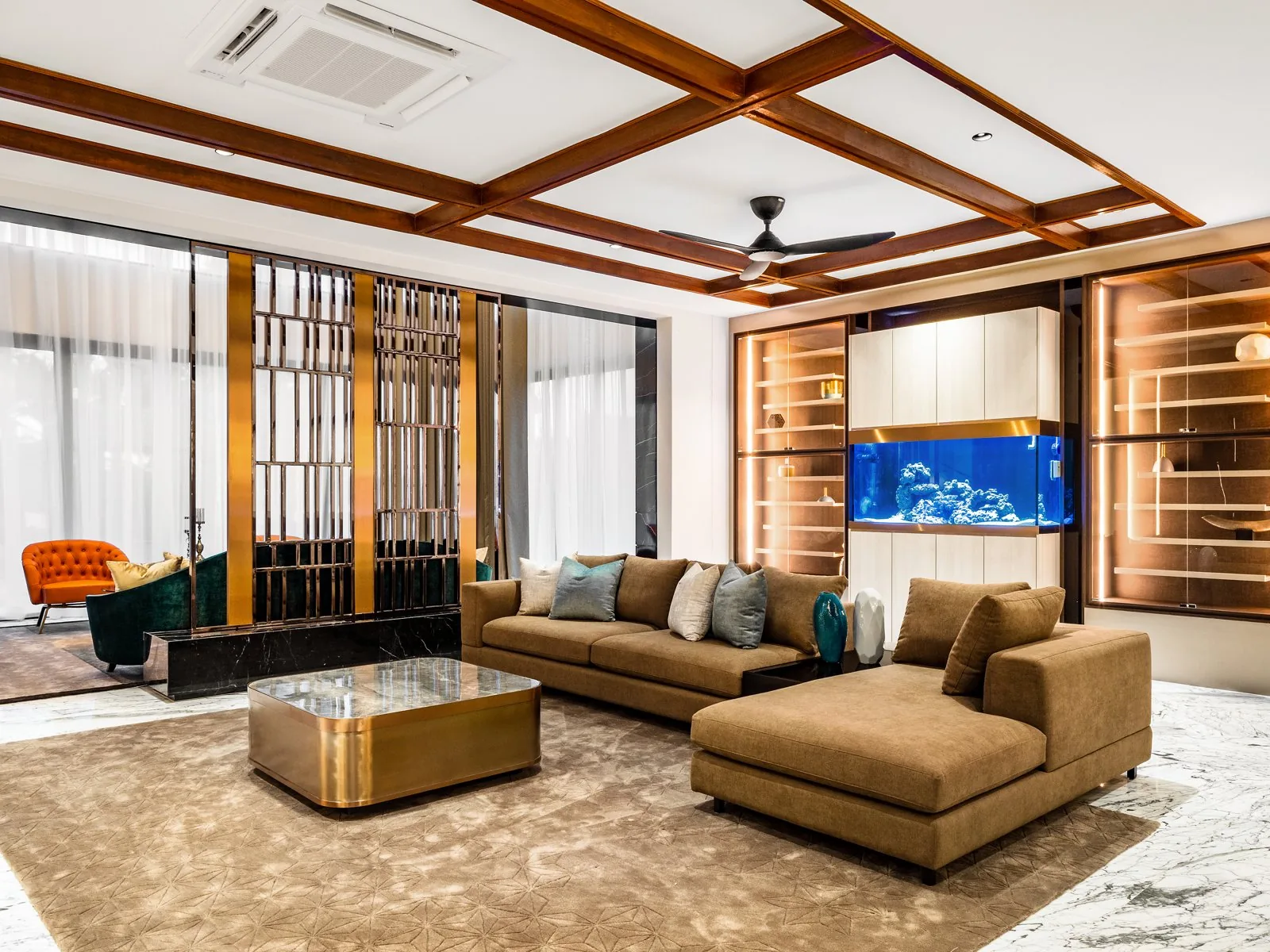
Coffered ceilings feature a grid of recessed panels for elegance. In our Terengganu bungalow, a timber grid divides the living room ceiling into deep coffers, which gives a large space scale and rhythm. Among unique ceiling designs it is the most traditional style, it suits timeless interiors, and in a traditional house the coffers can carry paint or wallpaper.
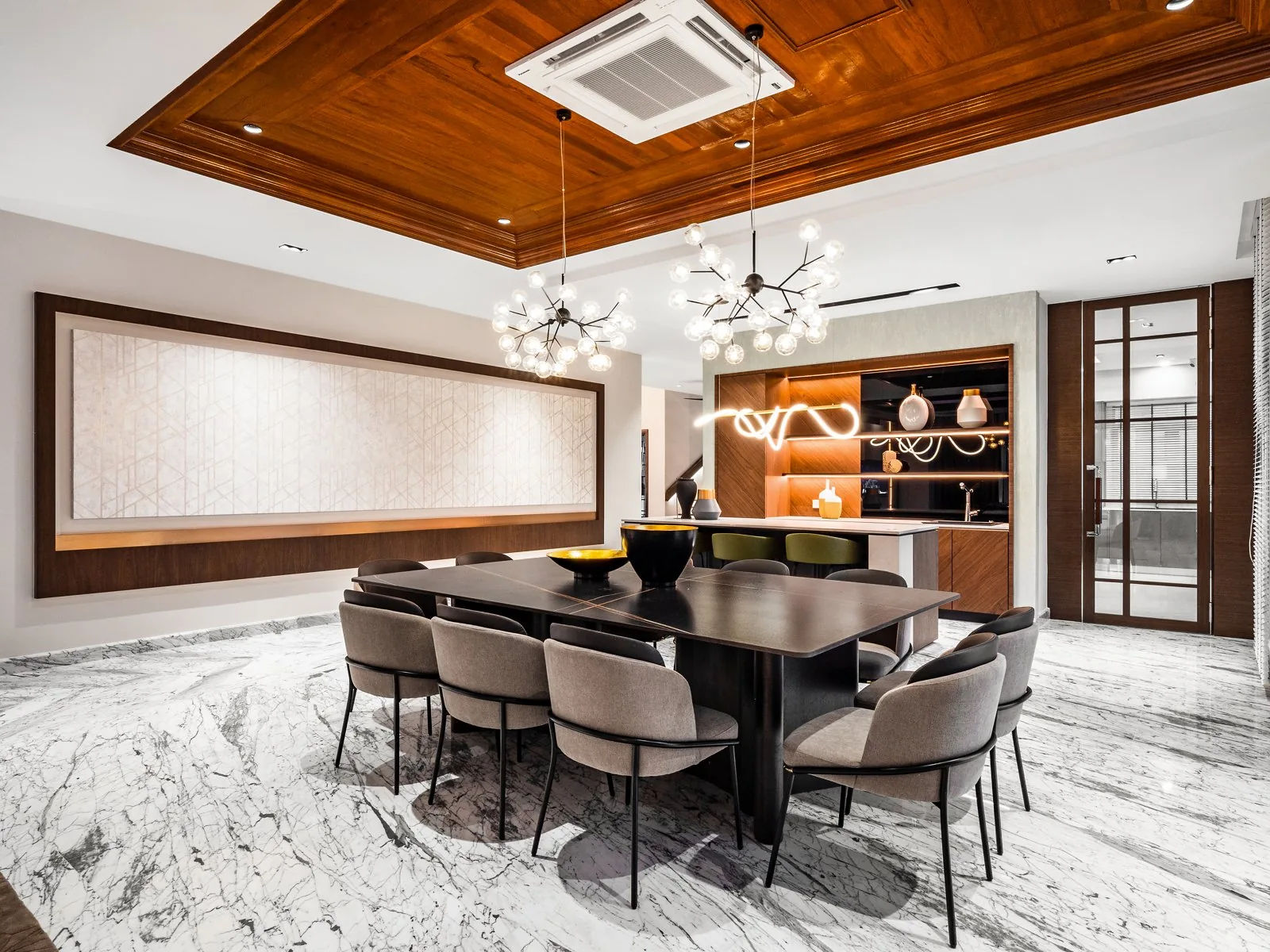
3. Cove ceilings and indirect lighting
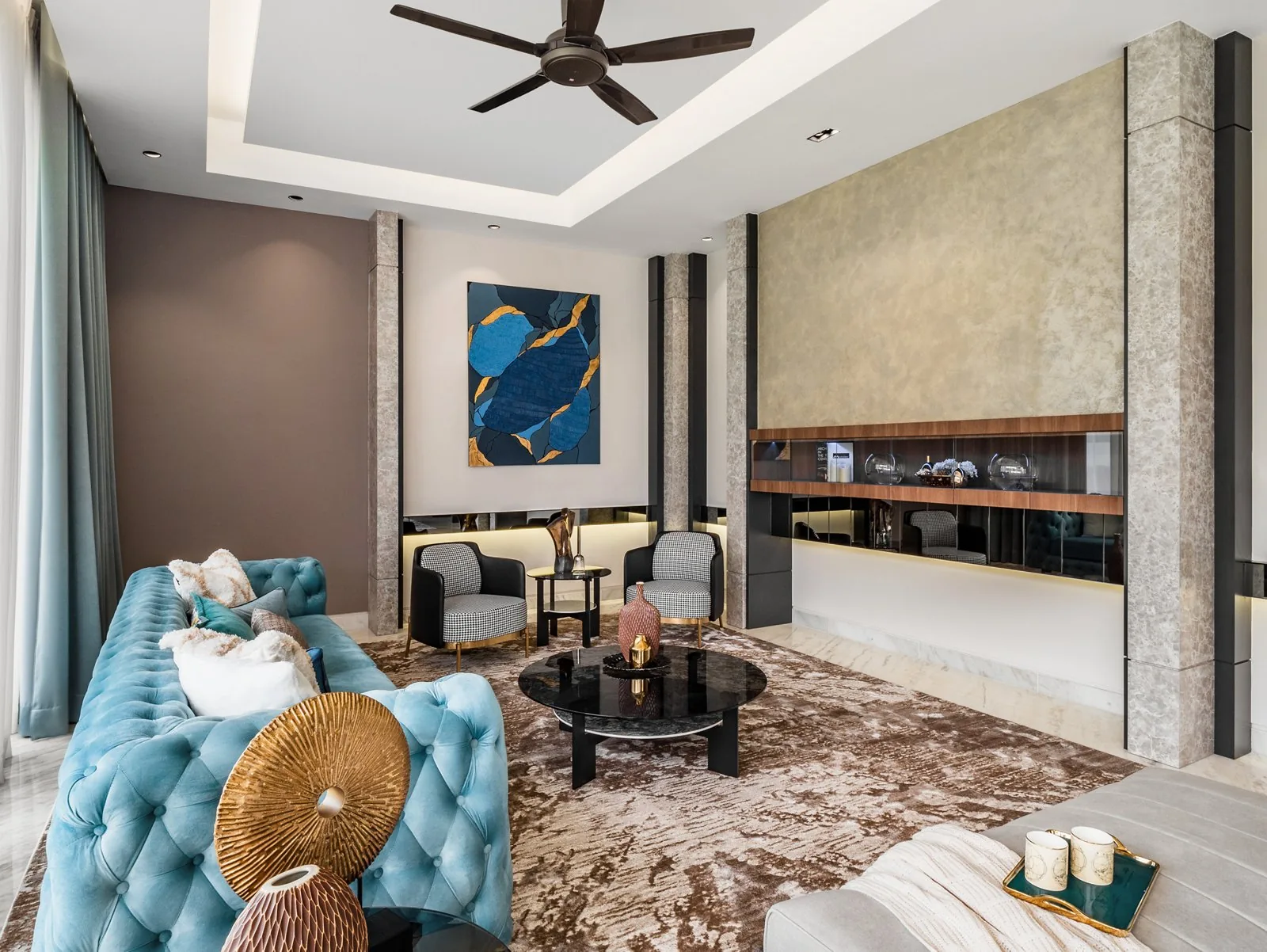
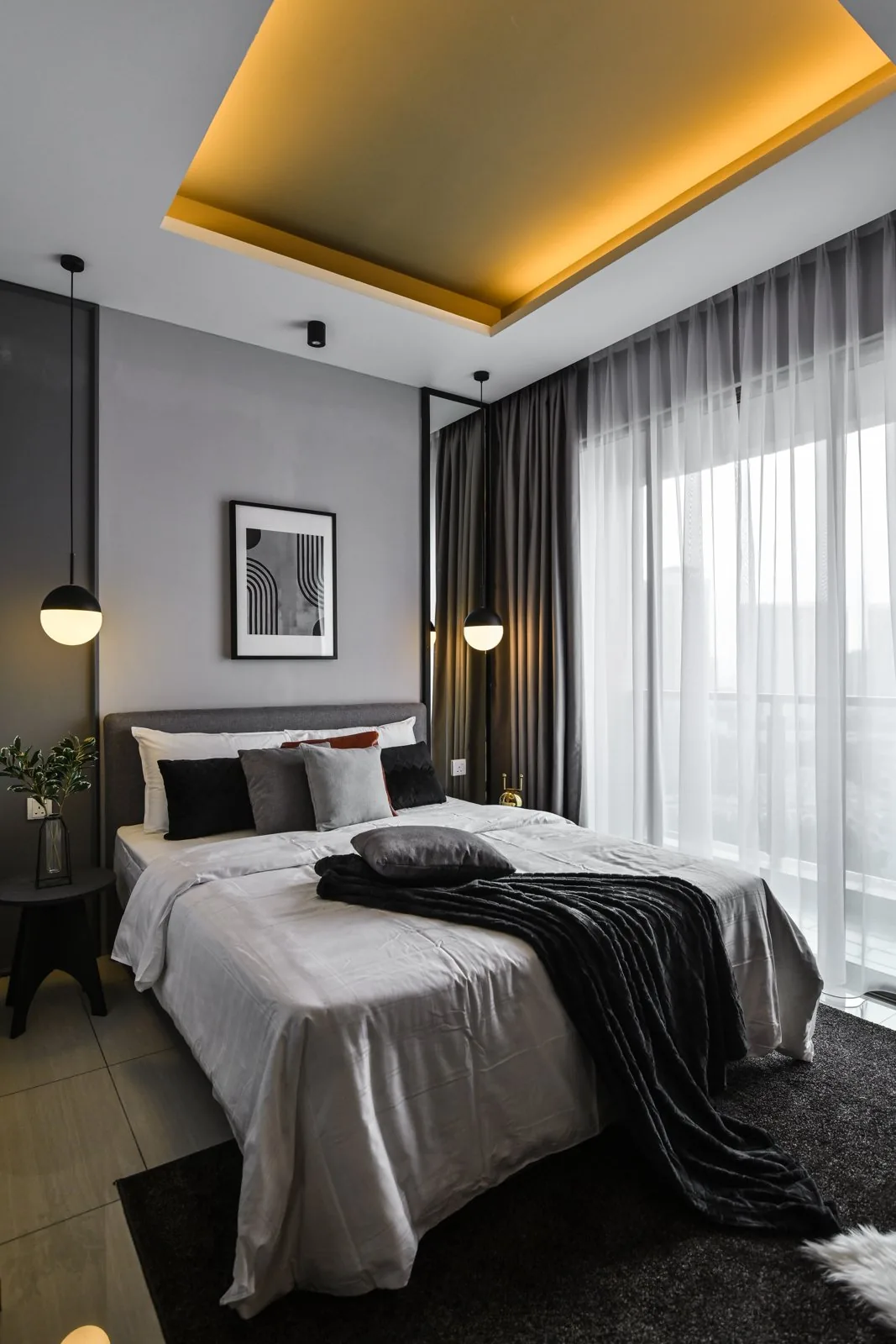
Cove ceilings provide soft, ambient lighting effects. Cove lighting incorporates drop-down plasterboard islands with soft ambient lighting: an LED strip sits on a ledge and washes the ceiling, so the light has no visible source. In our Kelana Jaya bungalow, the drop ceiling steps around a central fan over the living room; our living hall guide shows a gold-leaf tray.
4. A drop ceiling to hide what a slab cannot
A drop ceiling is a false ceiling hung below the existing ceiling of the building. In Malaysian condos it hides ducts and pipes, and suspended ceilings allow easy access to ductwork and wiring through hatches. Design guides list about ten types of false ceiling designs, from gypsum and plaster to PVC, wood, metal, glass and fabric. Plan it around the air-conditioning first, then the light.
5. Vaulted ceilings and cathedral ceilings
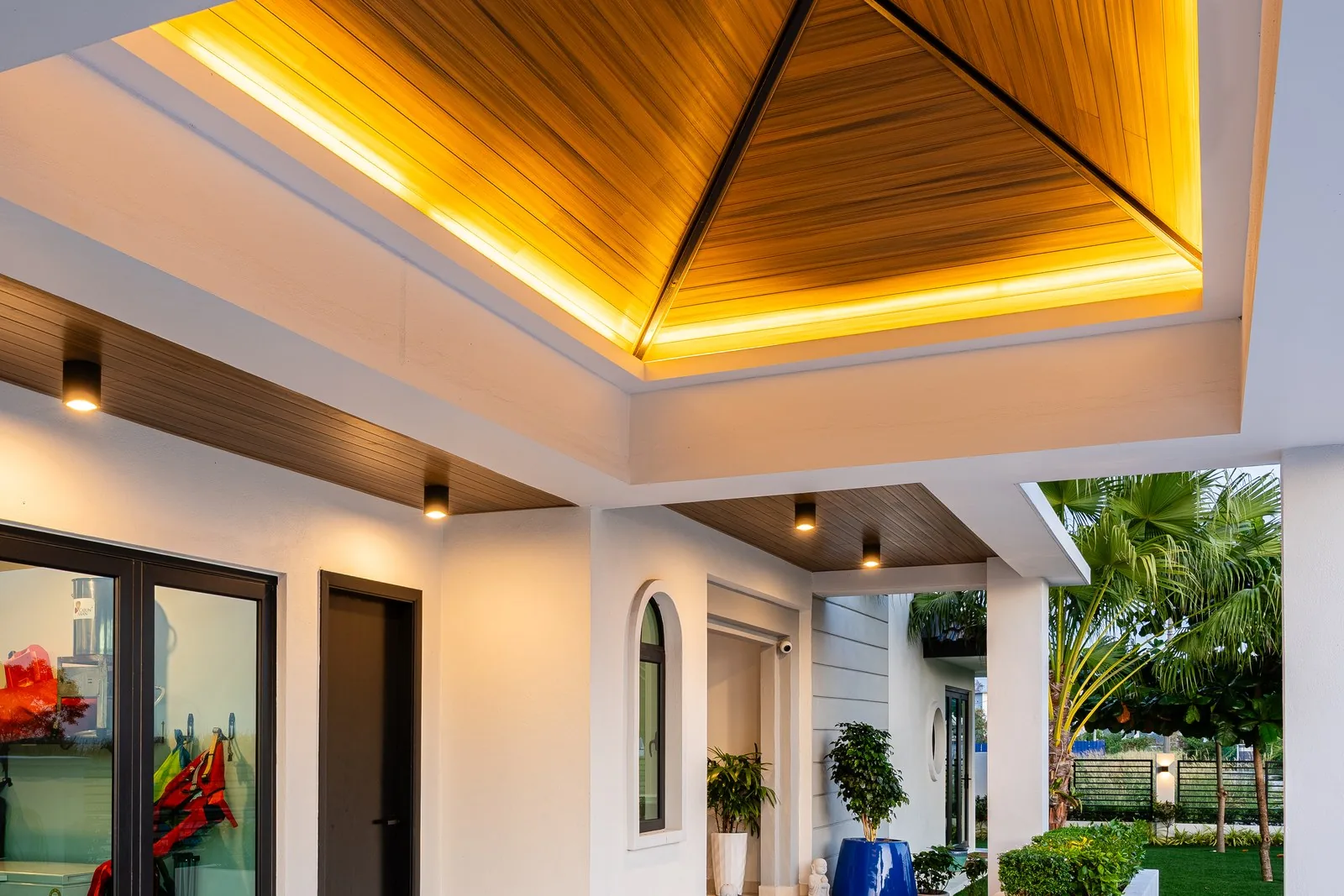
Vaulted ceilings create a dramatic sense of space, and vaulted ceilings enhance natural light and architectural rhythm. True cathedral ceilings, with two equal pitches meeting at a ridge, are rare in Malaysia because most houses have a flat slab under the roof. At Quayside Villa in Port Dickson, the covered terrace takes a timber-lined pyramid ceiling with a lit cove. Insulate above it, or the space heats up.
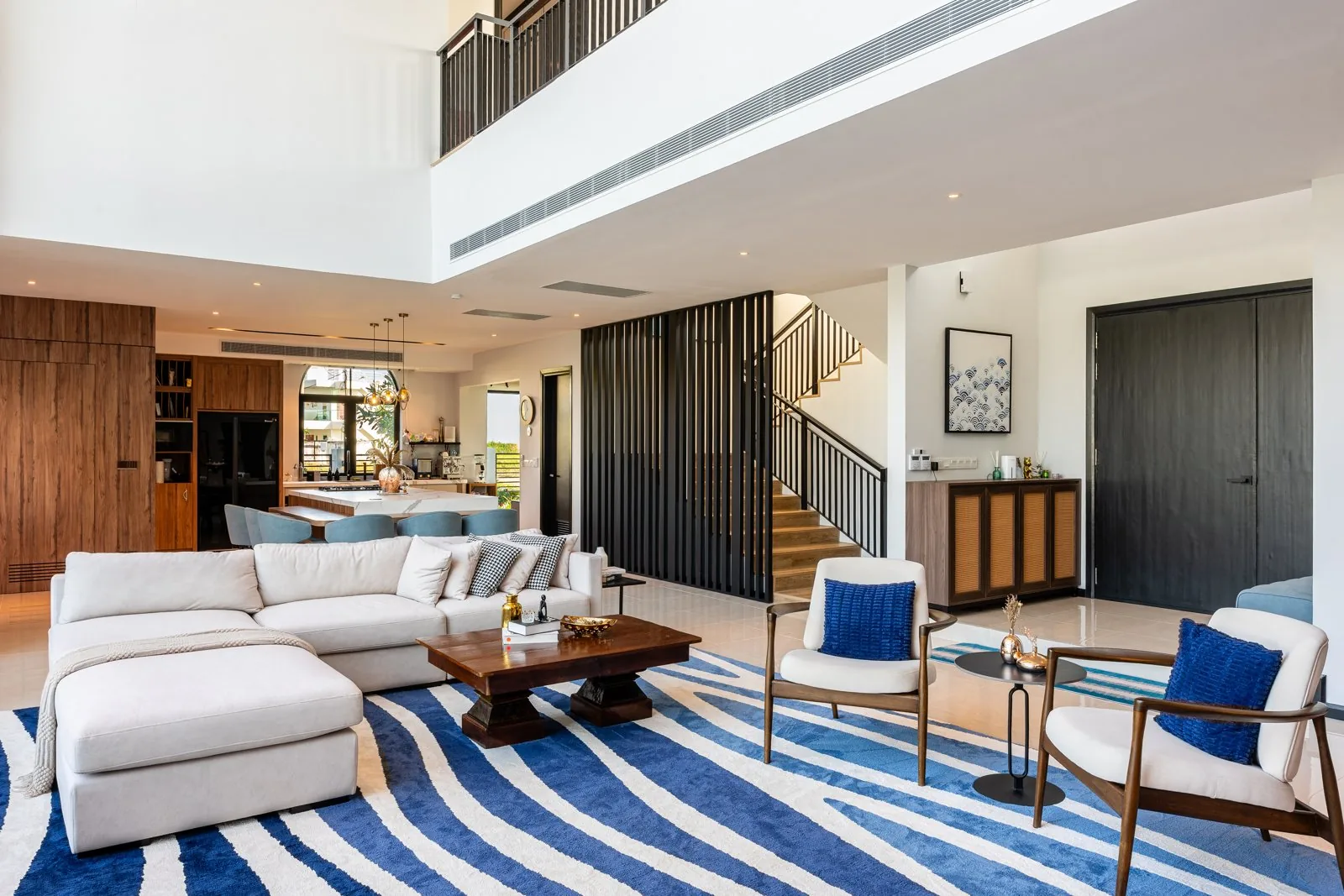
6. Exposed beams for warmth
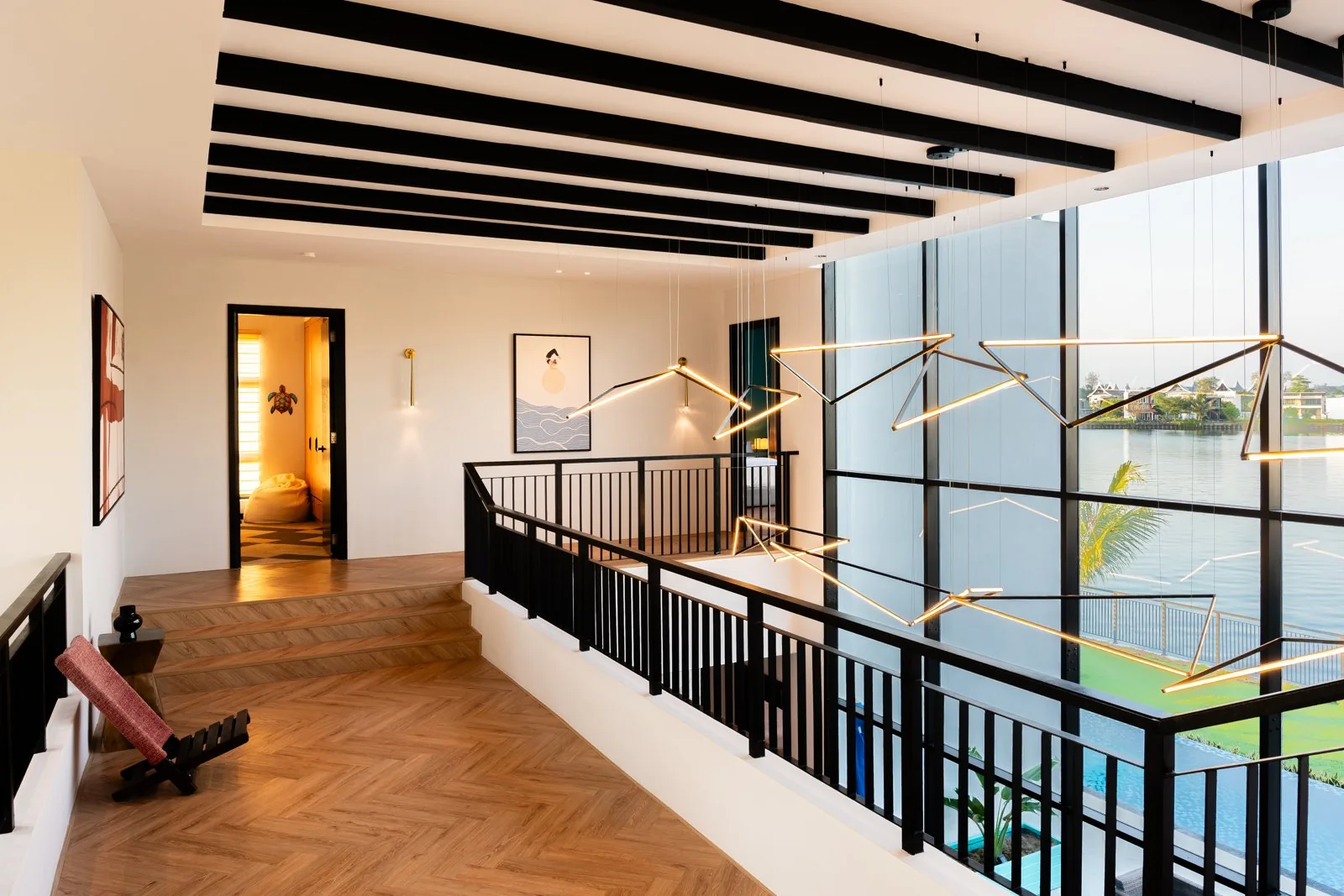
Exposed beams can add warmth, texture, and an industrial or contemporary vibe. Beams painted black across a white ceiling give a modern vibe, as on the upper landing at Quayside Villa; timber beams read rustic. In the Terengganu bungalow, timber beams cross a white ceiling in the family room. Real beams are part of the building; decorative beams are lighter. A rustic style suits a resort house more than a city condo.
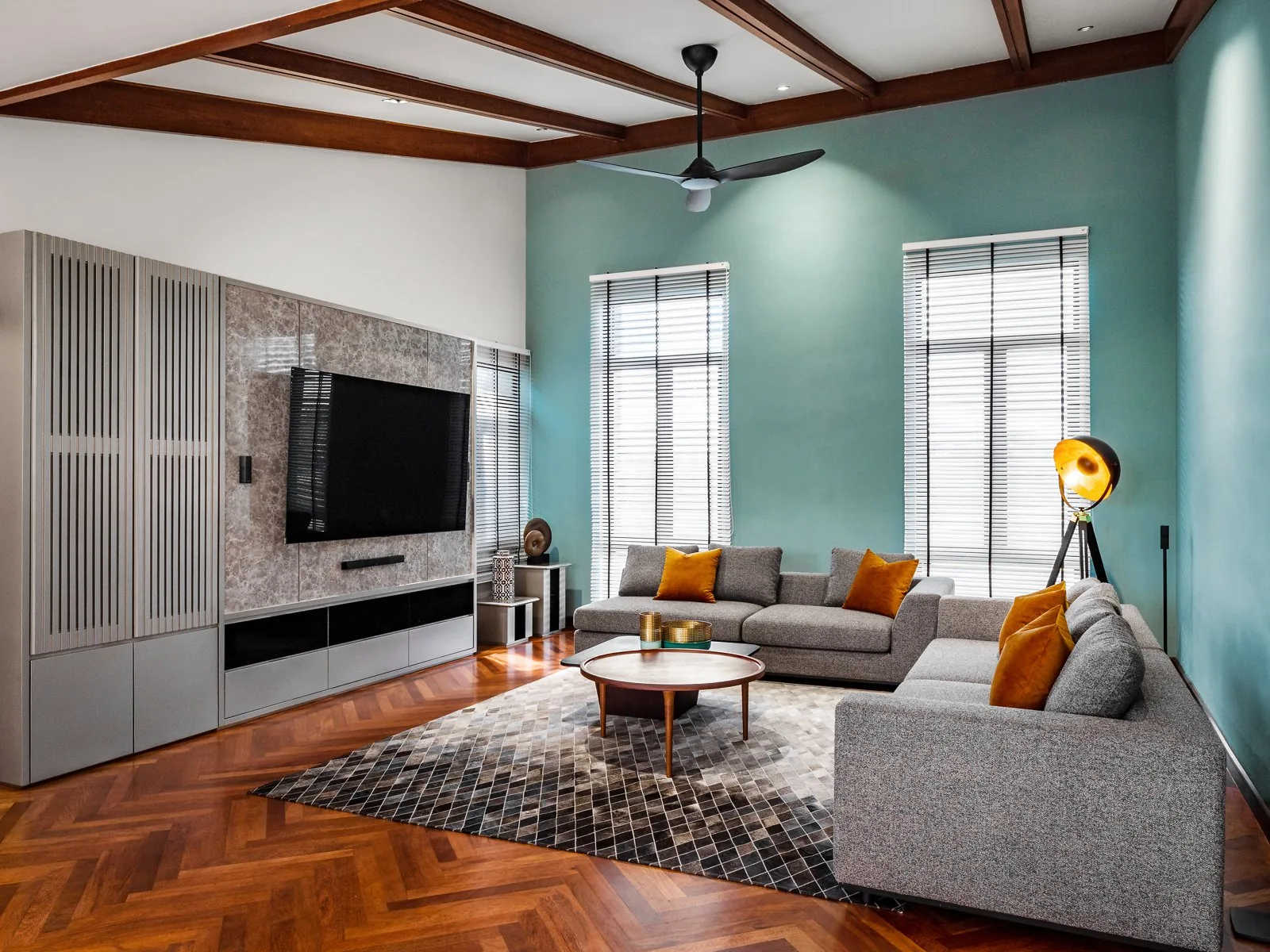
7. Wooden ceilings and slatted panels
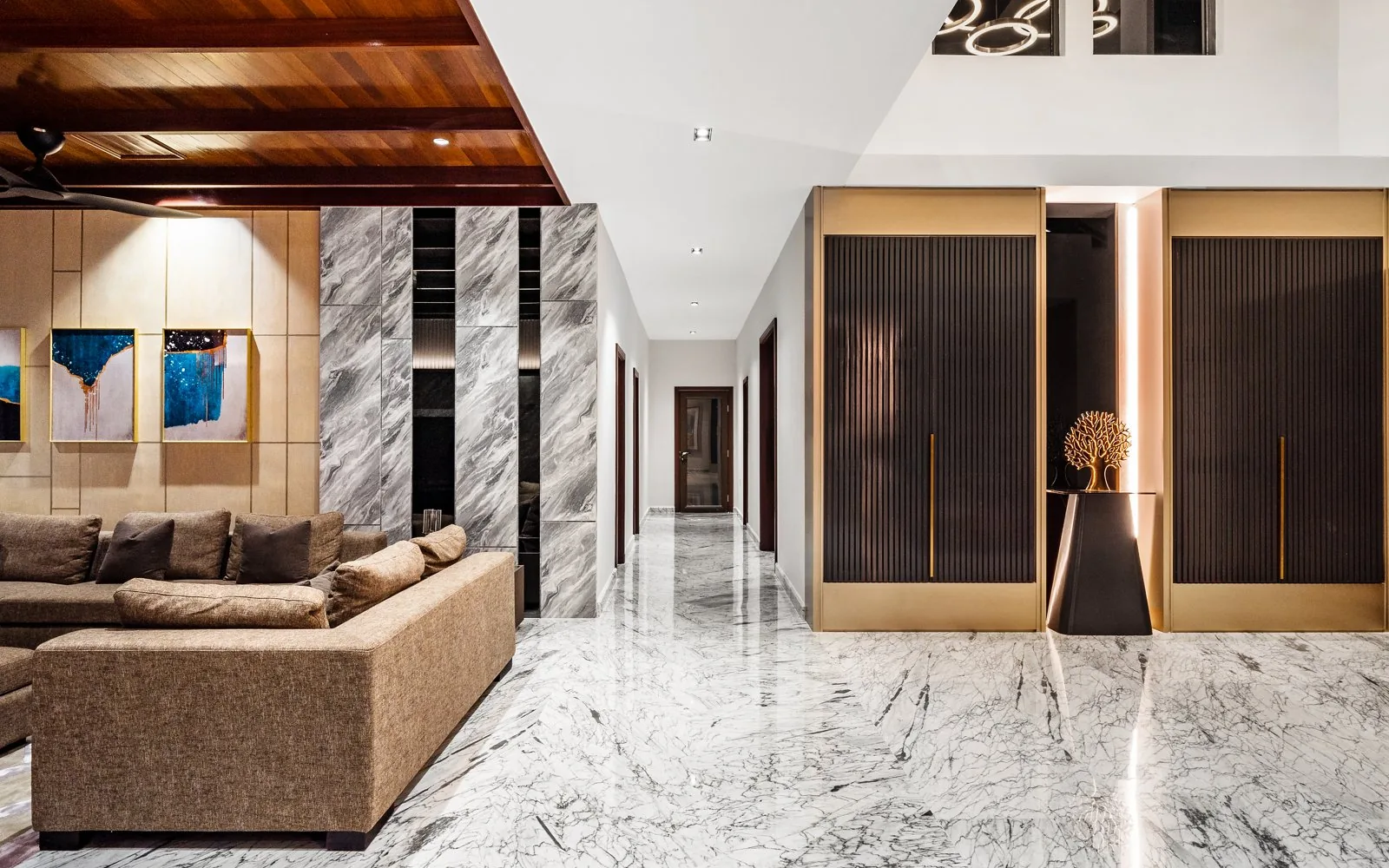
Wooden ceilings add warmth and natural beauty to interiors. Slatted wood panels introduce acoustic benefits and rich organic textures, and textured finishes or wooden elements can enhance acoustic properties in large spaces such as a double-height hall. Choose engineered wood or veneer in Malaysia's humidity. A rustic, natural wood ceiling is an excellent choice where the walls are stone.
8. Geometric shapes and white stripes
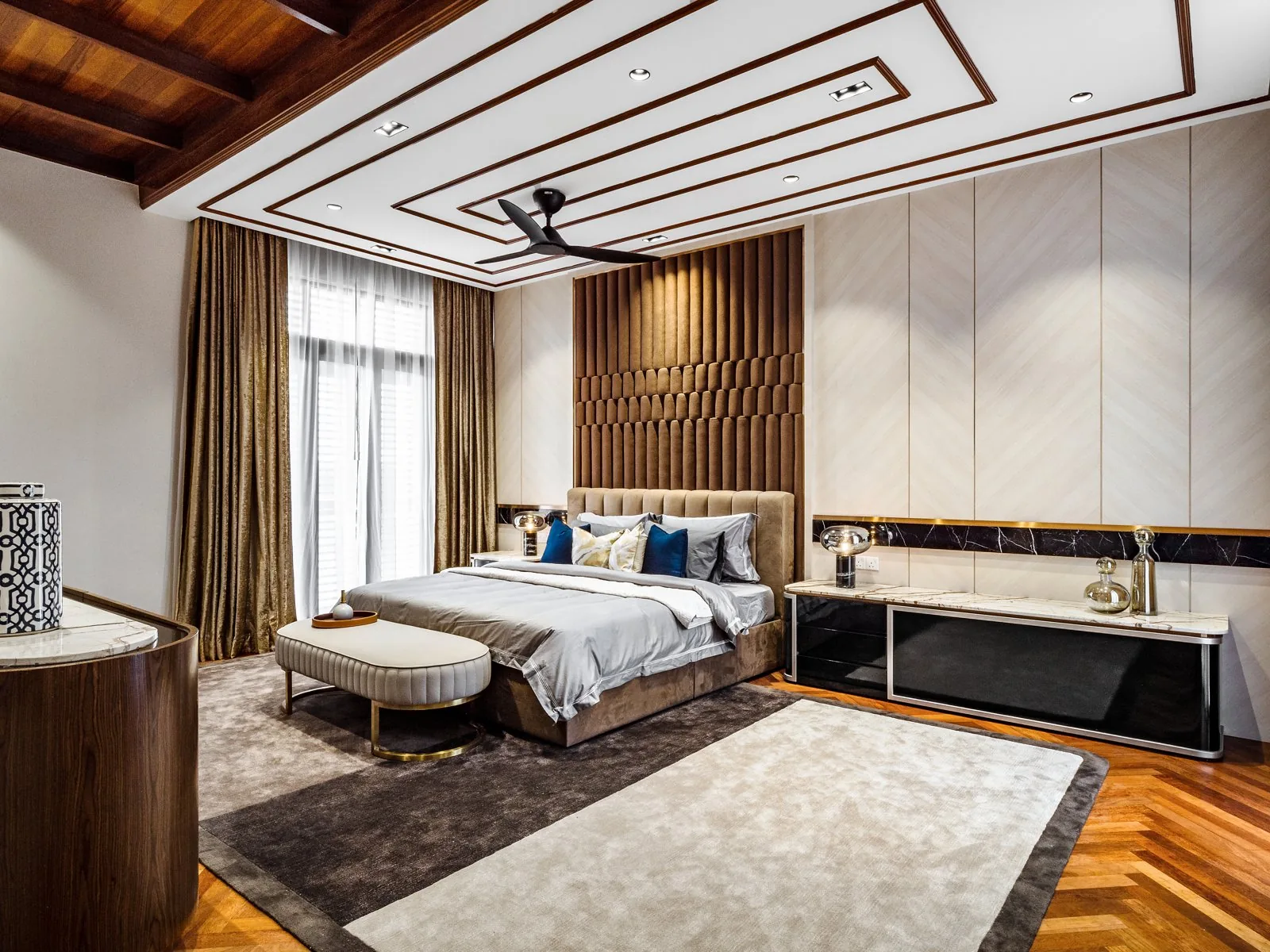
Modern ceiling designs incorporate unexpected materials and geometric shapes. In the master bedroom of the Terengganu bungalow, concentric white stripes step across the ceiling and frame the fan, a pattern that adds visual interest without a colour. Use geometric shapes once per house.
9. A black ceiling, or a deep colour
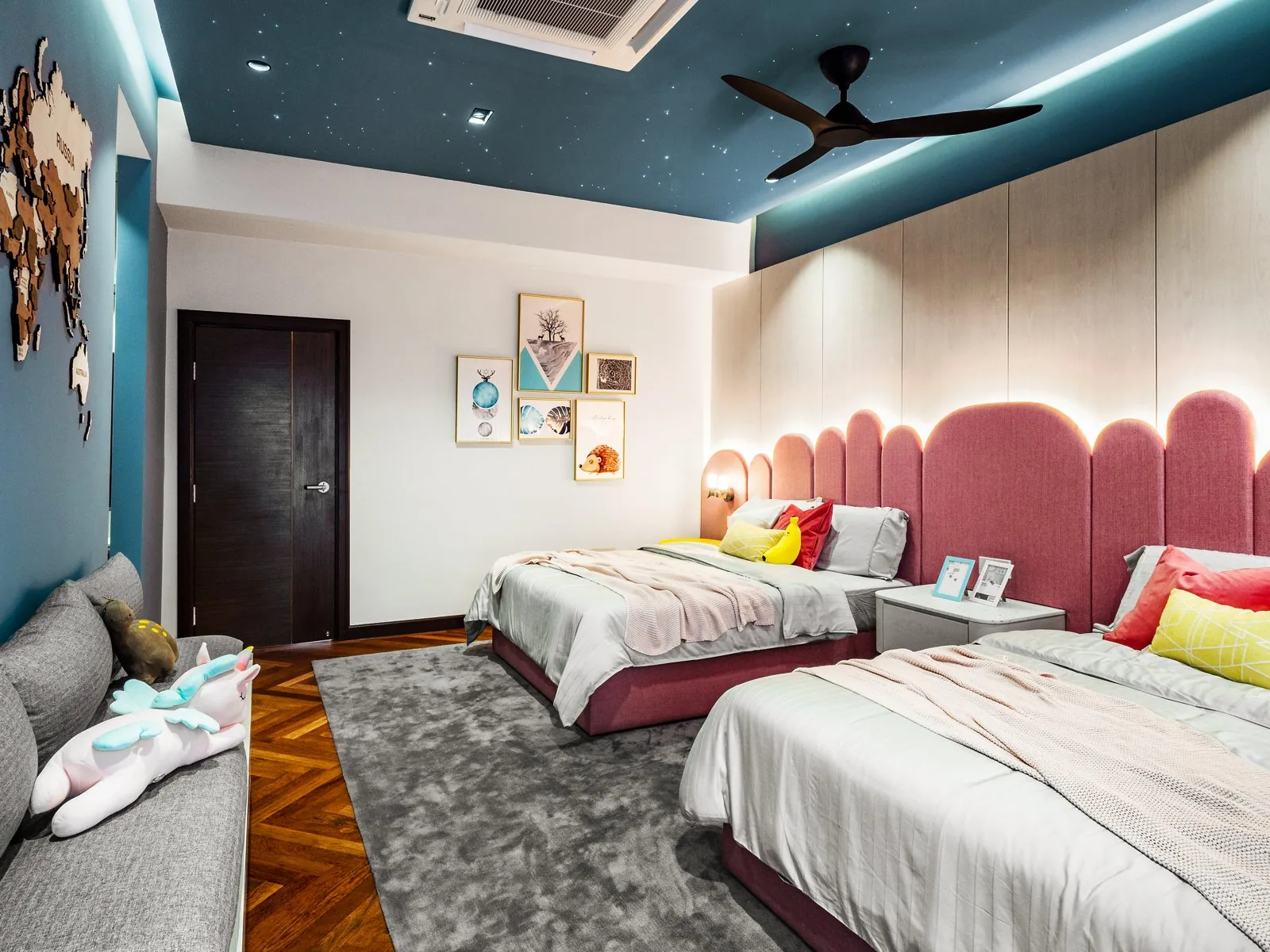
A black ceiling makes a room feel intimate and hides wiring and sprinklers; dark paint can add depth to a tray. At Dorsett Hartamas, a black ceiling panel sits over the dining area; in a children's room in the Terengganu bungalow, the ceiling paint is deep teal. Keep a black ceiling for rooms with good height and paint the walls lighter.
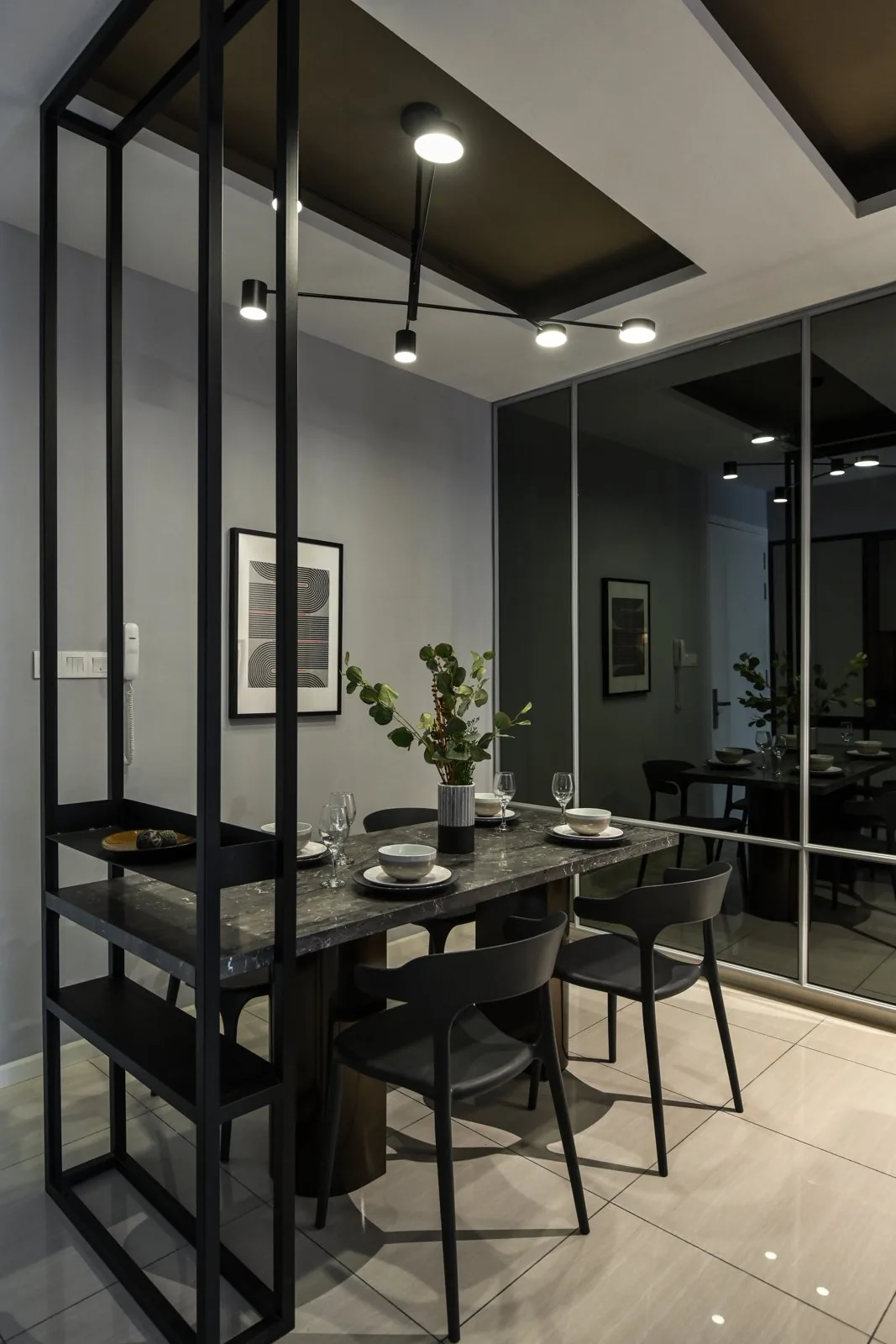
10. Stretch ceilings, mirror and high gloss
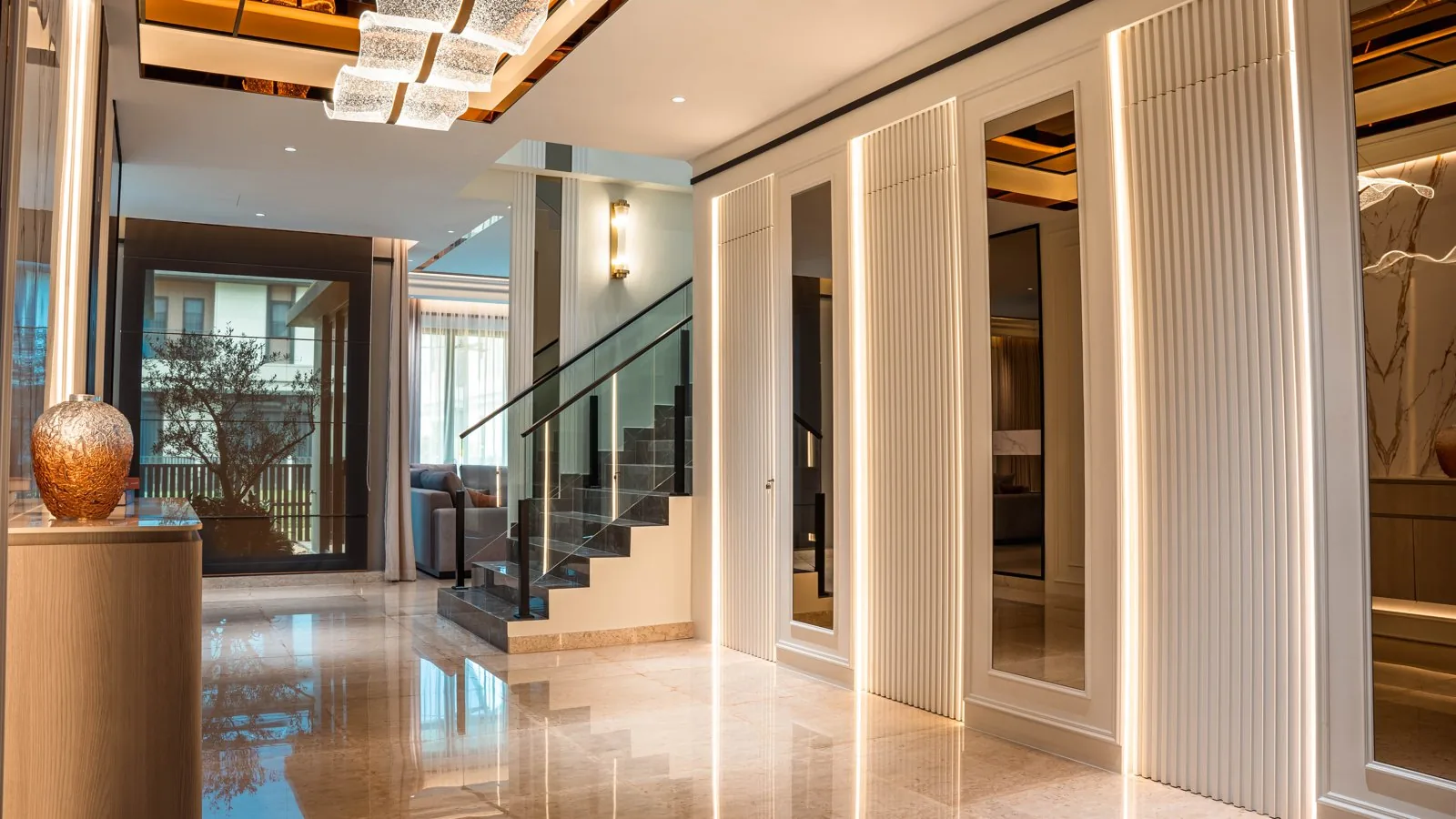
High-gloss ceilings create an illusion of larger spaces. At Setia Marina One in Cyberjaya, sleek bronze mirror coffers reflect the staircase hall and double the height of the space. Stretch ceilings offer a fully customised, impactful look: a PVC or fabric membrane on a track, gloss, matt or printed. Stretch ceilings also make a backlit light panel.
11. Metal ceilings and tin ceiling tiles
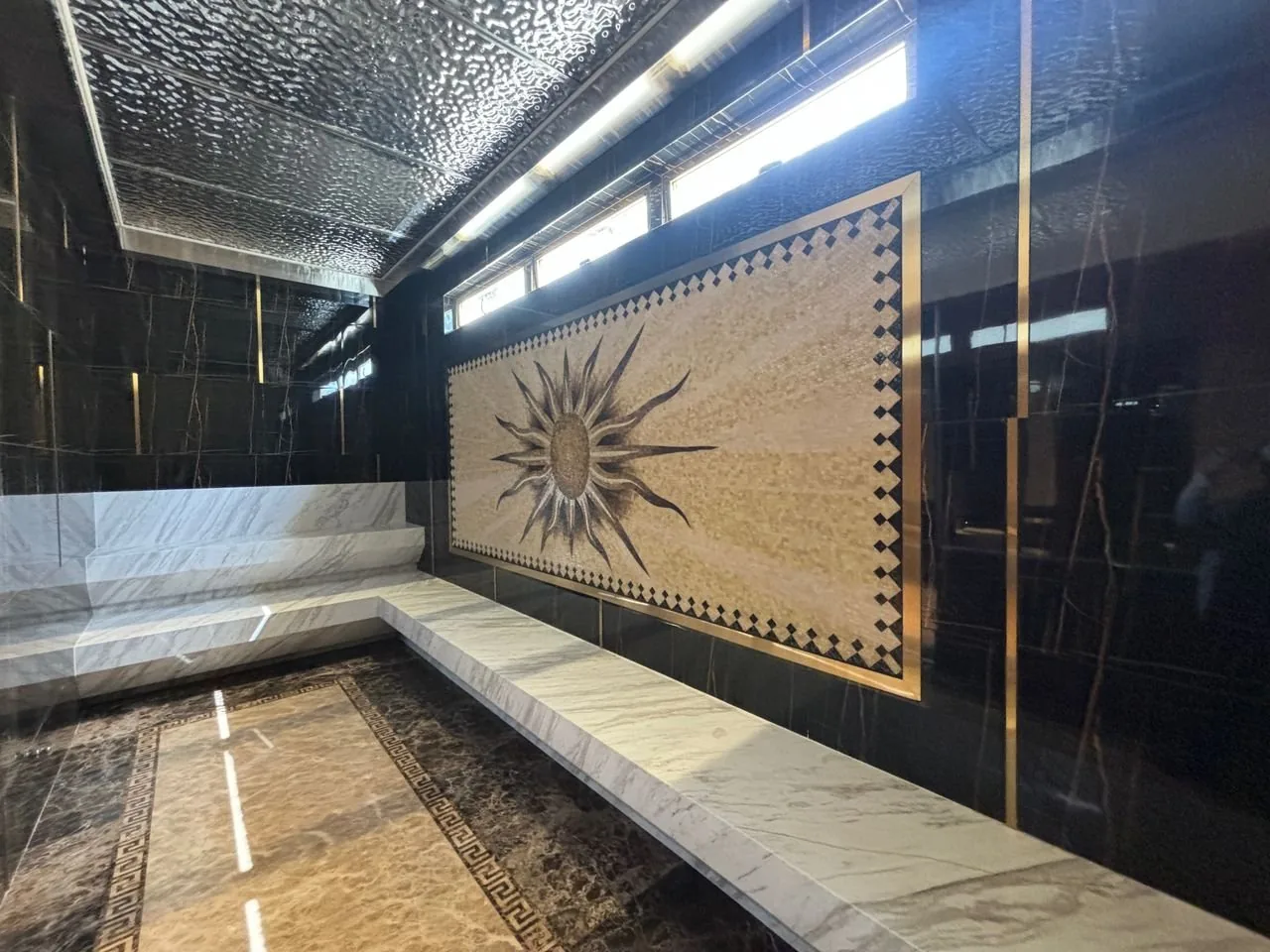
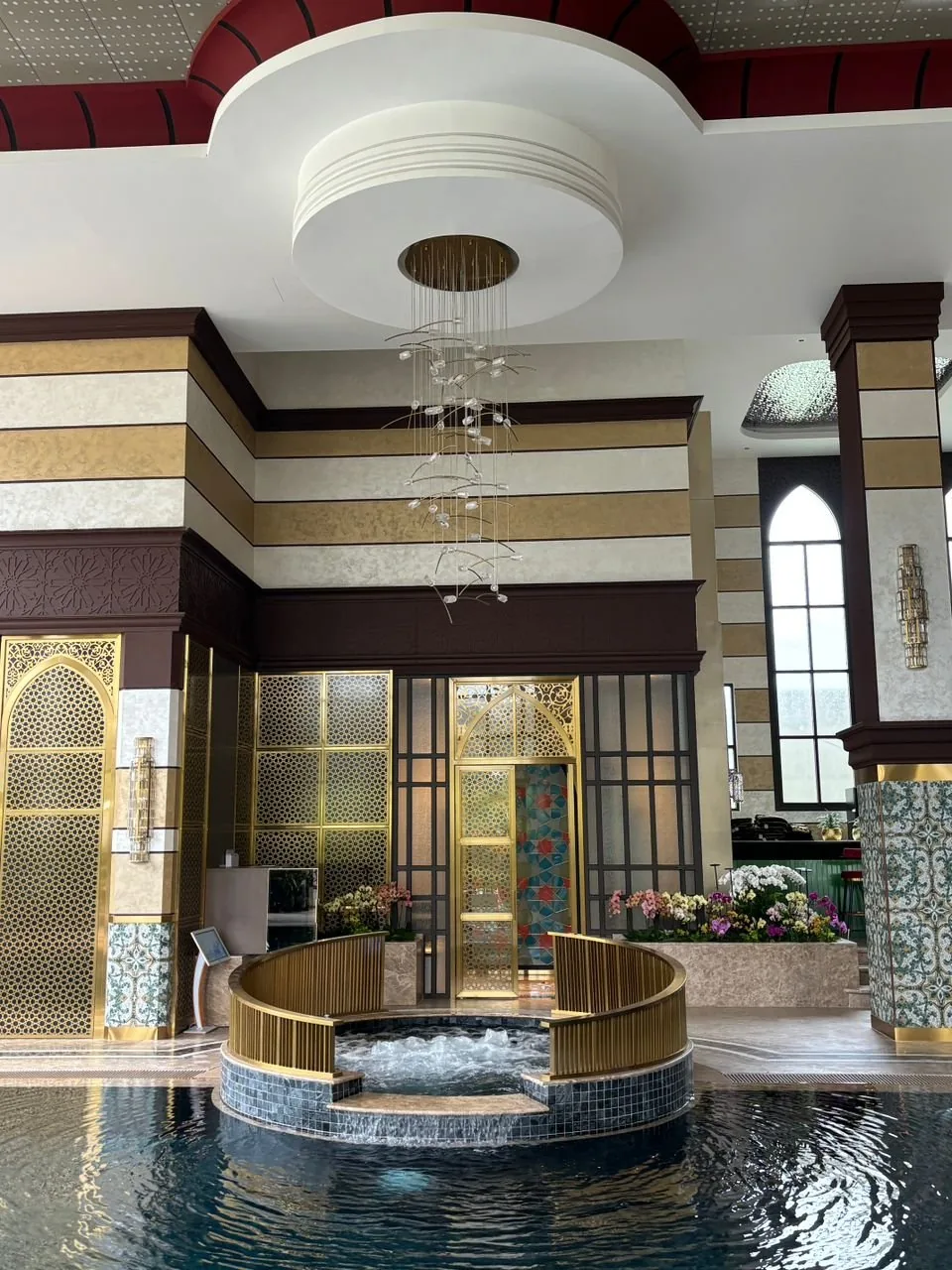
Tin ceilings offer vintage flair with intricate patterns and sheen. Metal ceilings can create a vintage flair with intricate patterns, as the pressed ceiling tiles do in the spa room at The Peak in Ampang. Metal ceilings also resist moisture. In commercial building interiors, ceiling tiles in a grid are the usual suspended ceiling; the ceiling tiles lift out for access.
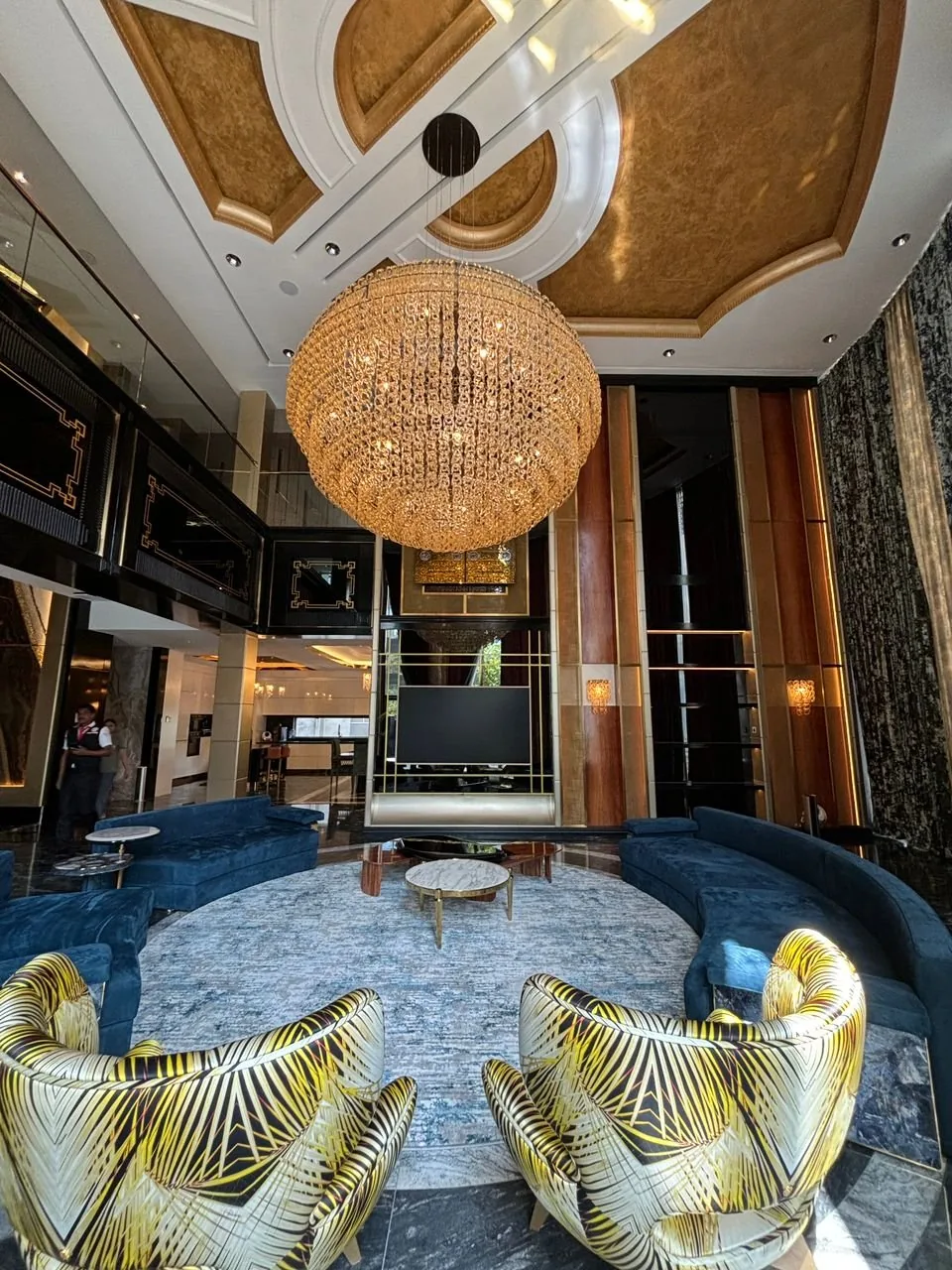
12. A minimalist flat surface for statement lighting
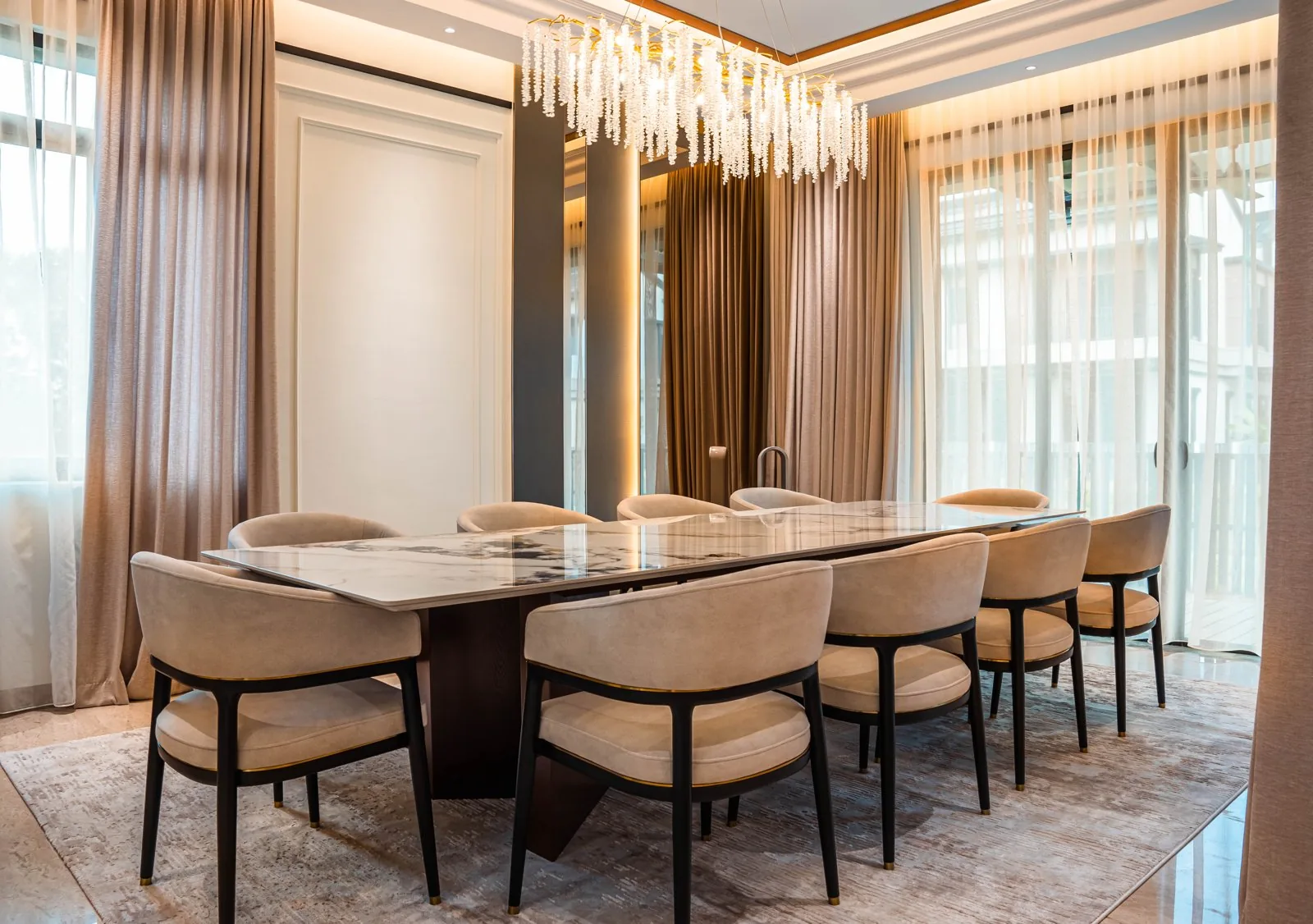
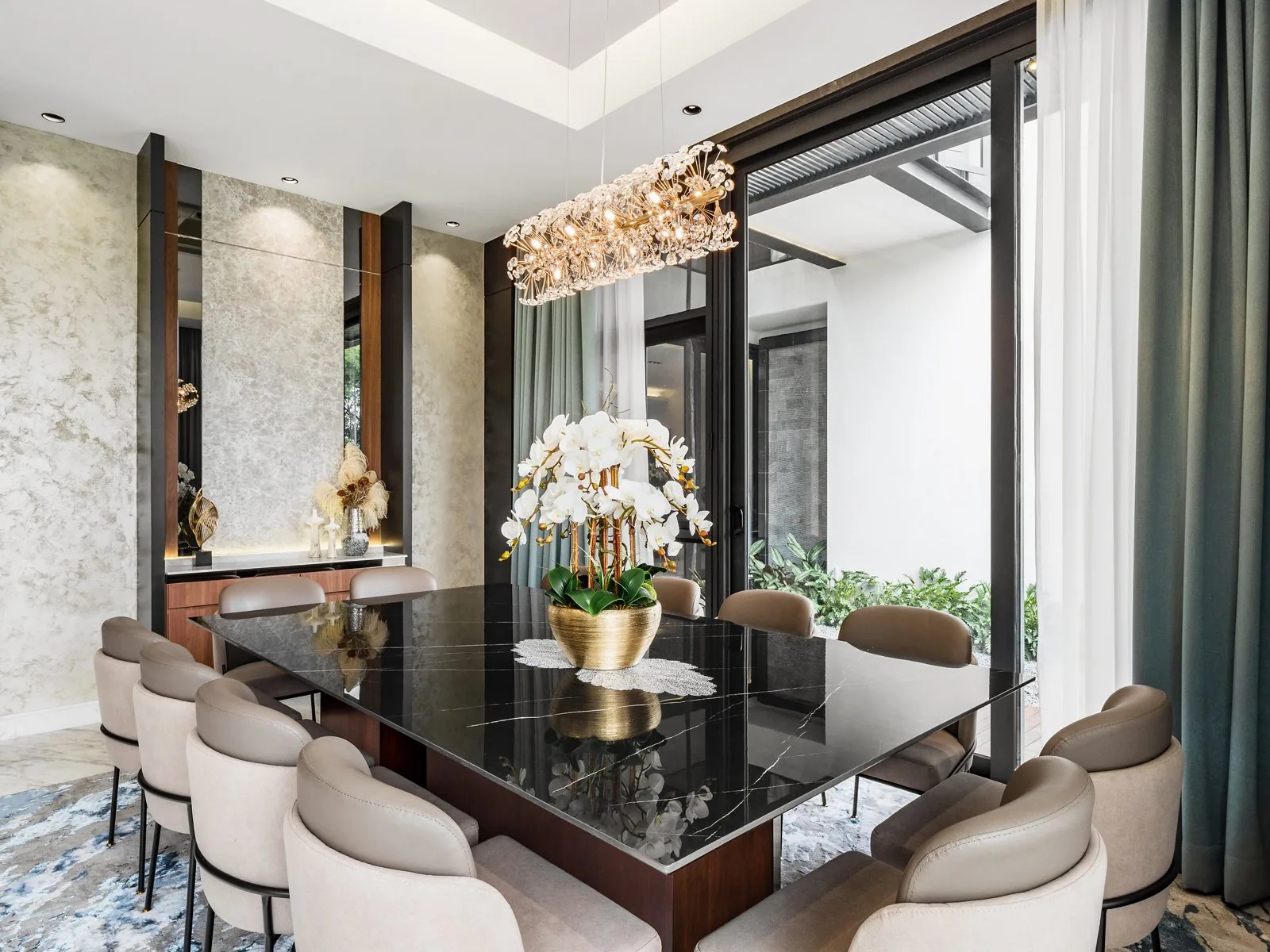
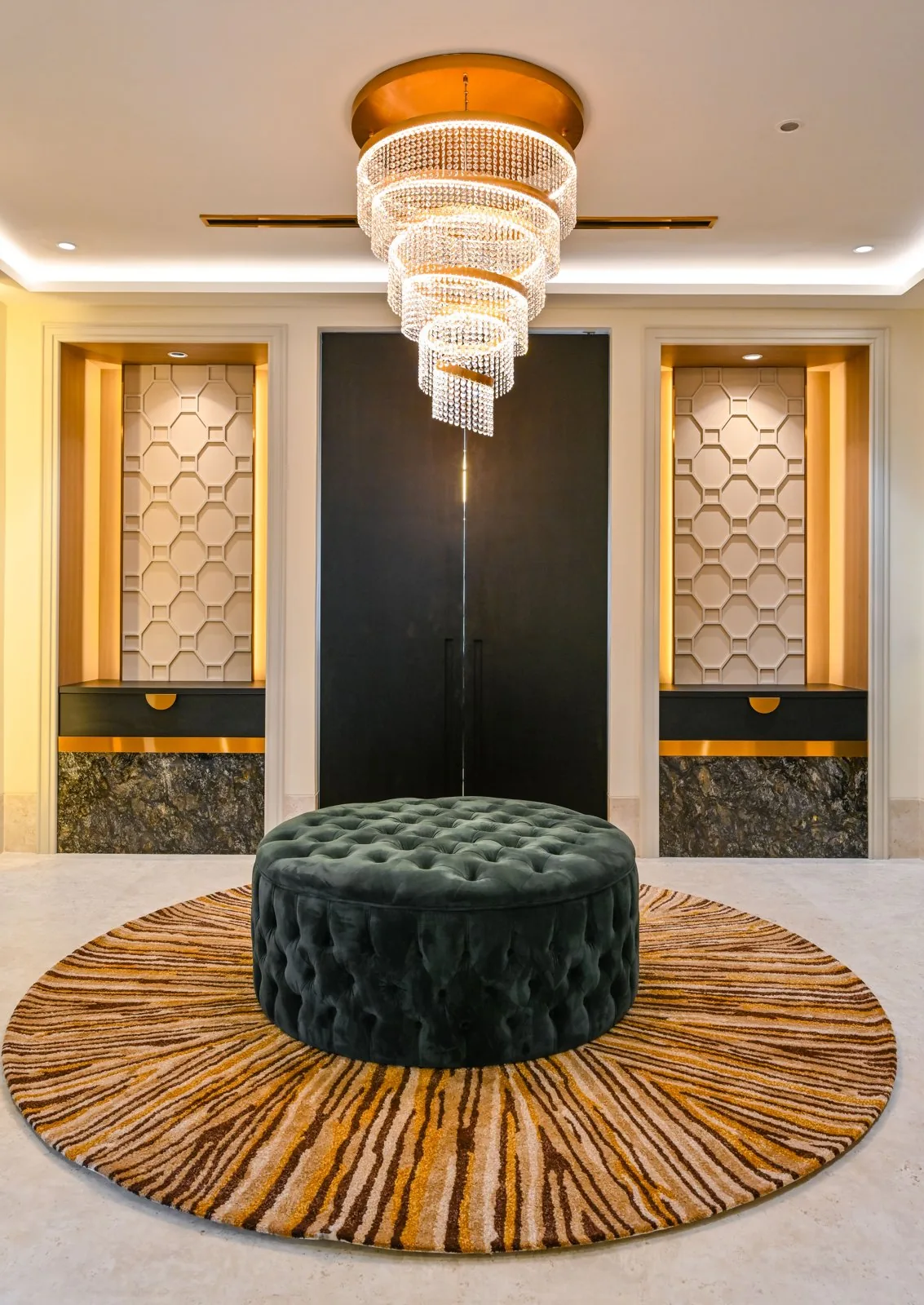
Minimalist ceilings maintain a smooth surface for statement lighting. Modern ceilings often utilise clean geometry and natural materials: a flat surface, clean lines and one striking fitting, like the crystal chandelier over the dining table at Setia Marina One. A simple ceiling design suits minimalist decor and modern decor, and lets the lighting fixtures take centre stage.
Ceiling design by room
Living room ceilings
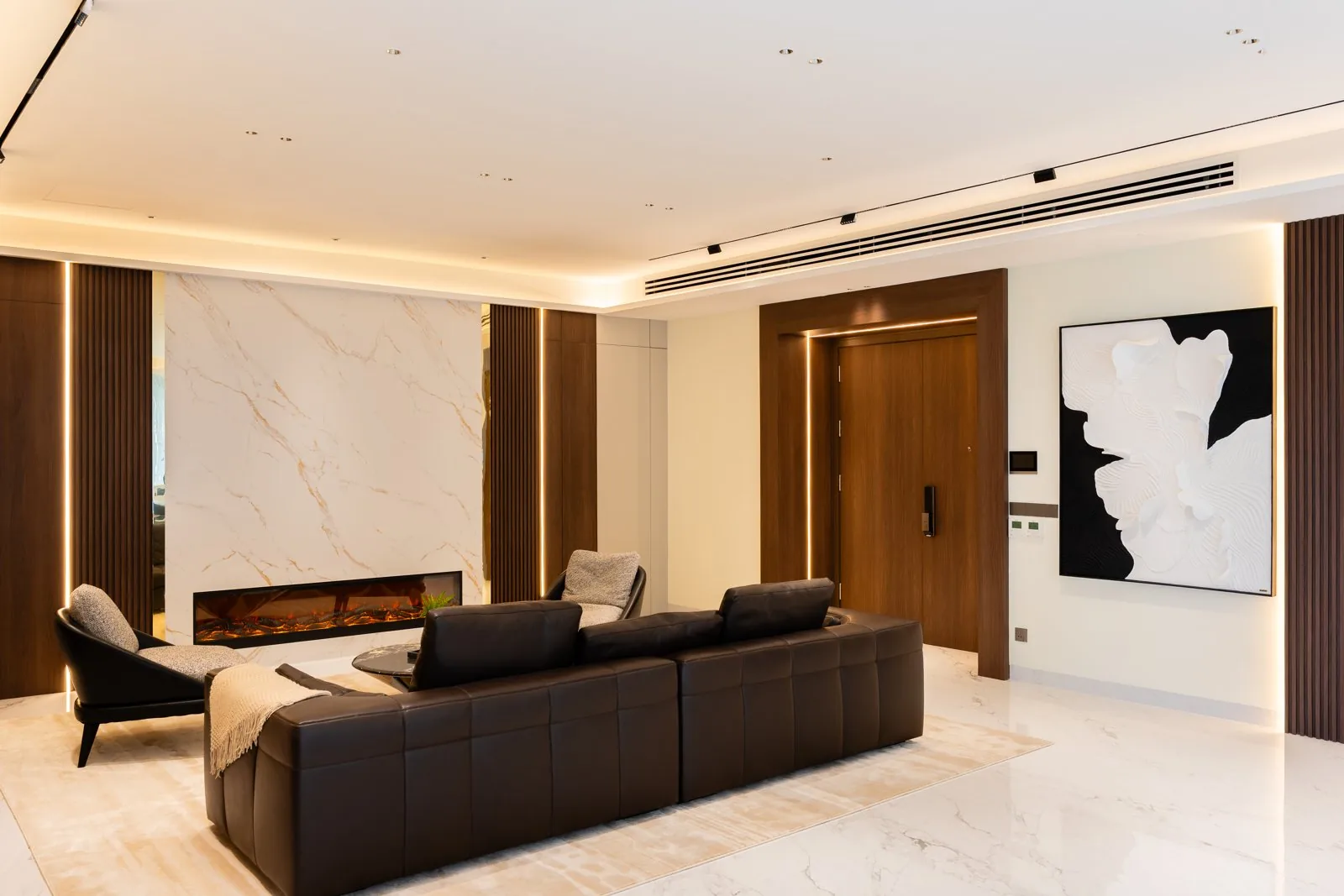
The living room is where a ceiling design earns its place, and a living room ceiling can create the mood of the whole house. Our living room design guide covers the layout below; overhead, a tray or cove ceiling frames the seating and track lighting picks out art, as at Park Regent Residence in Desa ParkCity.
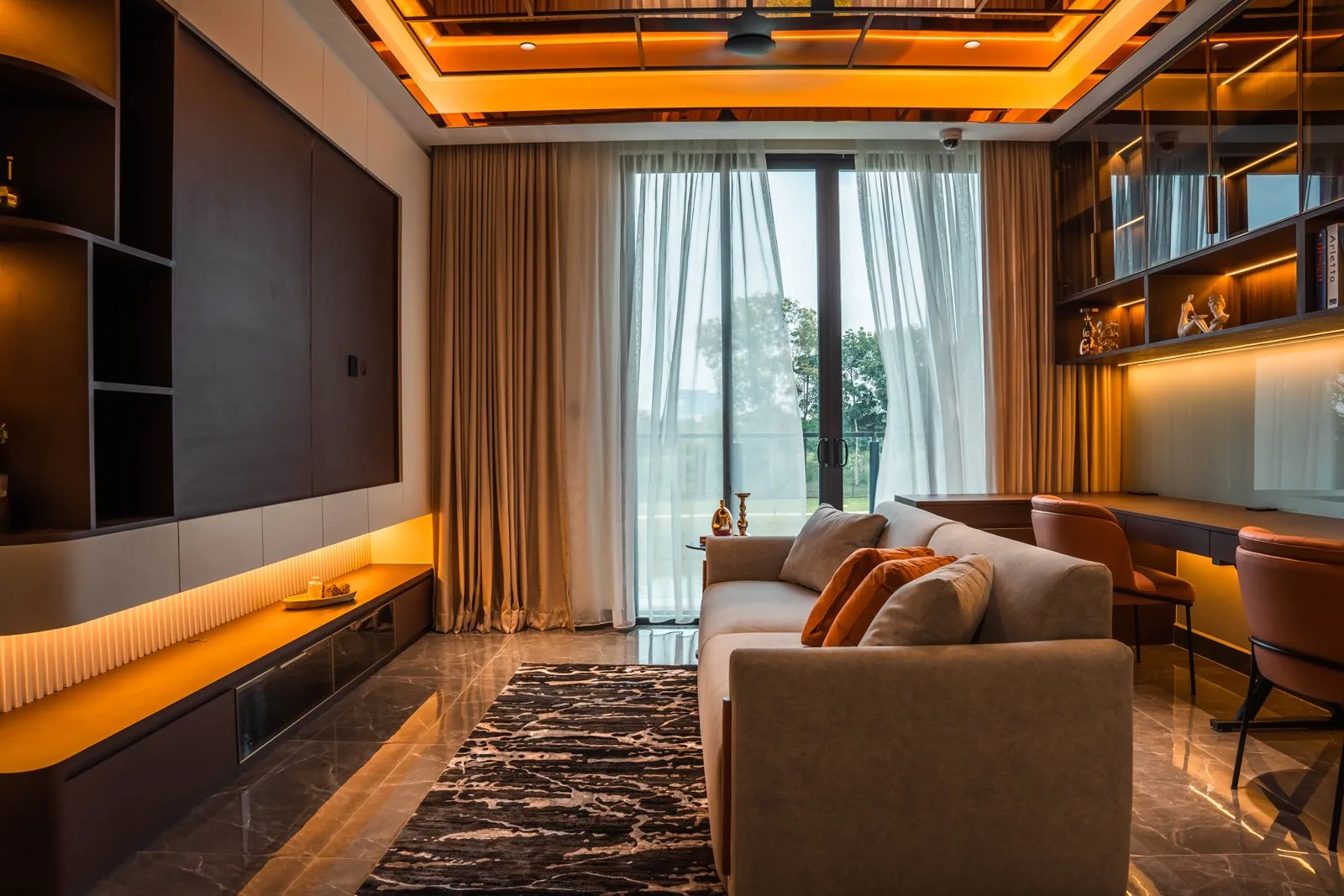
Dining room ceilings
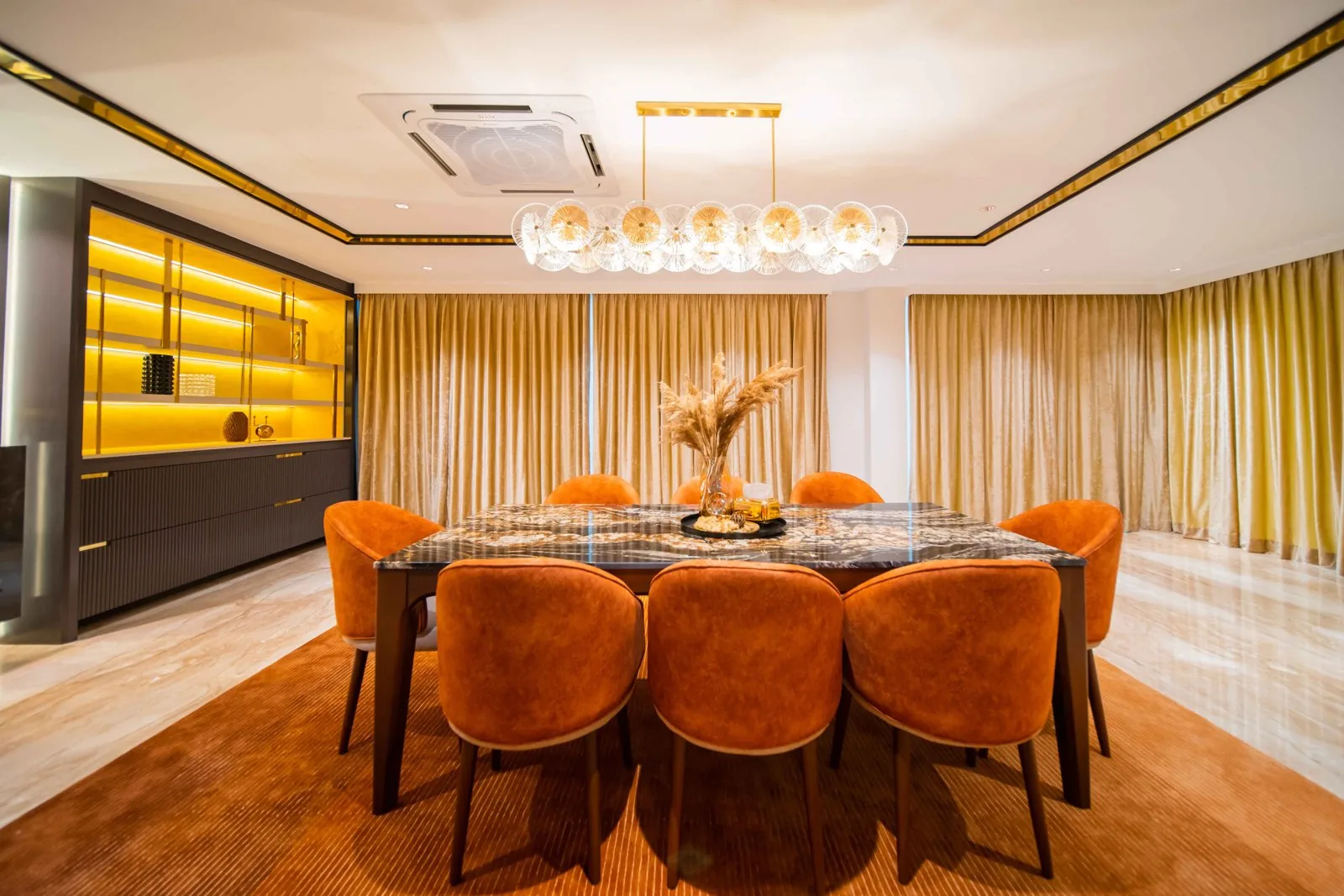
A dining room ceiling should centre on the table. In our Bangsar bungalow, a gold-trimmed tray ceiling holds the chandelier and a curved cove follows the round table and the fan.
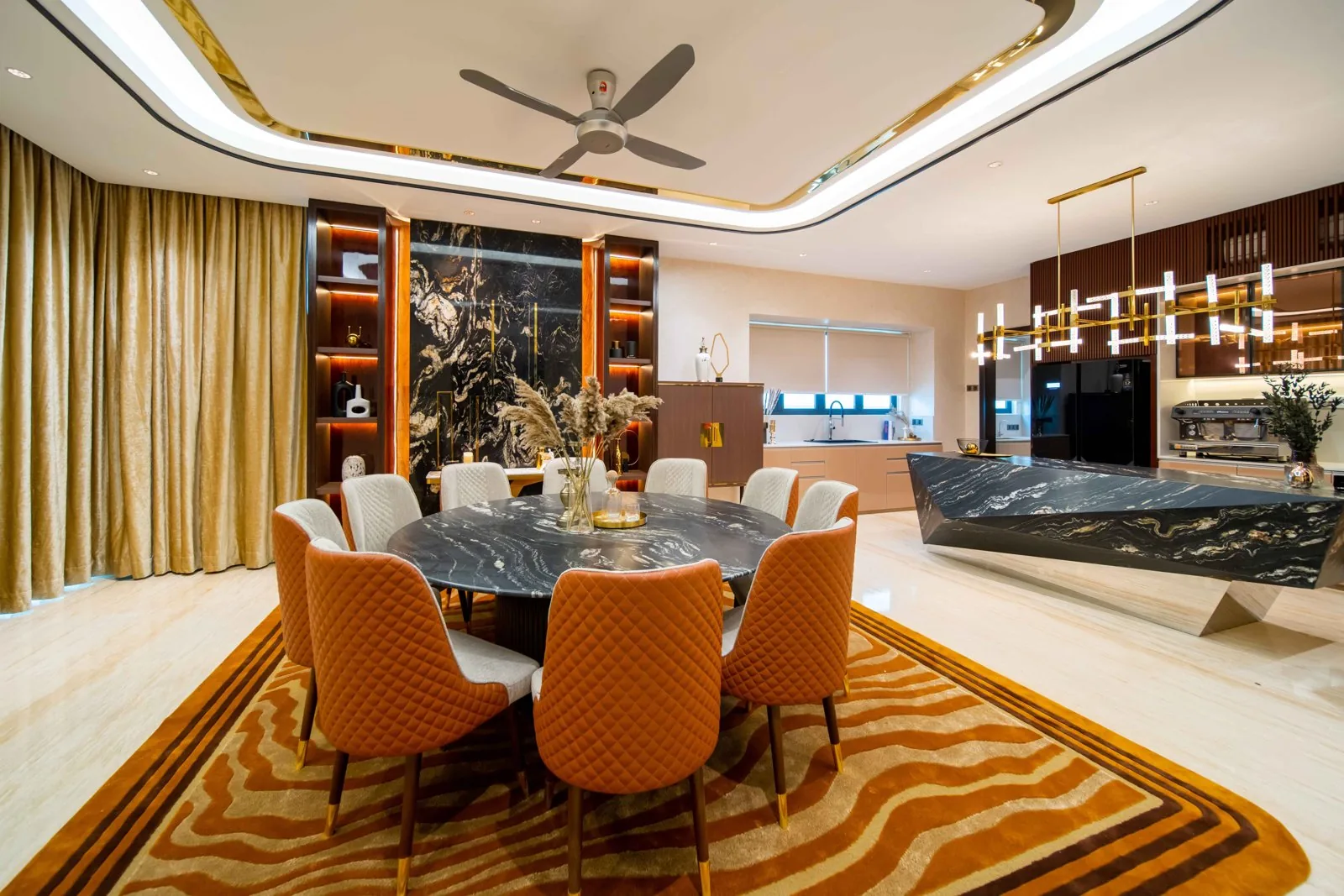
Bedroom ceilings
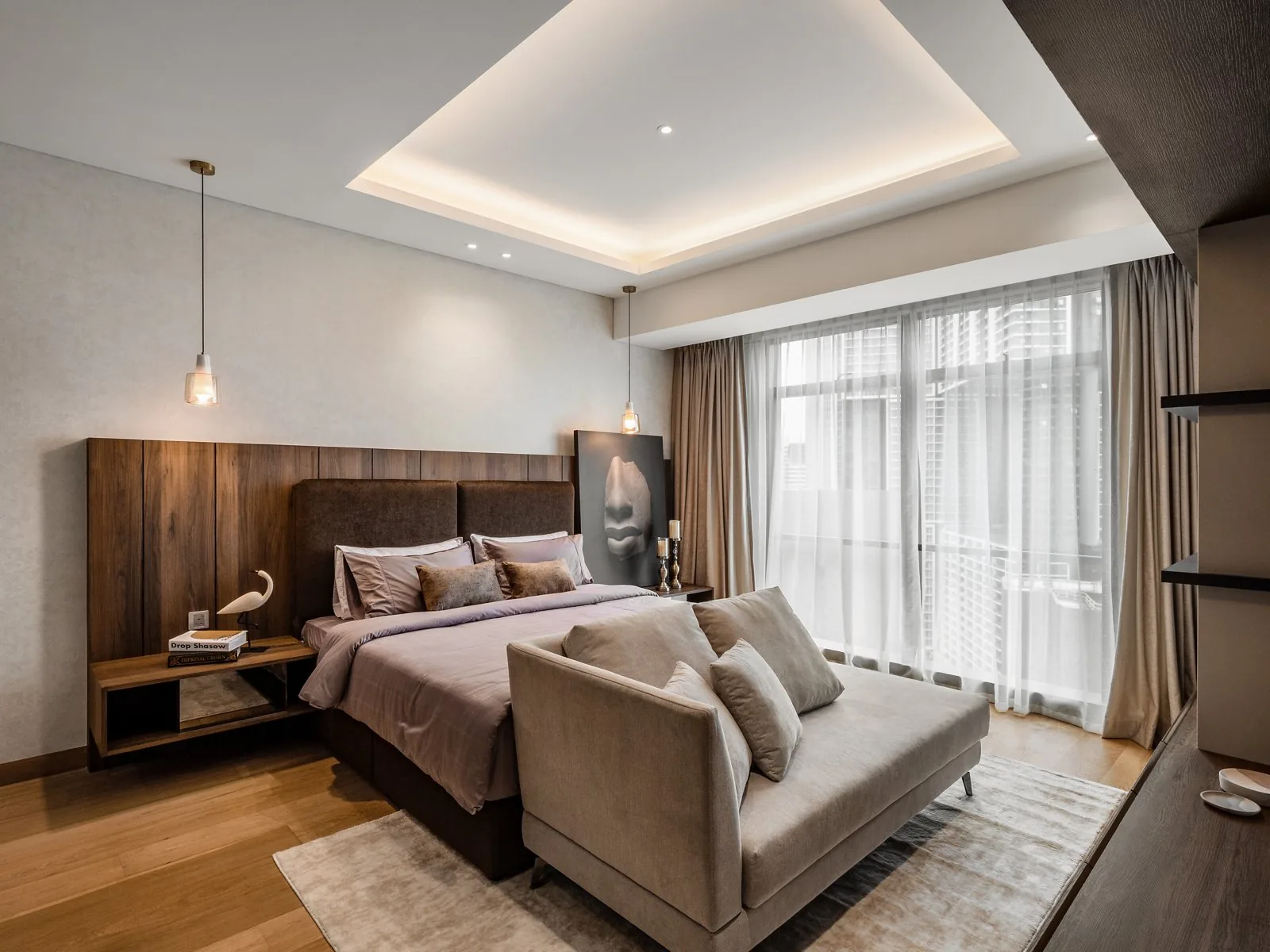
In a contemporary bedroom, ceiling design should calm, not perform. Shallow tray ceilings with a warm cove, the fan in the centre and no downlight over the pillow are our default; see the bedroom design guide.
Kitchen and bathroom ceilings
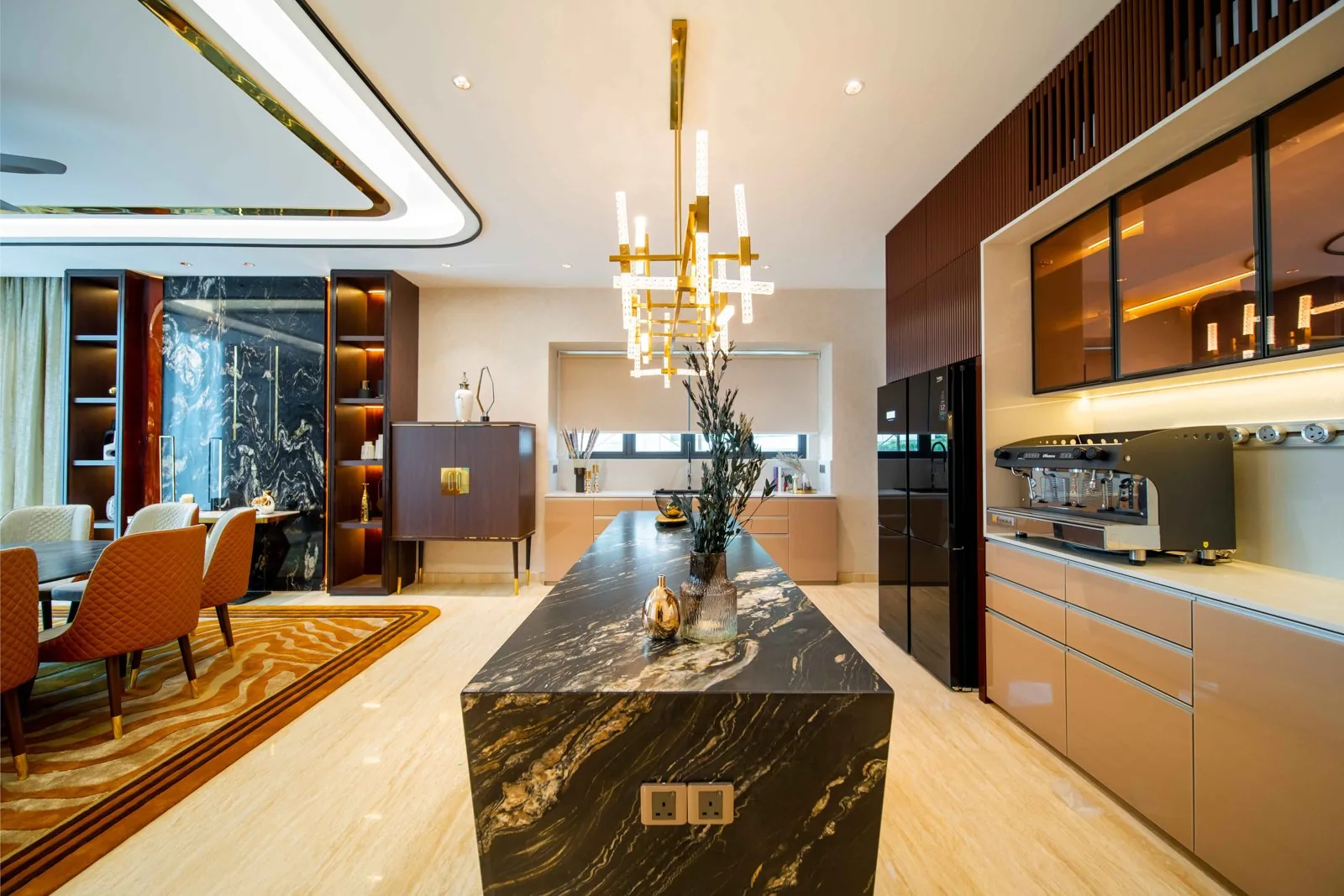
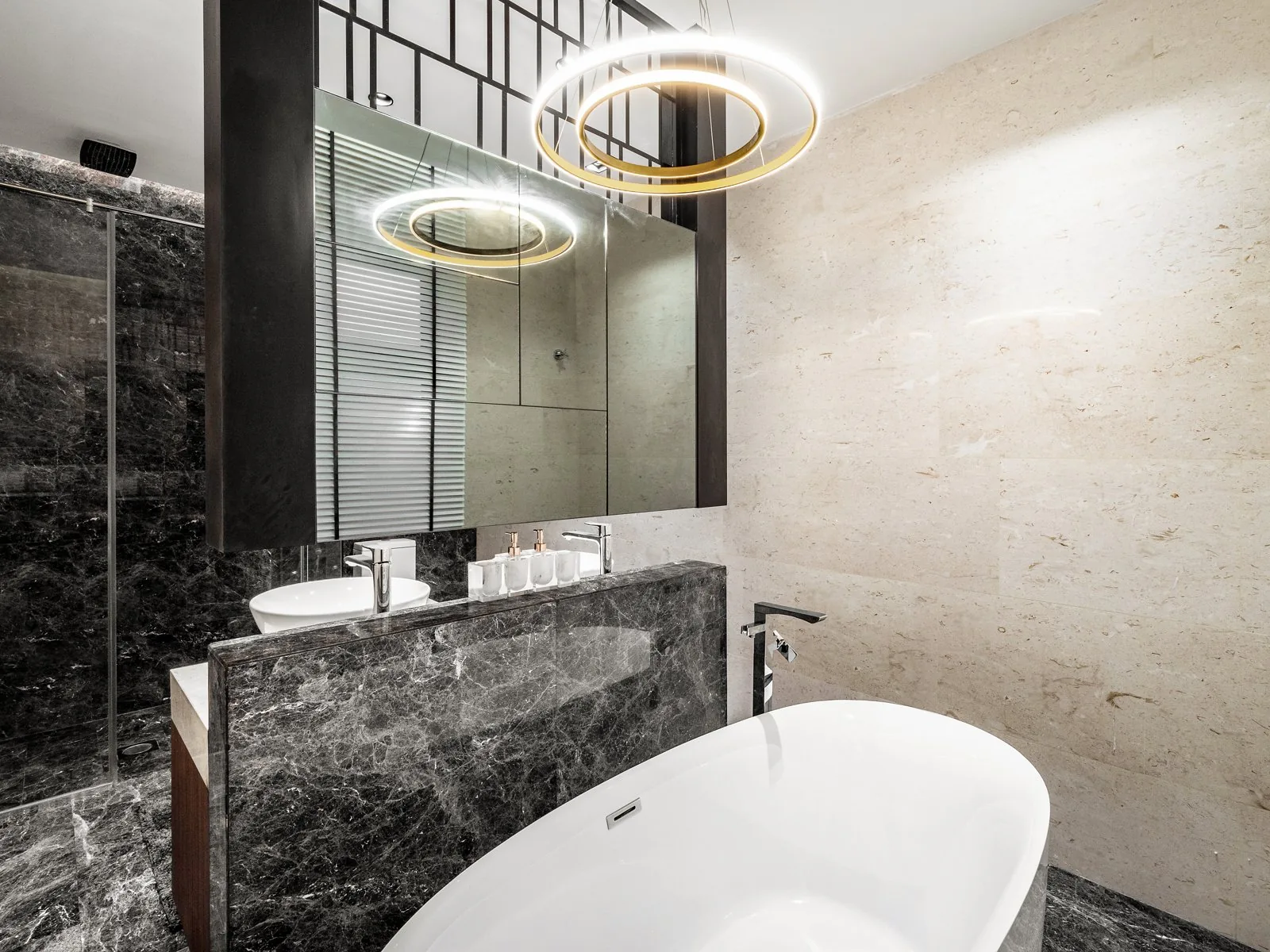
PVC ceilings are moisture-resistant and easy to clean, which makes PVC panels the practical false ceiling for a bathroom or wet kitchen space. A moisture-resistant gypsum board ceiling, painted with bathroom paint, is the alternative.
Ceiling design and lighting
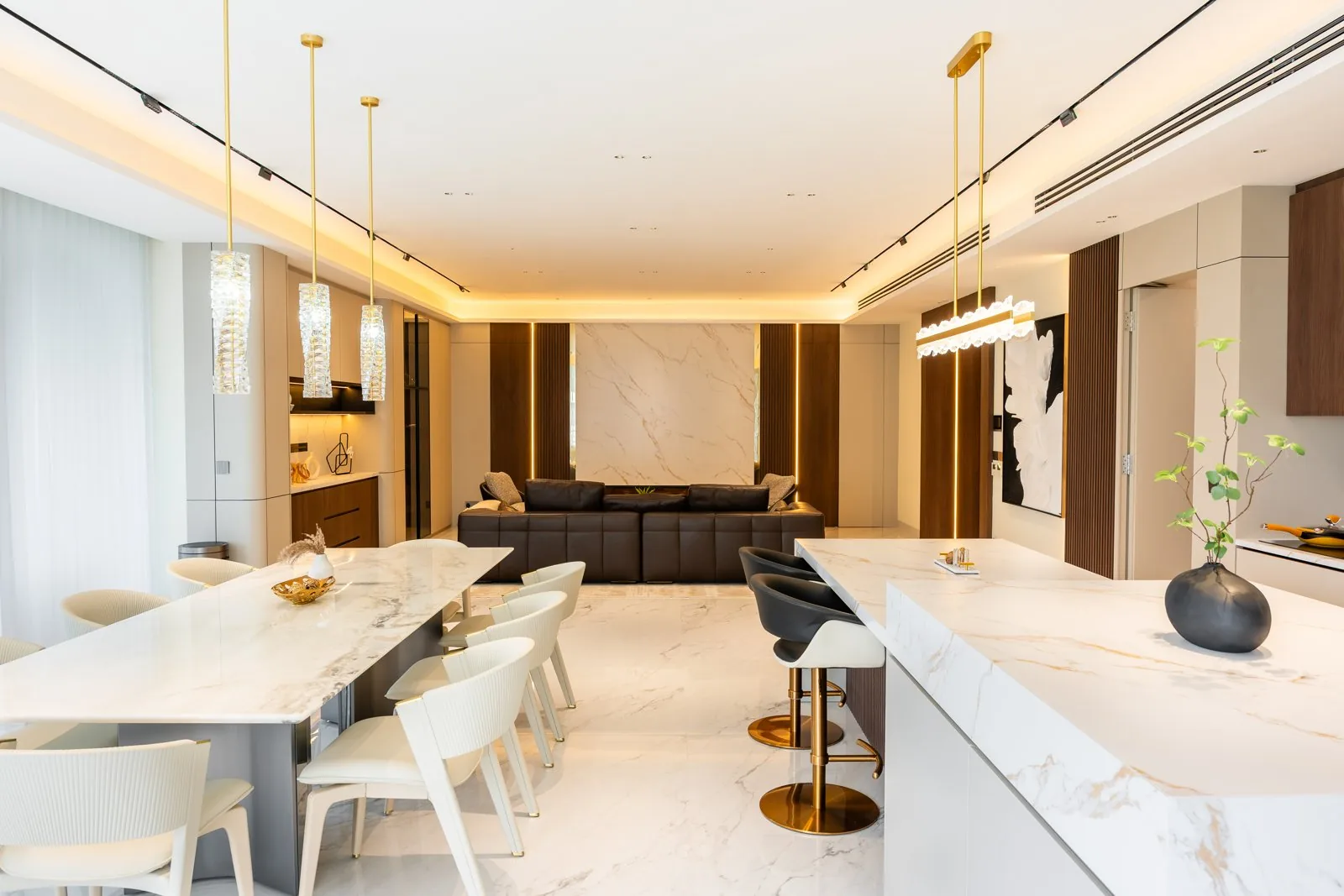
Layering lighting enhances ceiling designs and creates a dynamic atmosphere: ambient light from a cove, recessed lighting or track lighting for tasks and art, and one decorative light to create a focus. Pendants from houses like Flos, shown in Kuala Lumpur at Vluz Concept in Desa Sri Hartamas, or a crystal installation of the kind Lasvit has installed in Kuala Lumpur, need the space planned around them. Our chandelier guide covers light sizes and style.
False ceiling materials for Malaysia's humidity
Gypsum and plaster
Gypsum ceilings can be customised with detailed patterns and textures, and gypsum ceilings can be wiped down with a mild solution. Plaster ceilings are durable and resistant to dents and scratches. Most Malaysian homes, modern or traditional, use a gypsum false ceiling, called a plaster ceiling locally.
PVC panels, wood, metal and fabric
PVC suits wet areas. Wood brings warmth and texture; metal resists moisture; fabric ceilings create soft, enveloping spaces with texture. Textured paint or wallpaper on a ceiling adds patterns at little depth, and a rustic lime paint suits older houses; our texture paint guide explains finishes.
Ceiling design and height: condos versus landed homes
Simple ceiling designs suit low ceilings to avoid making the space feel cramped, and light colours on the entire ceiling keep a small room airy; keep the false ceiling to where ducts need it. Light walls keep it airy too. Our condo design guide covers low slabs; in landed homes, double-height volumes and vaulted roofs, covered in our bungalow design guide, allow bolder ceiling shapes.
Planning and installation
Good ceiling design factors in structural elements like beams and wiring. Before false ceiling installation, survey the building: the existing ceiling, beams and air-conditioning, then match the ceiling to the flooring and walls; the flooring and ceiling should share one palette. Some councils ask for minor-works approval for plaster ceilings, so check before building starts.
Ceiling design ideas for 2026
Modern ceilings can dramatically alter the perception of space and aesthetics. Modern ceiling design this year favours warmth over gloss: warm wood with a cove, gold leaf in one tray, curved coves, and suspended plants from ceilings, which enhance room freshness and aesthetics. Explore unique ceiling designs that transform one room first, transform the rest later, and explore materials in a photo of a finished space, not a render.
How Blaine Robert Design approaches ceiling design
We treat the ceiling as one of the architectural elements of a room and draw it with the furniture plan, so the chandelier lands on the table. Clients who furnish with Minotti or Molteni&C, or cook in a bulthaup kitchen, expect the ceiling to hold its own beside them. See our home interior design guide and residential service.
Frequently asked questions
Which ceiling design is best for a home?
The best ceiling design fits the room's height and function: a tray or cove in living spaces and bedrooms, a flat surface in low condos, PVC in wet areas, and a coffered ceiling only where height allows.
What are the common types of ceilings used in Malaysia?
A gypsum (plaster) false ceiling, with flat, L-box, tray and cove profiles, is the most common. PVC panels suit bathrooms; timber and metal suit landed homes.
Which is better, PVC or plaster?
Plaster or gypsum gives a seamless finish for living spaces and bedrooms; a PVC false ceiling resists moisture and is easier to clean, so it suits bathrooms and wet kitchens.
How much does a ceiling design cost in Malaysia?
It depends on area, profile, material and lighting. We do not publish prices because every ceiling is drawn to its room; our cost guide explains what drives the cost.
Start your ceiling design
Explore a photo of every room we have completed in our gallery. When you are ready, contact us to book a design consultation.