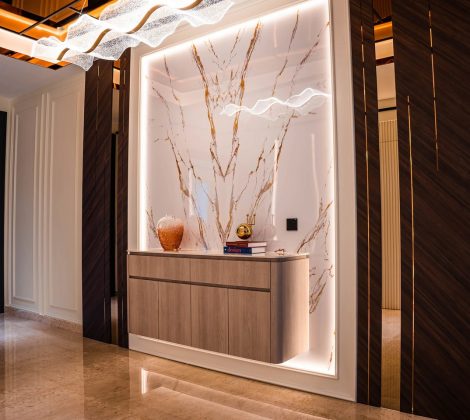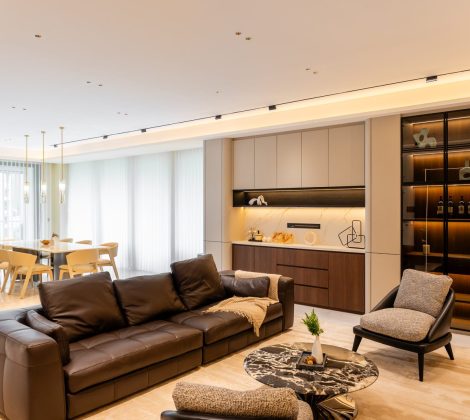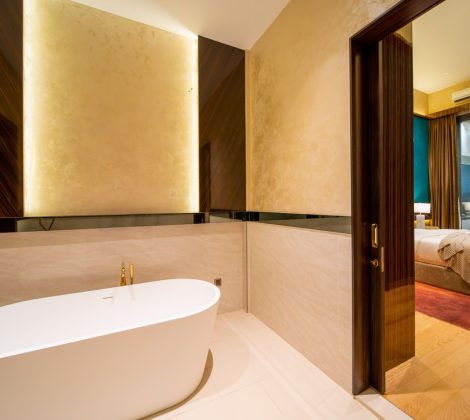

TV cabinet design decides how the whole living room reads. The TV wall is often the first thing you see from the door, so the TV cabinet and the panel behind it become the focal point of the living space.
A good TV cabinet does three jobs: it holds the screen at the right height, hides the cables, and gives practical storage without visual clutter.
Below are 12 TV cabinet design ideas from homes we have completed.
Key takeaways
- TV cabinets should offer a balance of open and closed storage for functionality.
- Centre the TV screen at seated eye level for the best viewing experience.
- Plan cable management and ventilation before you choose a finish.
- Floating TV cabinets and a wall mounted TV cabinet keep the floor open.
- Integrated LED lighting and natural wood give a modern look that lasts.
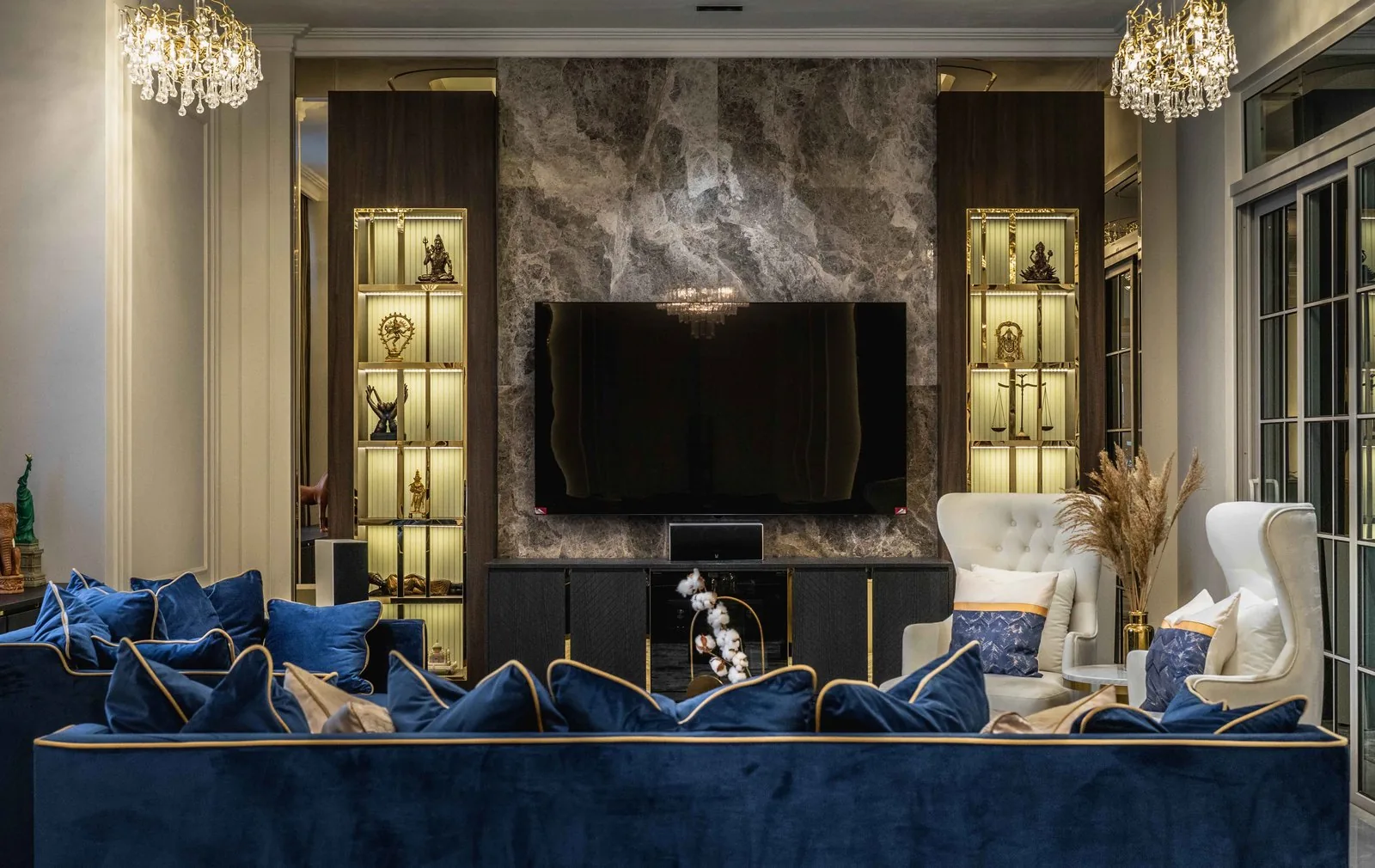
What makes good TV cabinet design?
Good TV cabinet design starts with the living space, not the catalogue.
Choose a TV cabinet that fits your room's dimensions and the available space. Ensure the TV cabinet design aligns with your room's aesthetic and your existing decor.
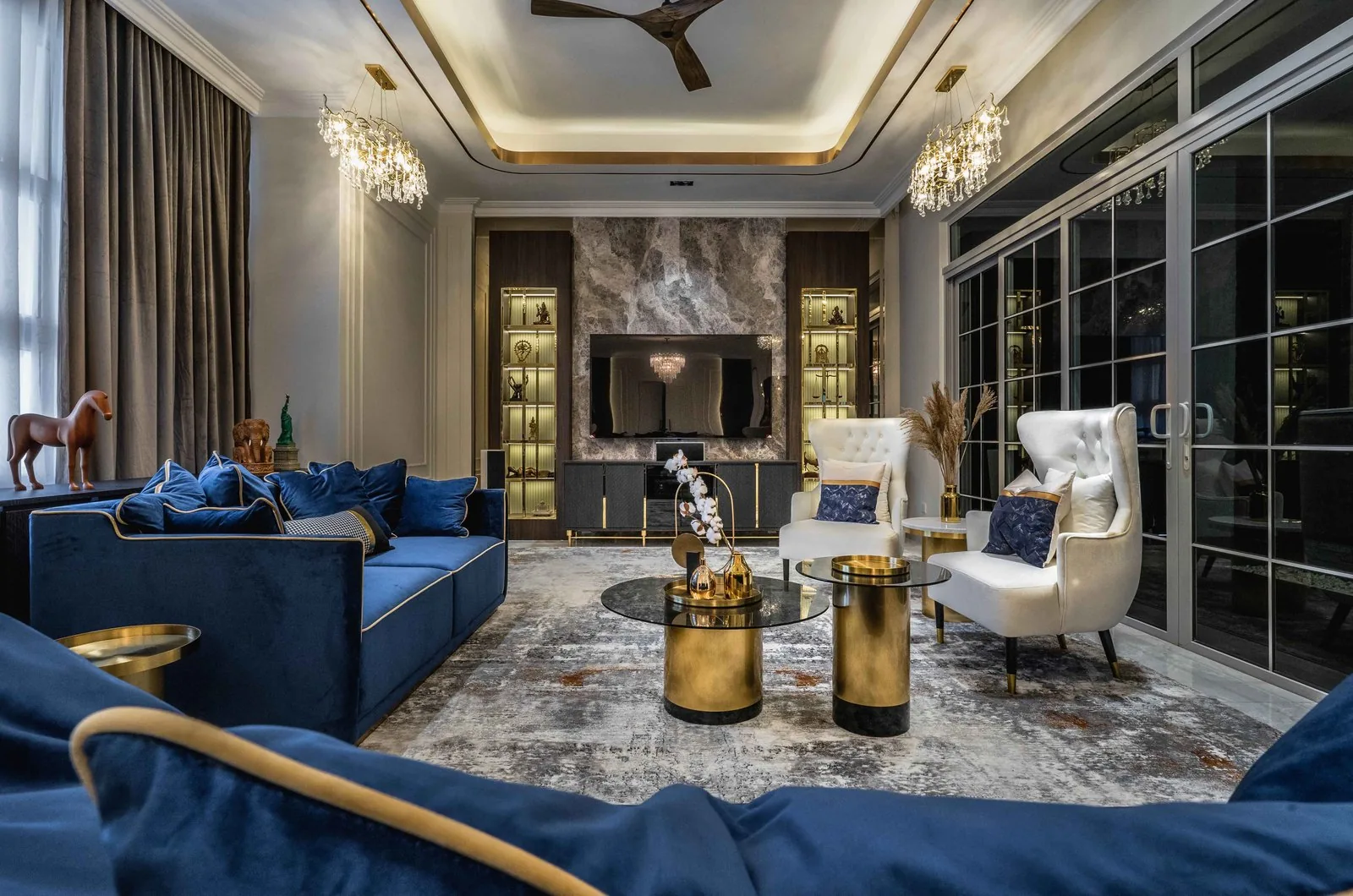
Key factors are the TV size, the seating distance, your storage needs and the devices you own.
A TV unit plays a central role in the living room: everyone faces it.
How to design a TV cabinet
Measure the wall, the TV, the storage space you need and the distance from the sofa in your living space.
List everything the TV cabinet must hold: set-top box, router, soundbar and gaming consoles.
Closed cabinets are essential for stowing away media clutter; open shelves carry books and display items.
Plan power, cables and light first: designing a TV cabinet involves considerations for cable management and ventilation from the first drawing.

What are the ideal dimensions for a TV cabinet?
Height: centre the TV screen at eye level. For a standard sofa, the centre of the screen sits about 42 inches (107 cm) from the floor, so a low TV console sits well below it.
Width: a 55-inch TV is about 48 inches (122 cm) wide, so choose a TV console of 60 inches (about 150 cm) or more.
Depth: allow room for each box plus its cables at the back.

Built-in or floating: choosing your TV console
The first decision in any TV unit design is whether the TV cabinet sits on the floor, hangs on the wall or fills it.
1. A wall mounted TV cabinet that floats
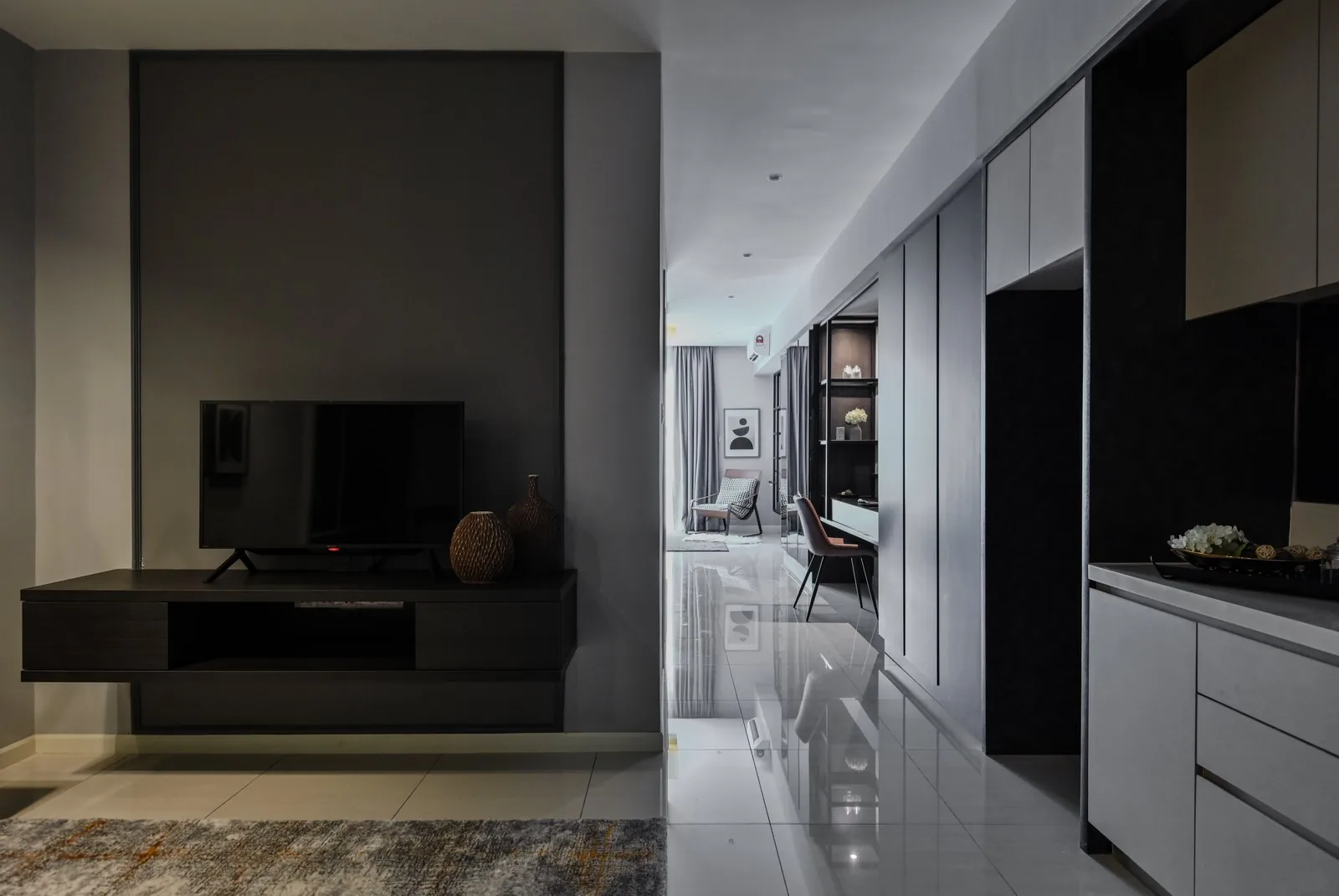
Modern TV cabinet designs emphasise floating structures and integrated LED ambient lighting.
A wall mounted TV cabinet creates an airy, modern look. Floating wall-mounted consoles keep floor space open and make cleaning easier.
Floating TV cabinets also enhance the illusion of space, so this TV cabinet design suits a small living room or a condo living area.
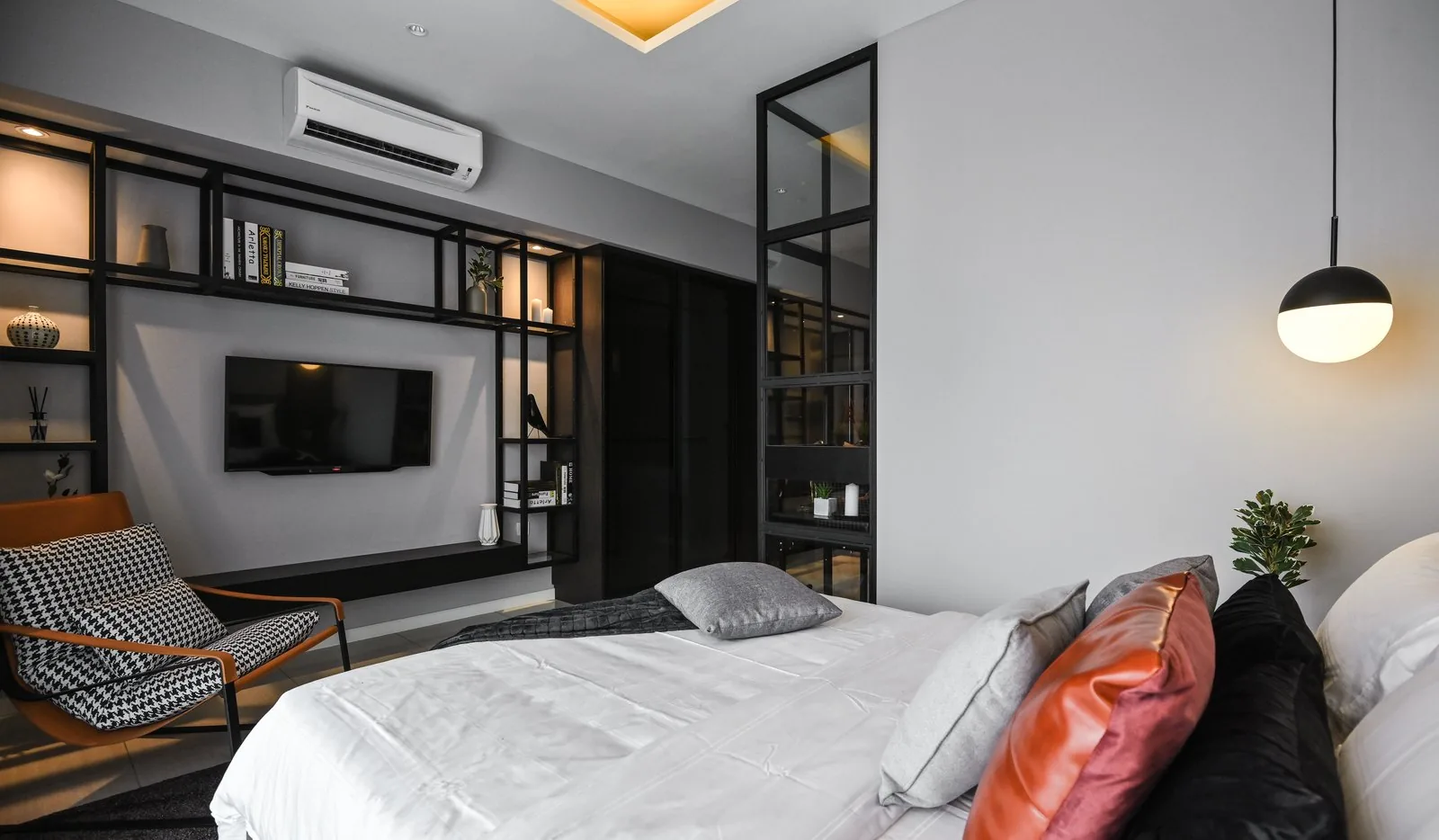
In the Dorsett Hartamas show unit, a dark floating TV cabinet sits under a grey panel with clean lines and the wall mounted TV above.
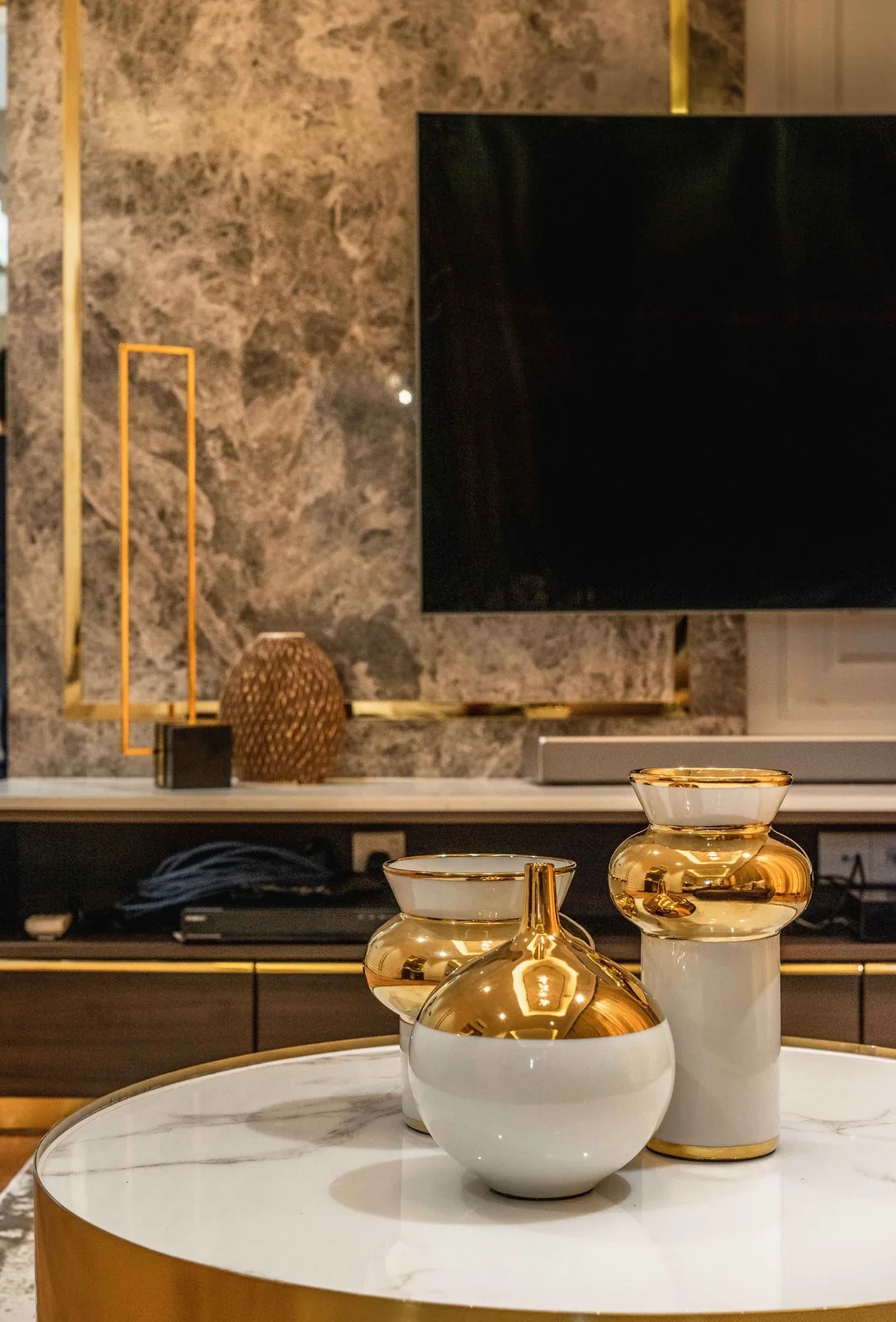
A minimalist floating TV unit with floating drawers gives concealed storage and a clutter free appearance. Fix any wall mounted TV cabinet into a solid wall.
2. A long, low TV console for open-plan living

In an open plan, the TV console can run the length of the wall and tie the living area to the dining and bar.
In our Bangsar bungalow, a long black TV cabinet runs along one wall of the living room, with clean lines and drawers below.

At Quayside Villa in Port Dickson, a low TV console keeps the view over the marina clear.
3. A full wall built-in TV unit

A full wall TV unit gives the most hidden storage. In the Bangsar family room, a timber wall unit frames the TV point with glass display cabinets and a low bench.

Integrated media walls create a cohesive look for the TV and the surrounding elements.
Multi-functional TV walls combine storage and display in one unit, so this TV cabinet design gives the most storage space per metre of wall and a clutter free entertainment space.
The TV panel as a focal point
A well-designed TV panel design becomes a stunning focal point; our feature wall ideas cover walls without a screen.
4. A marble TV wall
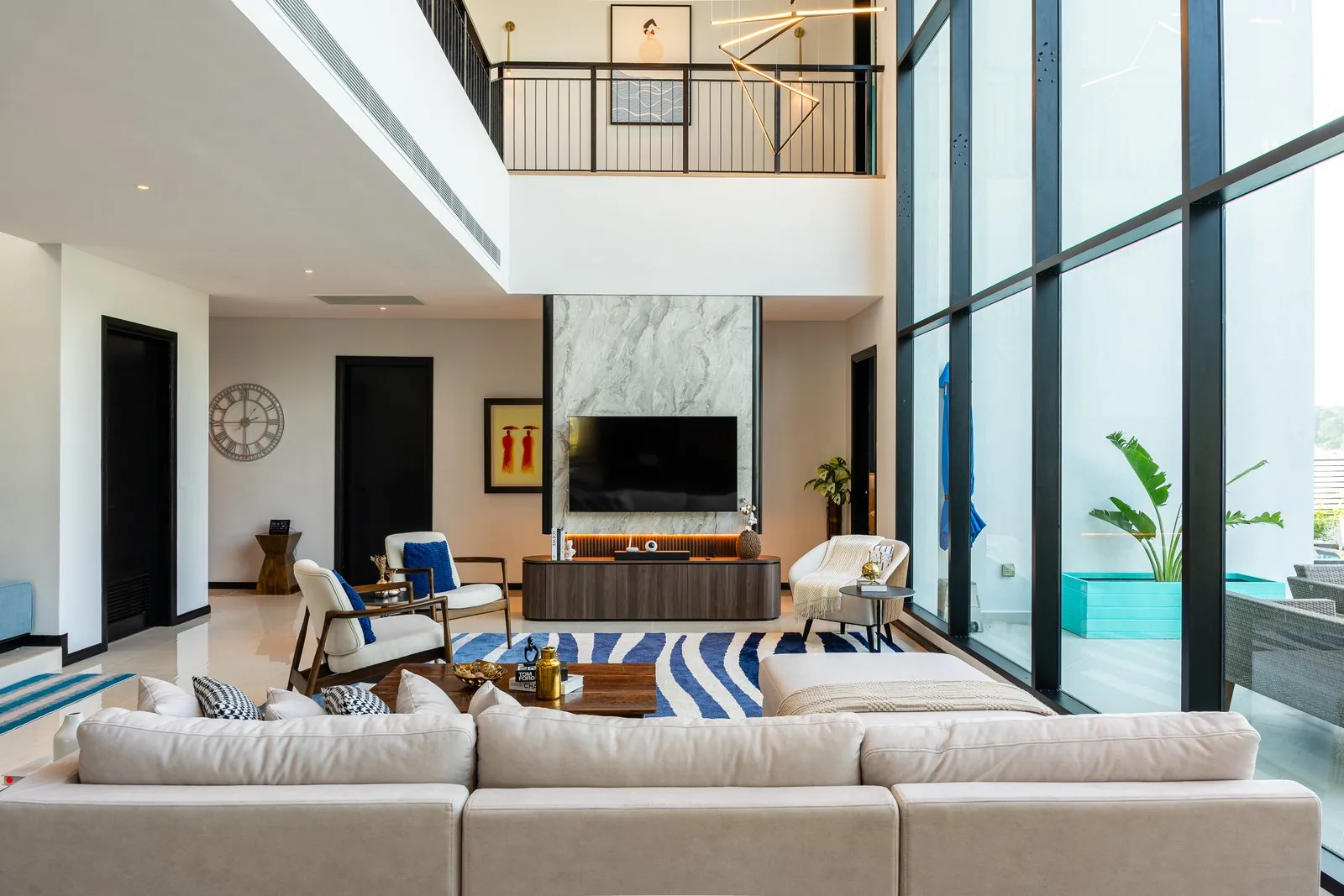
Marble gives timeless elegance. At Quayside Villa, a white marble panel rises through the double-height living room as its focal point, and the TV console stays low.

In our Terengganu bungalow, grey marble sits beside open shelving in dark timber. The contrast adds depth and more visual interest.
5. Fluted timber TV panel design
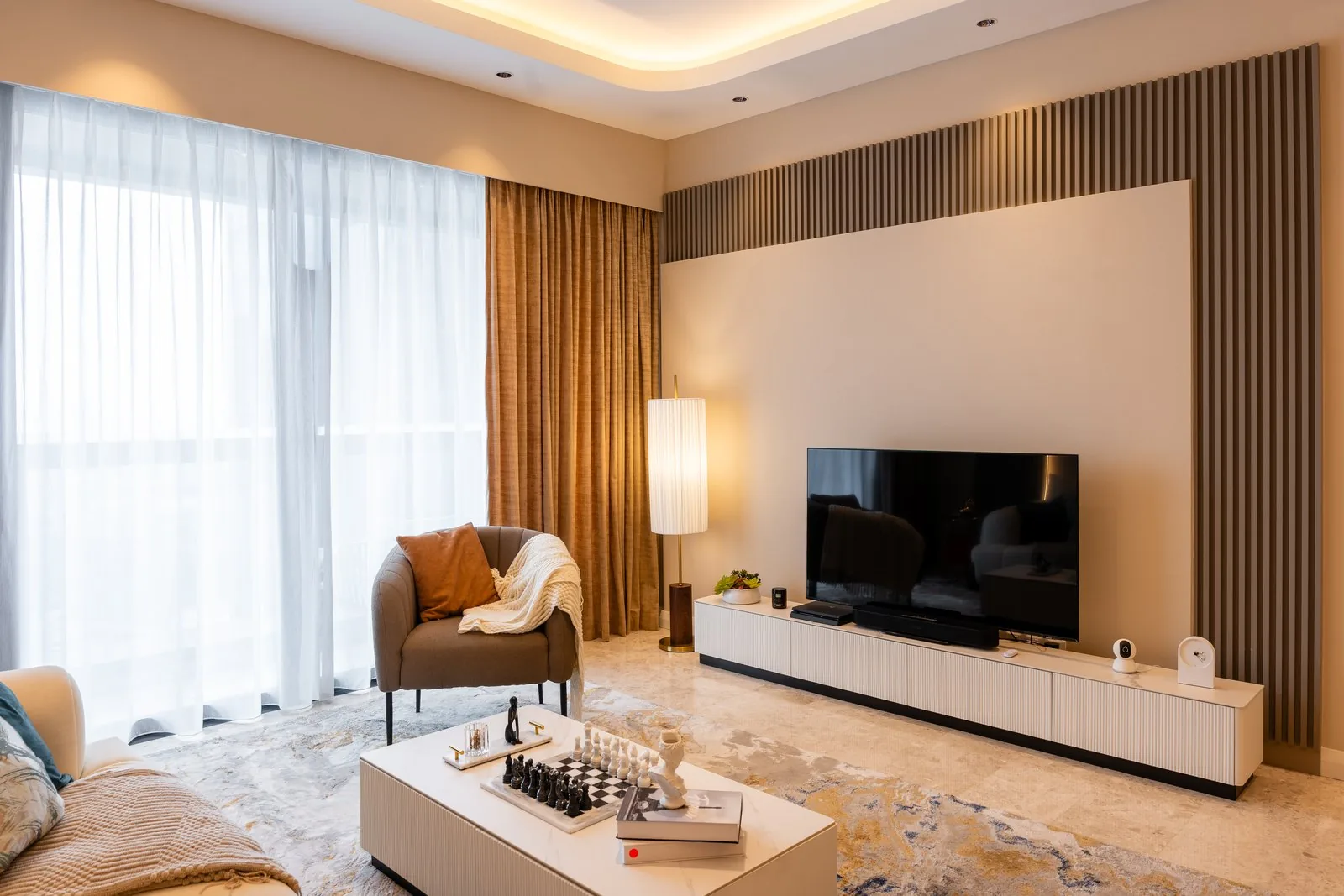
Fluted panels add rich tactile texture as wall backdrops behind TVs. Textured wall panels like fluted wood enhance the architectural appeal of a space.
At TRX Residence, a white TV console sits in front of a fluted timber panel, a modern TV cabinet design that suits modern minimalist interiors.
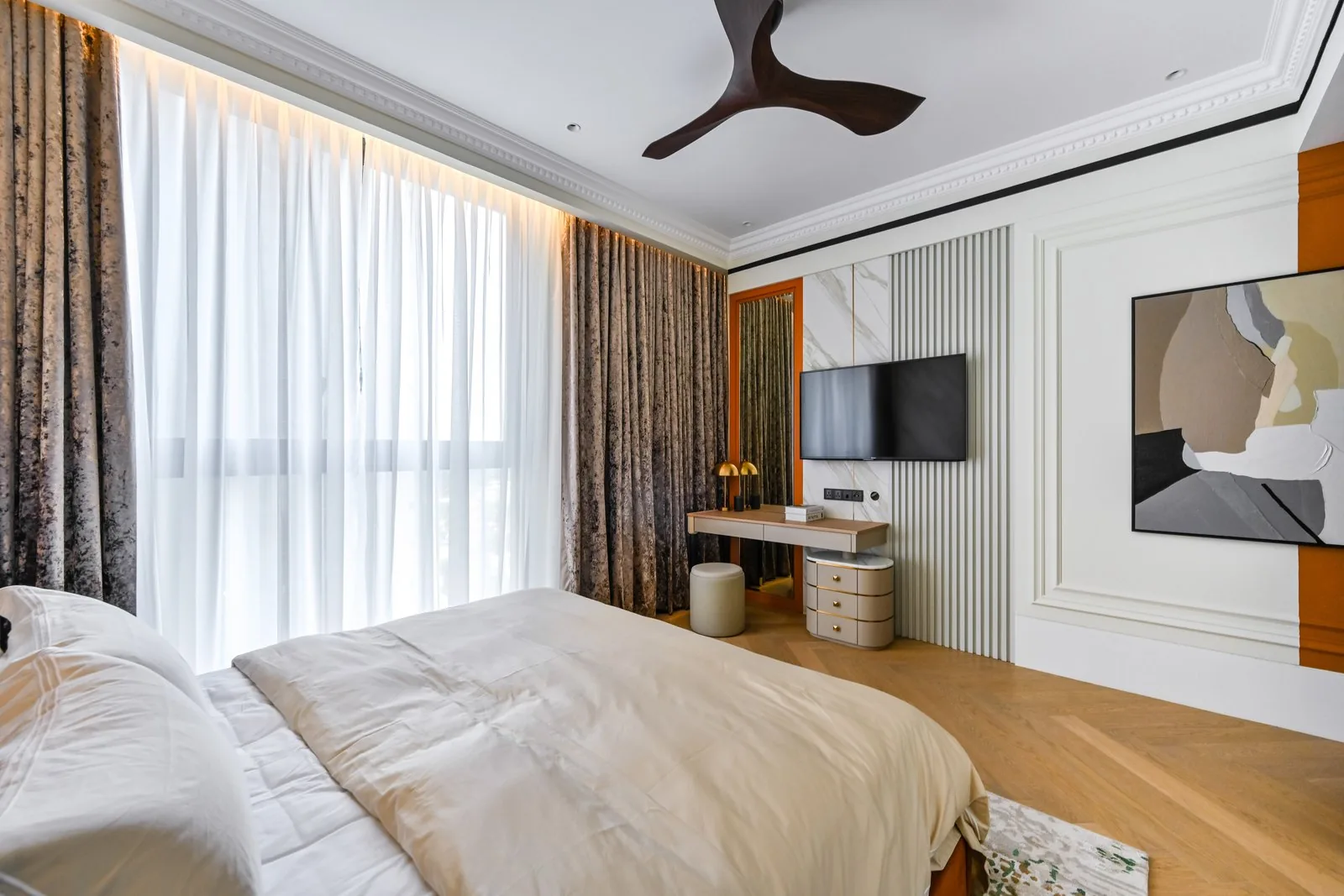
This TV panel design works in a bedroom too, as at Aira Residence.
6. A backlit stone TV wall
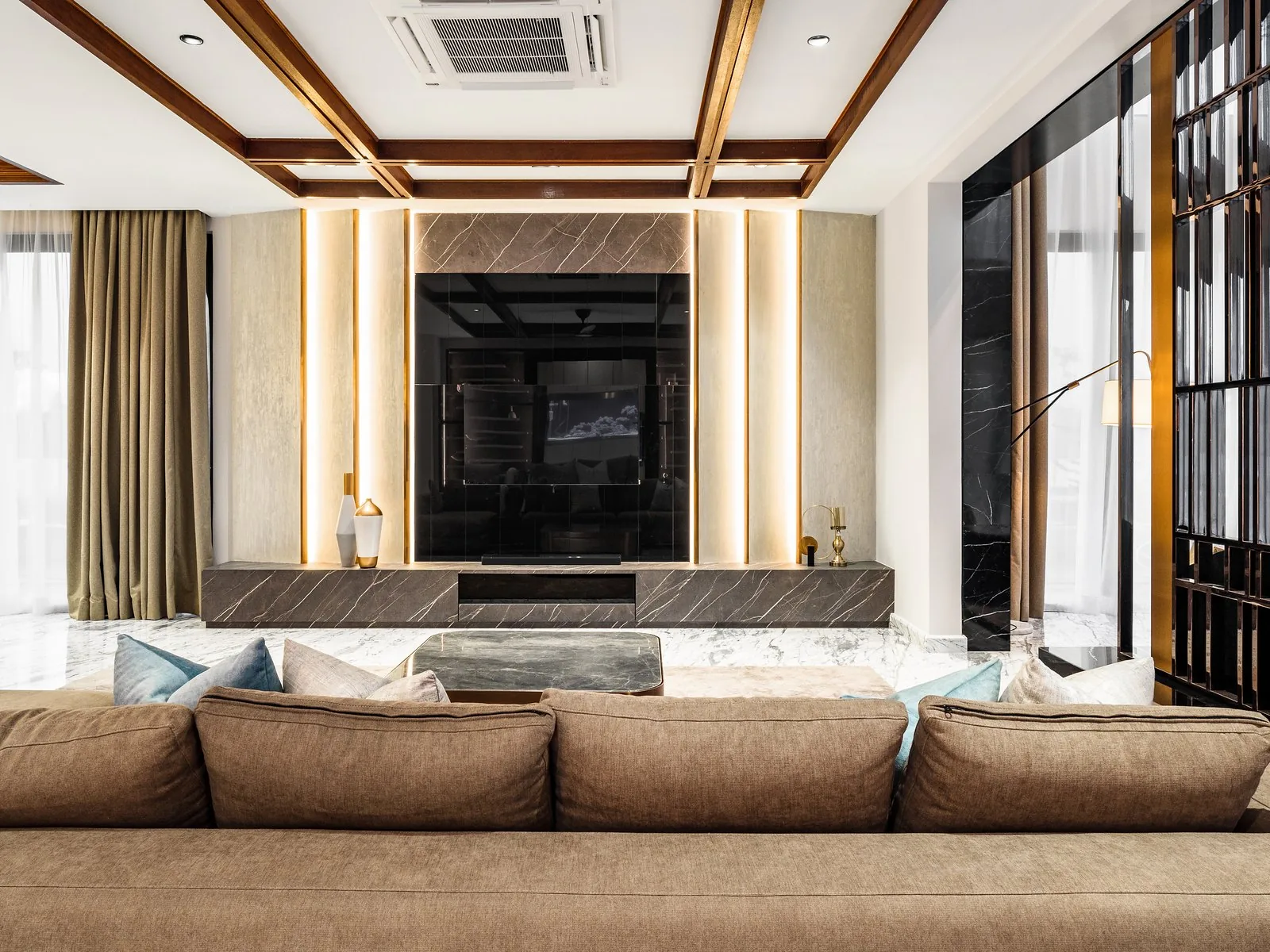
Backlighting lifts dark stone. In the Terengganu living room, black stone is framed by lit timber fins over a long TV console, a focal point you notice from the stairs.
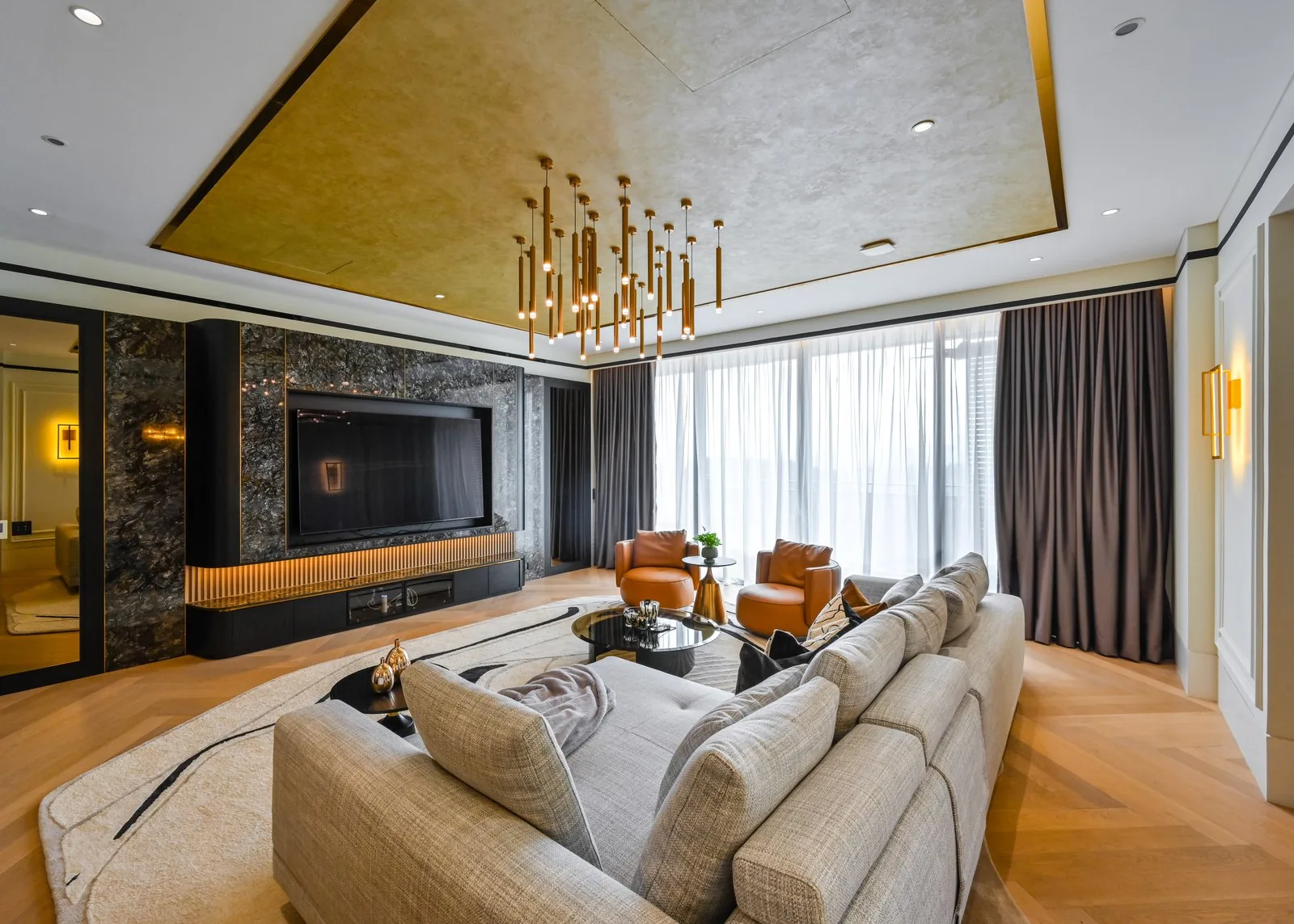
At Aira Residence in Damansara Heights, an LED strip under the timber TV console gives the dark marble a soft glow.
Media walls with display and storage
A media wall is a TV cabinet design with storage and display built in. It is the most multi functional TV unit you can build, and it keeps a clutter free entertainment space.
7. Lit display niches beside the TV
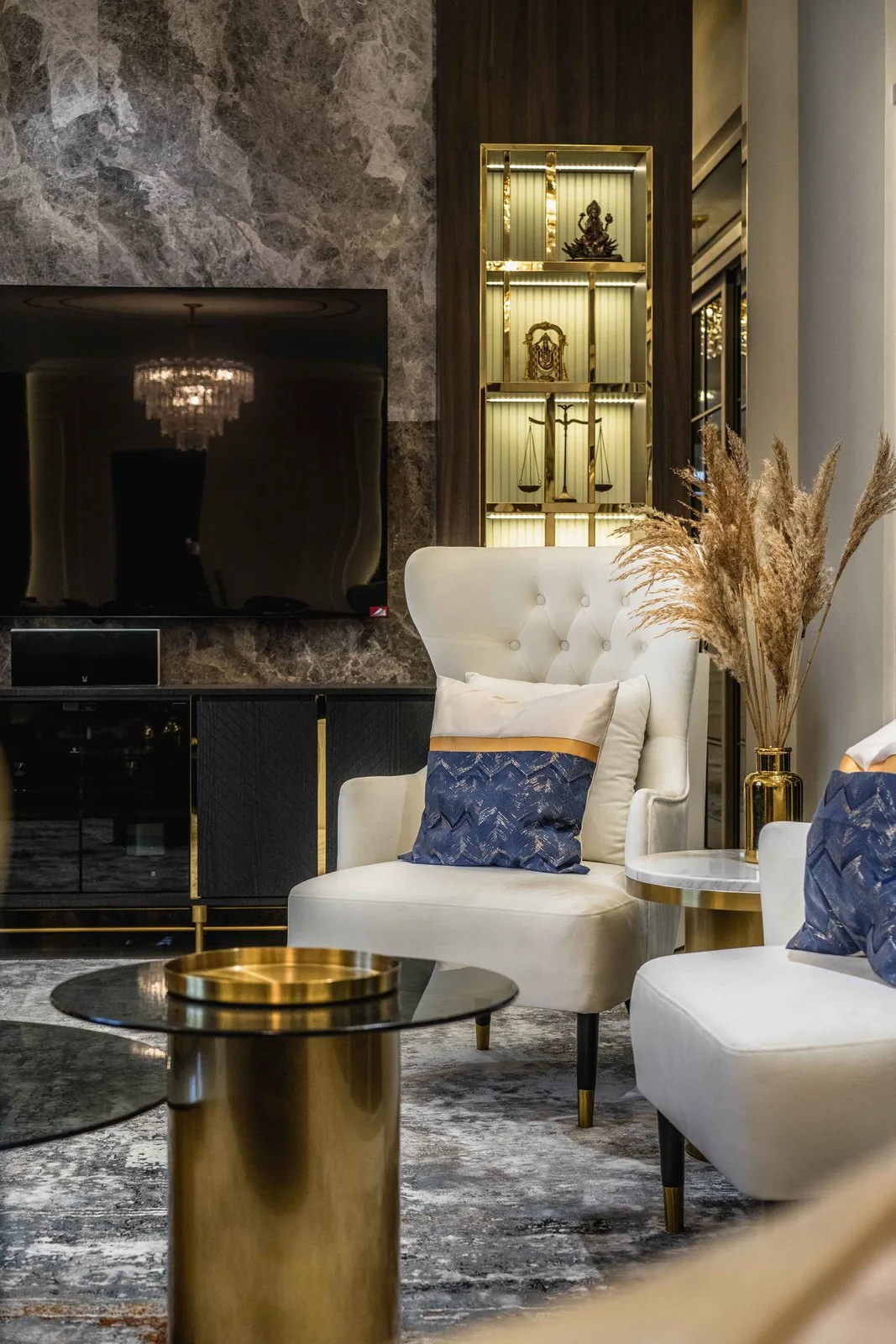
At EcoSpring in Johor Bahru, two lit niches flank the marble TV wall and hold display items.
Glass TV cabinets add a contemporary touch to interiors and create a minimalist and airy feel in the living room.
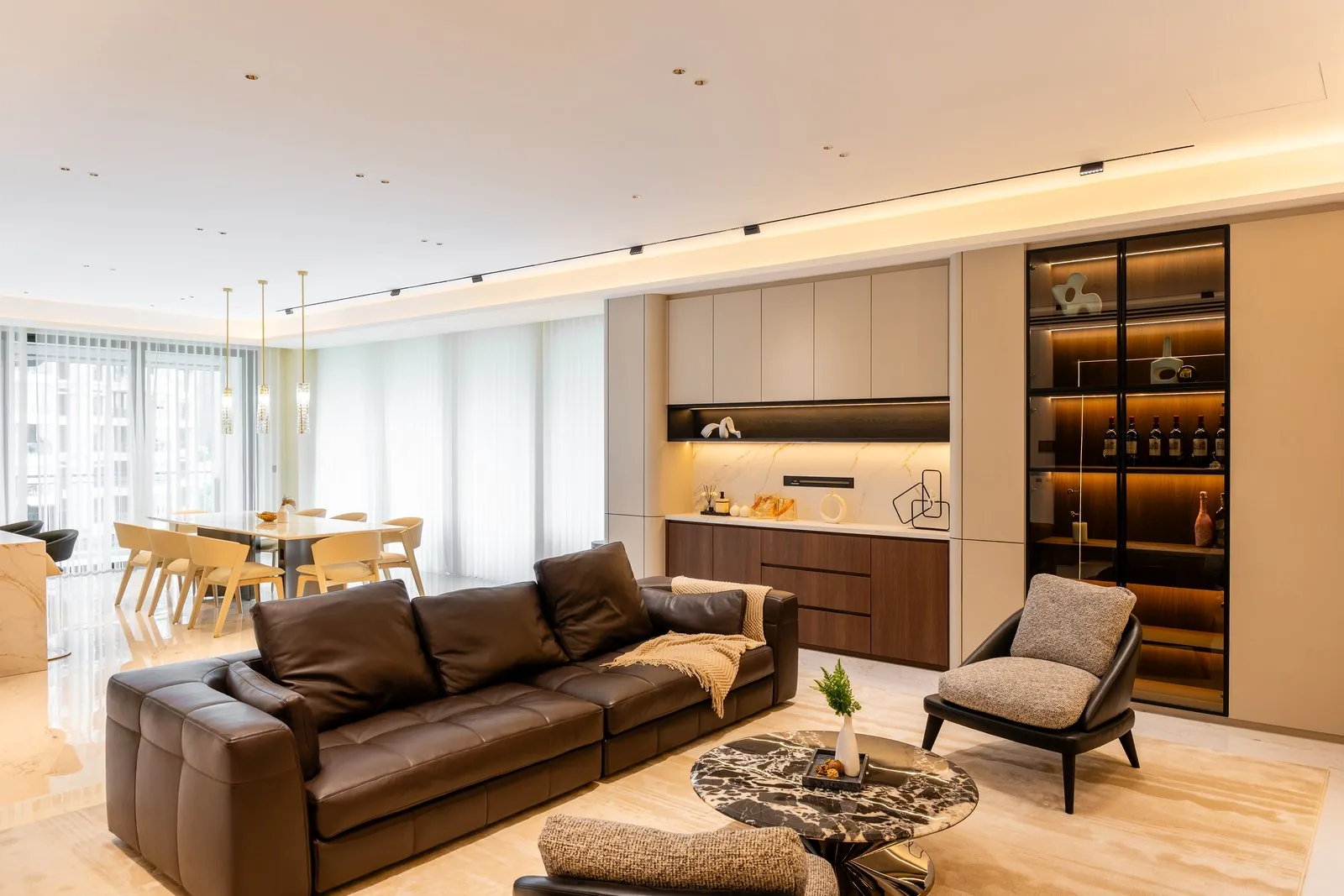
At Park Regent in Desa ParkCity, closed cabinets and a lit glass cabinet line the living room and give practical storage beside the TV.
8. Open and closed cabinets in one TV unit
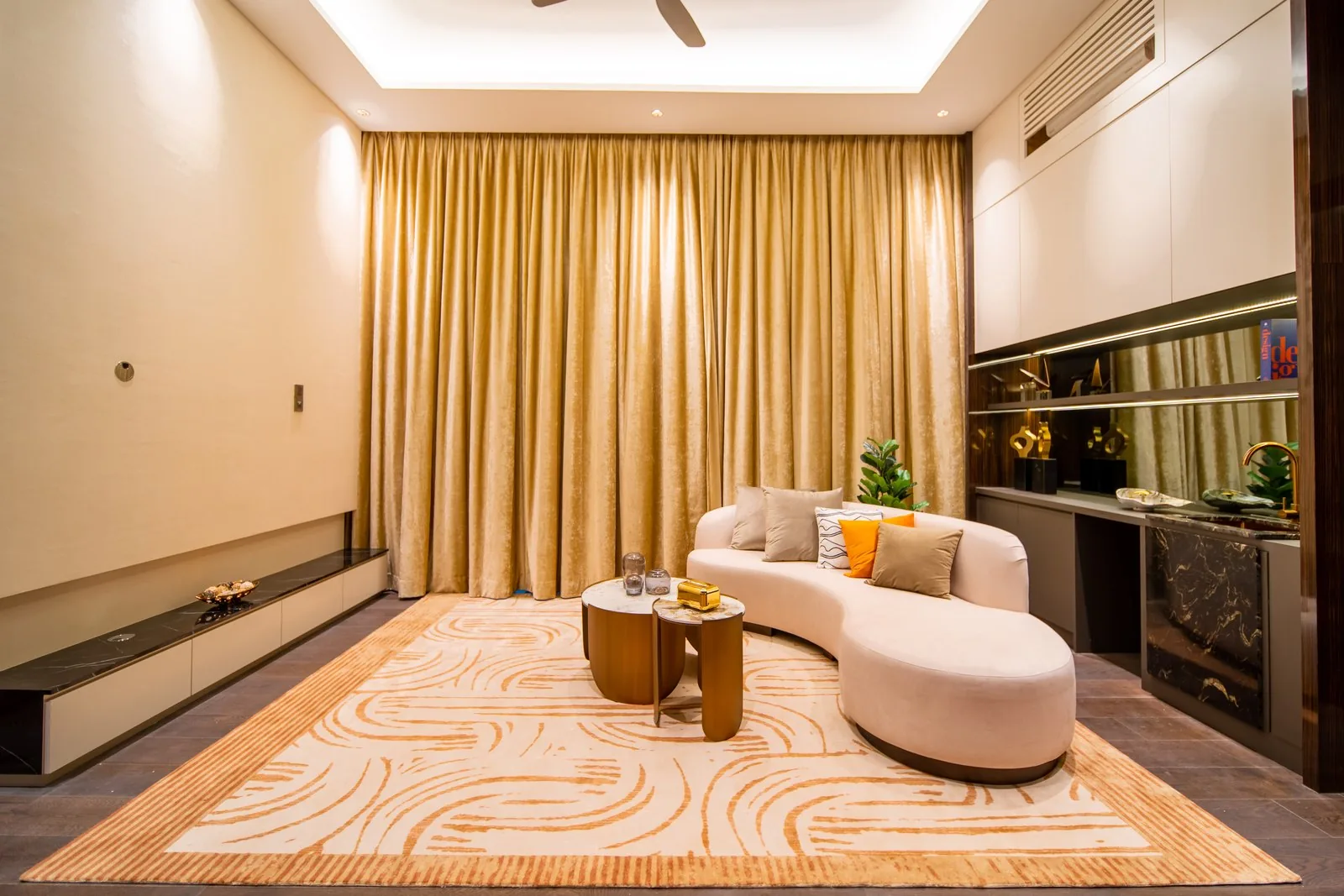
Mix open shelving with closed shelves. Open shelves give visual appeal; closed doors hide the router and remotes.
Wall mounted shelves above a TV stand add additional storage.

Modern TV cabinets often include hidden storage for a clutter-free appearance. That is what keeps a clutter free entertainment space.
9. A media wall with a bar or shelving

A media wall can carry a bar, a desk or a library, and turns the living area into an entertainment space.
At Setia Marina One in Cyberjaya, backlit shelving wraps the family lounge, a seamless blend of storage units, desk and light.
Our living hall design guide shows a media wall around a bar.
Hiding cables, AV and devices
Current trends focus on concealed wire management for a cleaner aesthetic. Seamless wire management ensures a completely wire-free look.
10. Cable management built into the TV cabinet design
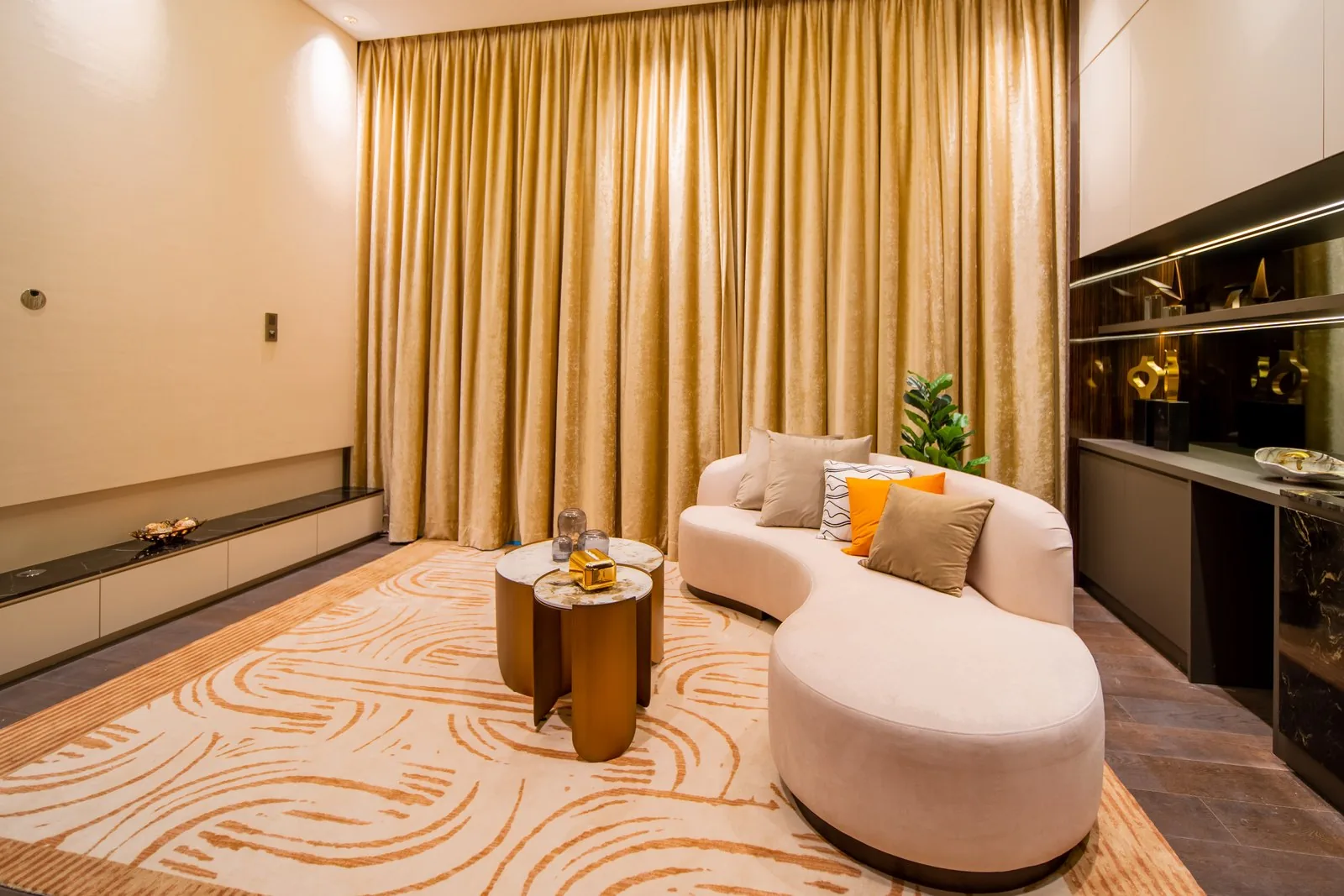
Proper cable management cuts dedicated grommet holes and runs internal wires to one point.
Plan a conduit from the wall mounted TV down to the TV console before the wall is finished. Always consider cable management features in your TV cabinet.
Ventilation for media devices
Proper ventilation in TV cabinets is crucial for electronic devices to function safely.
Device ventilation is critical to prevent overheating in media cabinets, so leave vents or an open back behind the router, gaming consoles and amplifiers.
Lighting your TV cabinet design
Integrated ambient lighting creates a cosy atmosphere in entertainment spaces.
11. LED strips behind the screen
Warm LED lighting improves aesthetics without overwhelming the space.
An LED strip behind the screen or under a floating TV cabinet adds soft lighting to the entertainment space. LED strip lighting can reduce eye strain and adds ambiance in the evenings.
Our ceiling design guide covers cove lighting above the TV area. Add a Flos floor lamp by the sofa.
Materials for TV cabinet design
Matte finishes and mixed materials are favoured over high-gloss surfaces in modern designs, and they avoid reflective surfaces opposite the screen.
Wood and natural wood
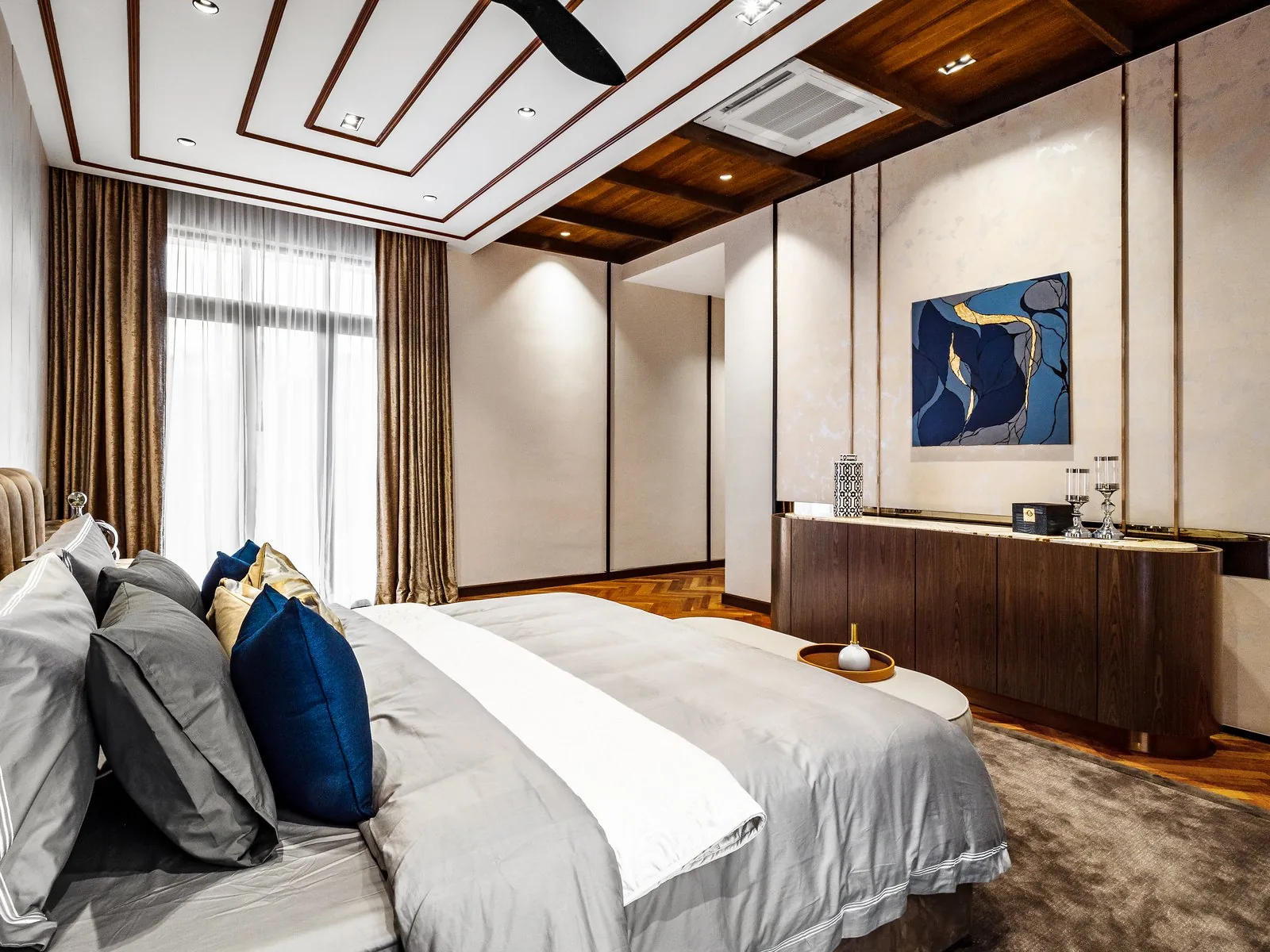
Wood is a classic and versatile material for TV cabinets. Warm, natural woods like oak and walnut provide a grounded aesthetic.
Reclaimed wood gives character; natural wood veneers stay stable in Malaysian humidity.
Stone and marble
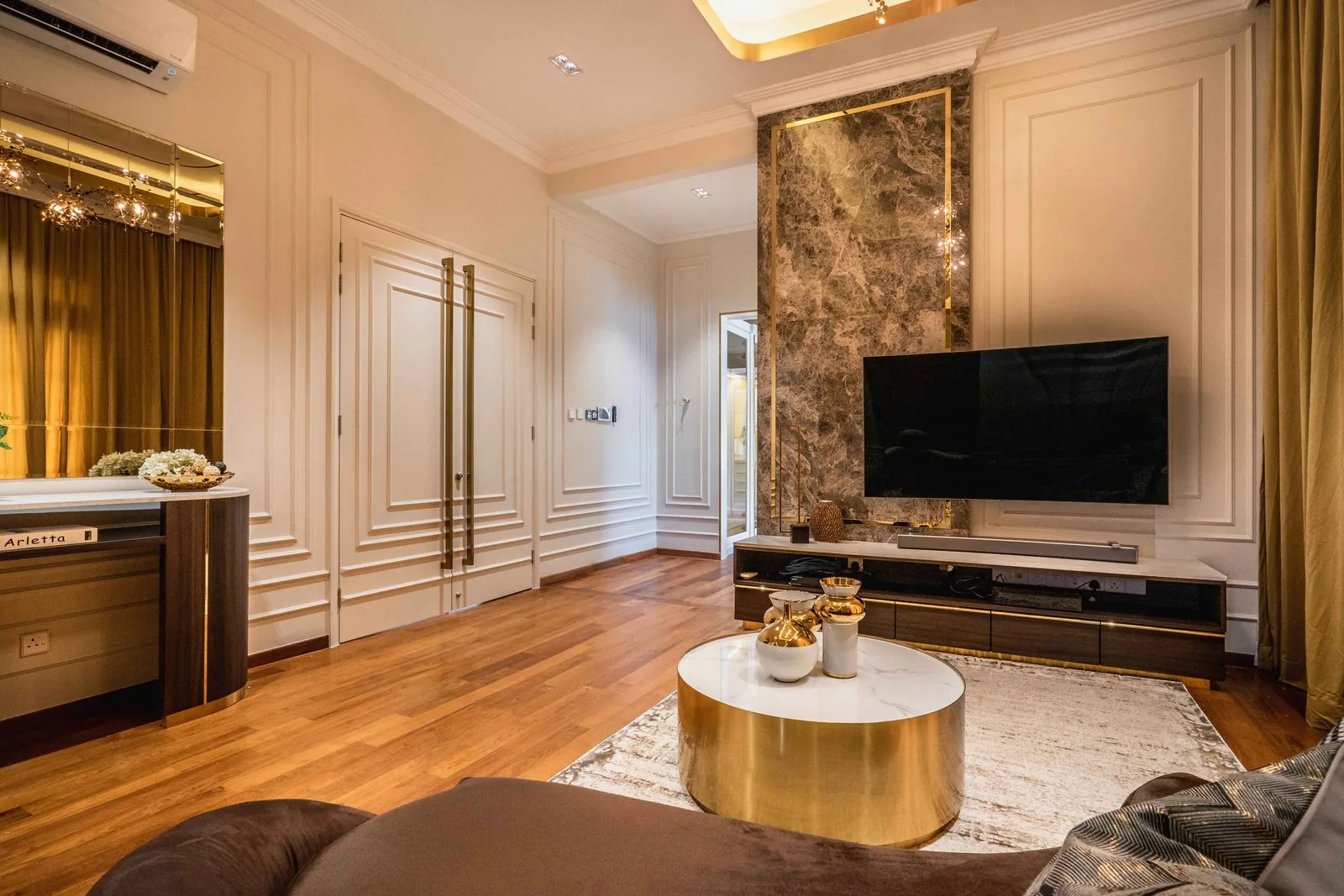
Stone gives timeless appeal and a stylish appearance. Use a thin slab or sintered stone on the panel, not on the cabinet doors.
Glass and metal
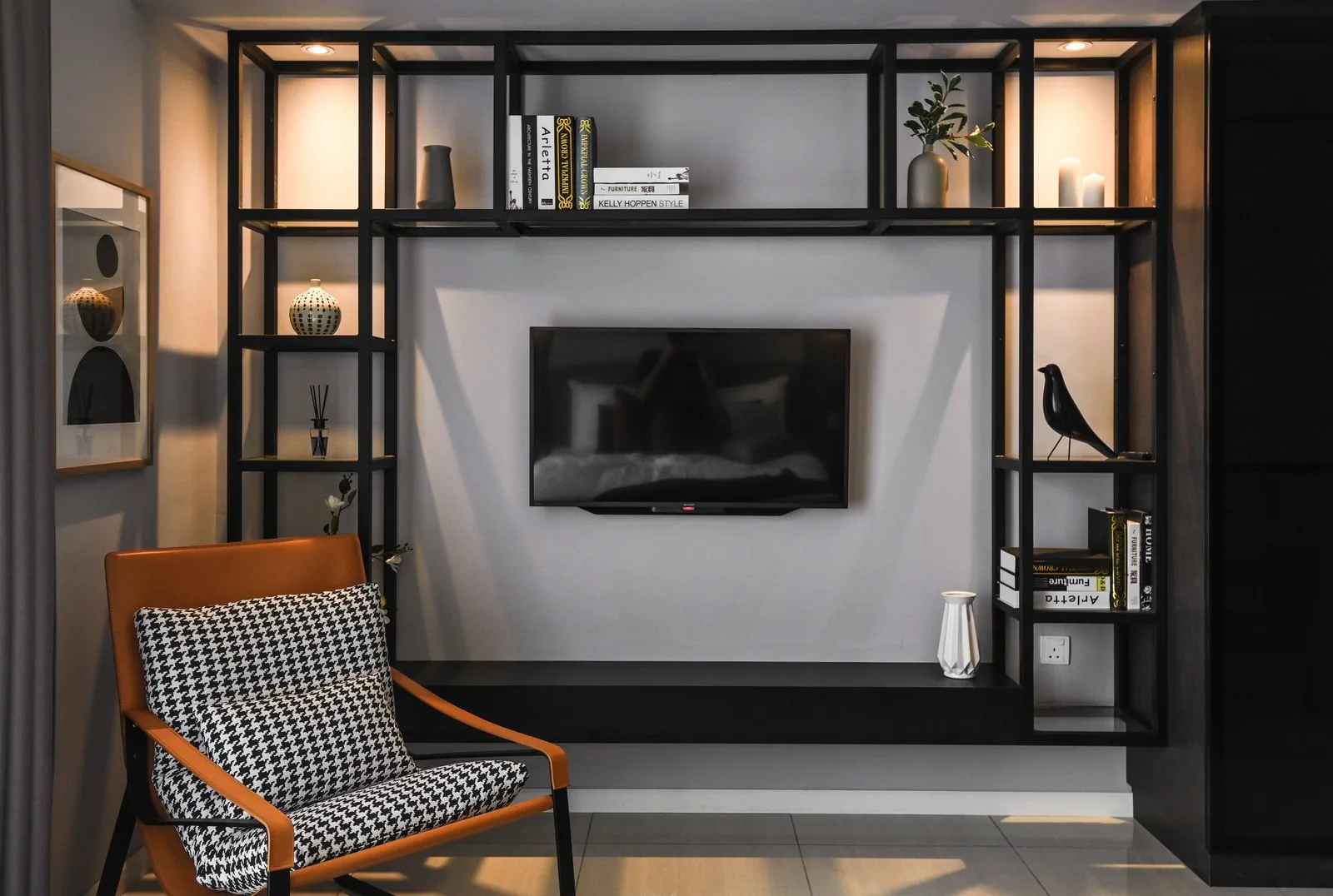
Metal offers durability and a rugged appearance for TV cabinets, as in the black steel frame above.
MDF, laminates and finishes
MDF is a cost-effective option for custom TV cabinet designs. Laminate is budget-friendly and available in various finishes.
Choose matte over high gloss laminates, which show fingerprints and glare. The right finish lets the cabinet blend seamlessly with the walls.
TV cabinet design for condos and landed homes
Condo and landed living rooms need a different modern TV cabinet design. Our condo interior design guide covers the condo living space.
12. Floating TV cabinets for a small living room
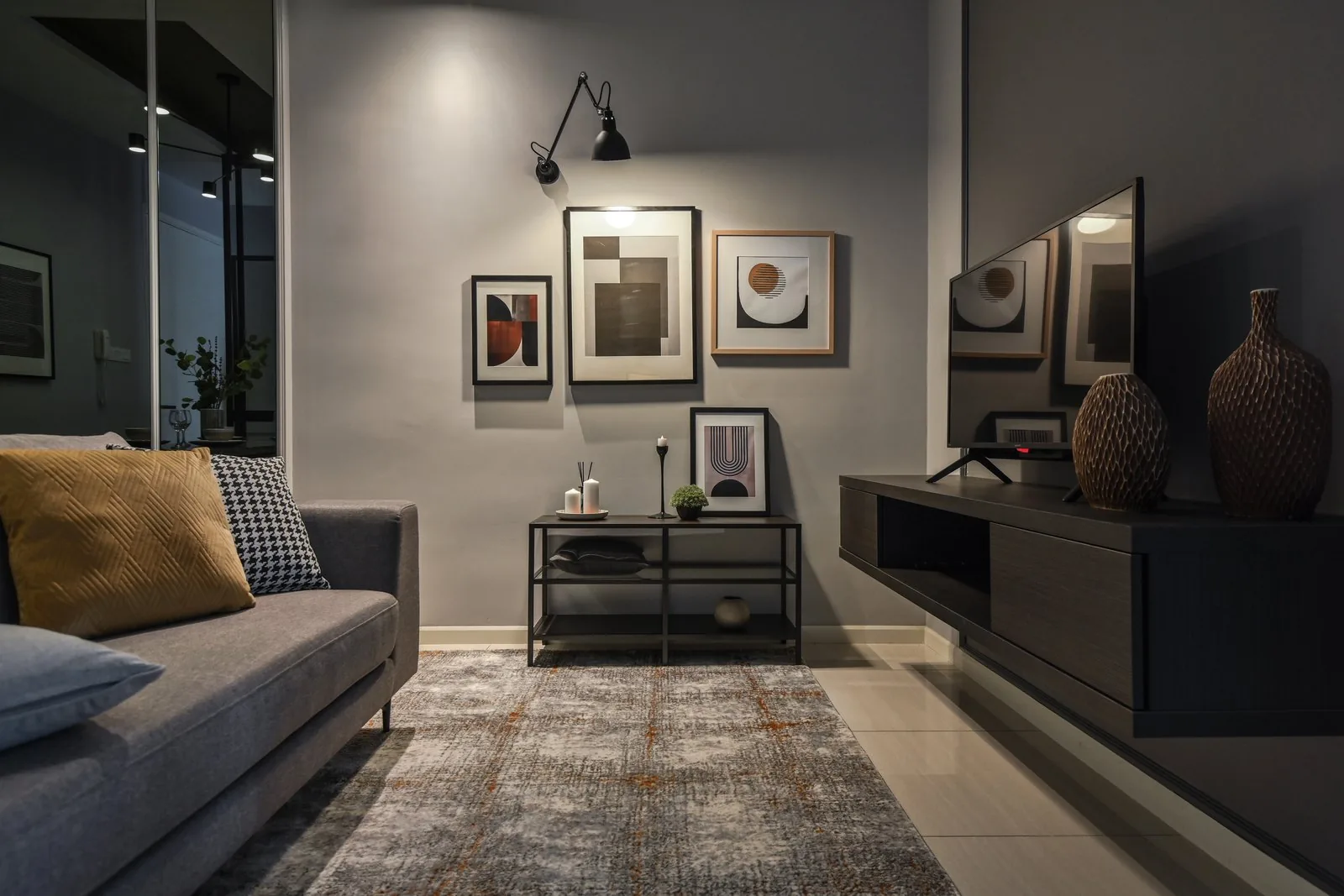
Floating TV cabinets are ideal for smaller spaces. Floating TV cabinets maximise floor space, keep rooms open and help maintain a clutter-free appearance.
In a small room, a wall mounted TV and a slim console maximise space. This space saving TV cabinet design suits the condo living area.
Corner and modular TV units
Corner TV cabinets optimise neglected spaces in living rooms and optimise space in small rooms.
Modular TV units allow for flexible reconfiguration of layouts, which suits a rented condo and diverse settings.
Double-height living rooms

In a landed living room with a double-height hall, take the panel higher than the screen, as at Quayside Villa, so the entertainment wall fills its wall space.
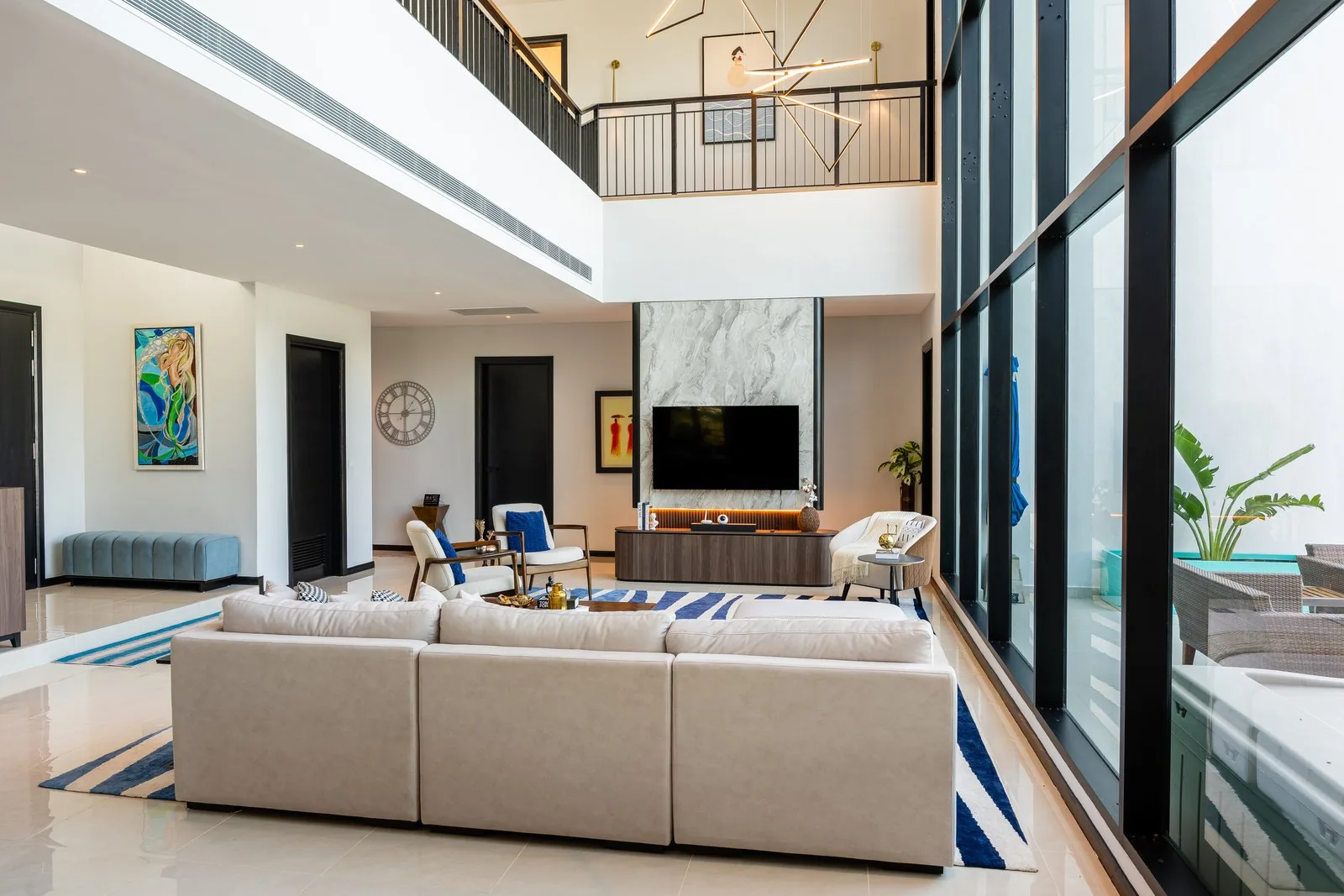
The result is an airy space and a living room where the TV cabinet design is the focal point from every seat.
TV unit design by room
Every room needs its own modern TV unit design. Our living room design guide covers the main living room.
Bedroom TV cabinet design

In a bedroom, keep the TV unit design low and long. At Four Seasons Residences, a pale TV console faces the bed.

In our Kelana Jaya bungalow, the wall mounted TV sits in a dark panel above a low console.
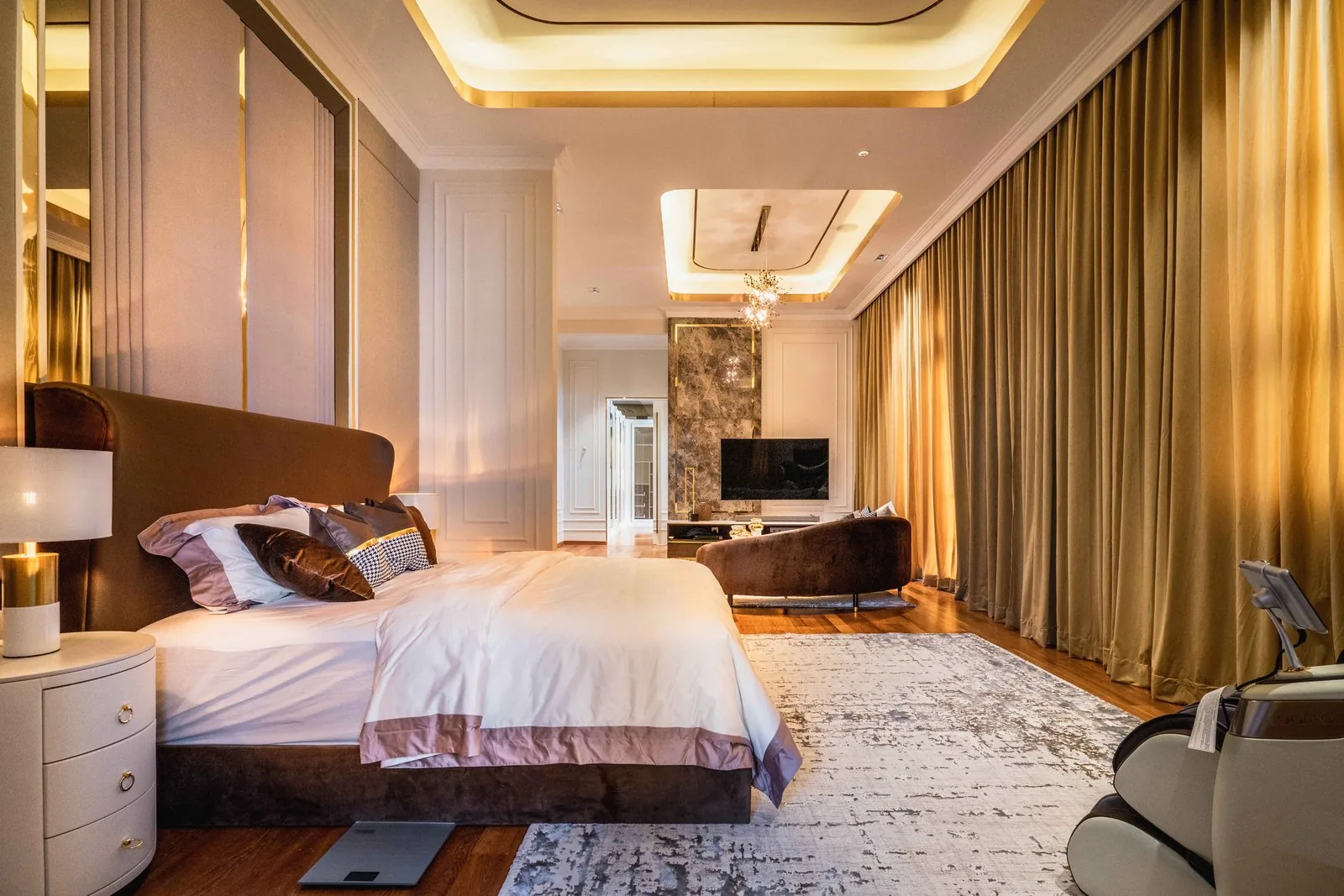
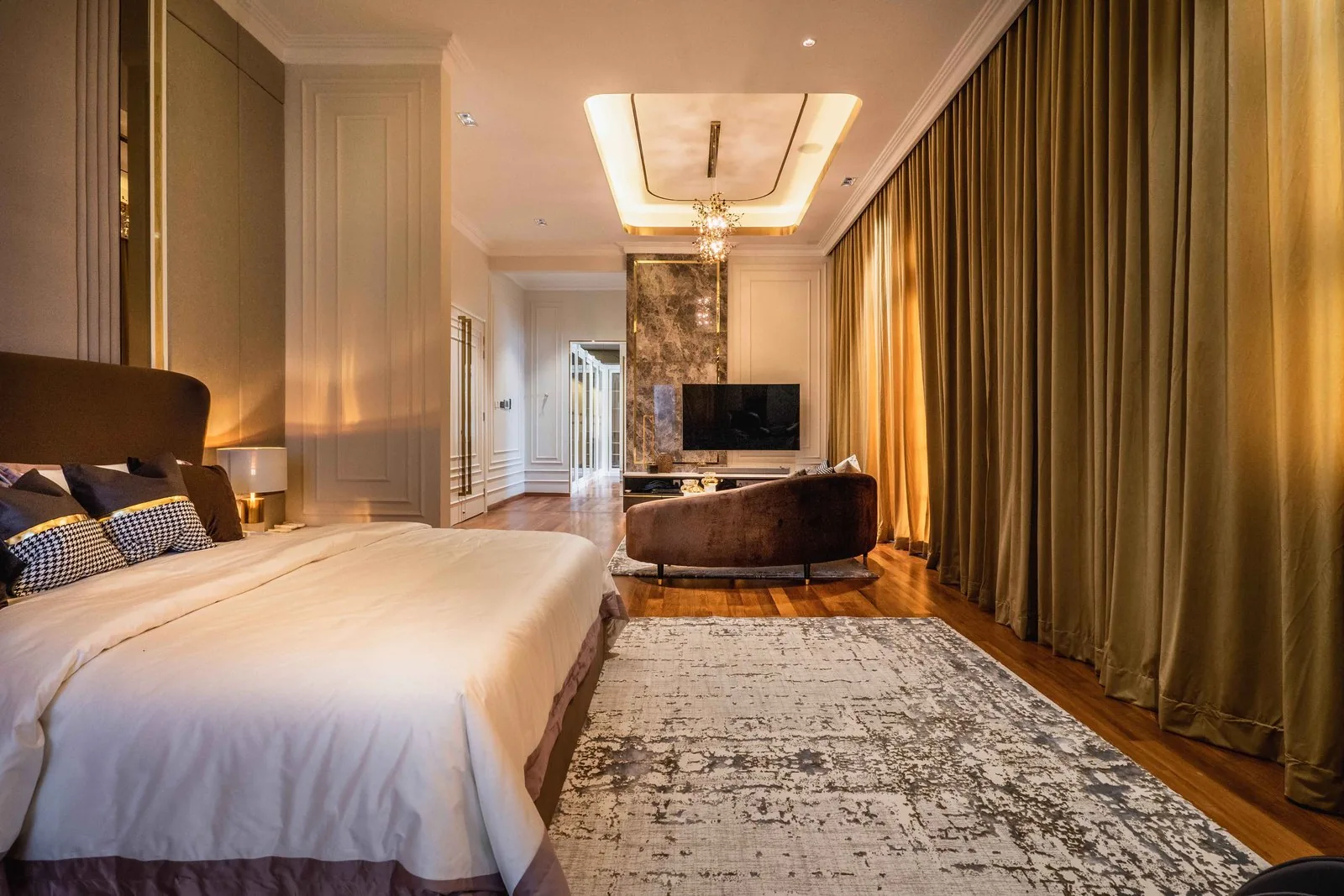
At EcoSpring, the master suite has its own lounge and a marble TV cabinet design.
Study and children's room

In a study, the TV unit design shares the wall with books.
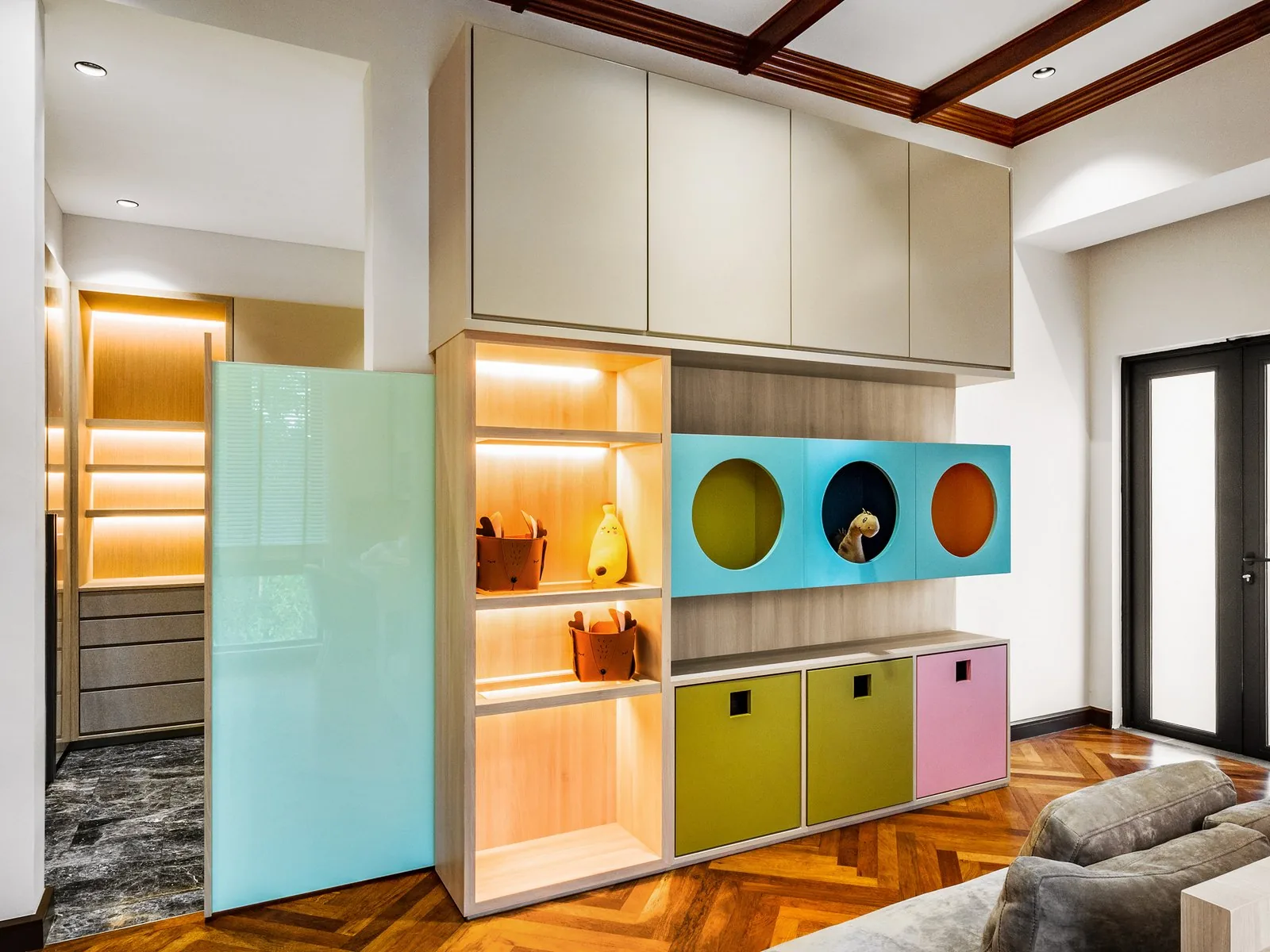
In a children's room, colour and closed cabinets keep toys out of sight, a practical storage TV unit design.
Luxury brands to pair with your TV cabinet design
A built-in TV cabinet design should sit well with the furniture around it and be the focal point of the room.
In Kuala Lumpur, clients often see Molteni&C, whose store at The Gardens Mall shows its Hector living system, and Minotti sofas in the same mall.
For a home theatre setup, Bang & Olufsen has a store there too.
A Poltrona Frau armchair, from its Bangsar store, completes the entertainment area.
Which TV cabinet is best?
The best TV cabinet fits the wall, the TV and the way you live.
Floating TV cabinets suit condos; a built-in TV cabinet design suits landed homes. Modern classic cabinets are popular for a sleek look, and minimalist TV cabinets create a clutter-free environment.
For a clutter free entertainment space and practical storage, choose closed doors over open shelves.
How to build a cabinet for your TV
Step 1: measure the wall and the TV.
Step 2: draw the TV cabinet design with power, data and cable routes.
Step 3: choose the carcass, the doors and the finish.
Step 4: build the TV cabinet, then install the panel and the lights.
Common TV cabinet design mistakes
Hanging the TV too high above the TV console.
A TV cabinet narrower than the TV.
No ventilation behind the devices.
Gloss opposite a window.
Frequently asked questions
How much does a TV cabinet cost in Malaysia?
It depends on length, material, hardware and lighting. We do not publish prices because each TV cabinet design is drawn to its wall; our cost guide explains what drives the cost.
What height should a TV cabinet be?
Low enough that the centre of the screen sits at seated eye level, about 107 cm from the floor.
Can a TV cabinet be a room partition?
Yes, between the living room and dining; see our TV cabinet partition ideas.
Plan your TV cabinet design with Blaine Robert Design
We design the TV wall with the rest of the house, alongside kitchen cabinet design, wardrobe design and the walk-in wardrobe.
See our home interior design guide, our residential service and the gallery, then contact us.